

Peru’s Institutional Stability Faces Risks Following 2026 Election Runoff
Peru’s upcoming presidential runoff between Keiko Fujimori and Roberto Sánchez threatens the country’s long-standing macroeconomic stability amid contested…
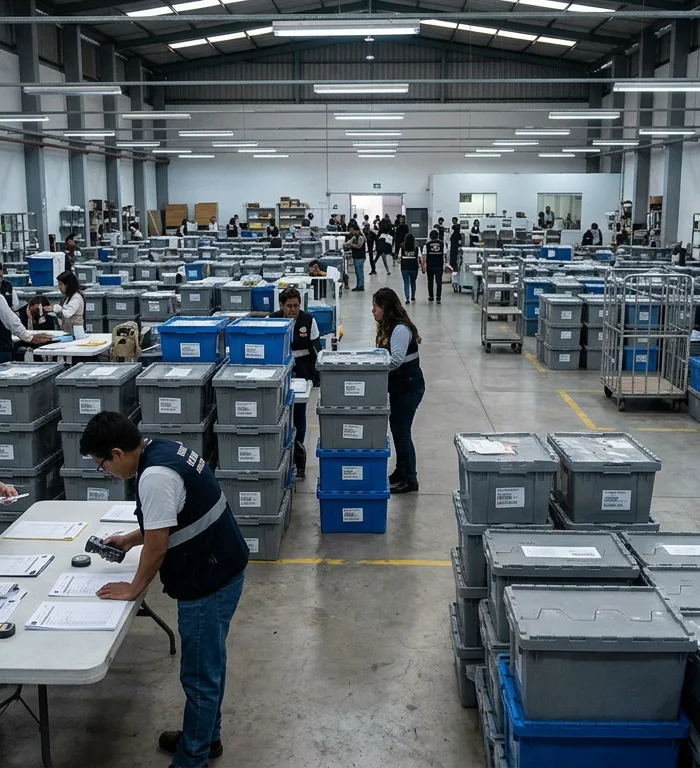
Peru’s long-standing decoupling of macroeconomic stability from political volatility is facing a critical stress test following the 2026 first-round presidential election. Preliminary results indicate a runoff between Keiko Fujimori and Roberto Sánchez, scheduled for June 7. The legitimacy of the electoral process is currently under scrutiny following reports of logistical failures and allegations of irregularities from third-place candidate Rafael López Aliaga, creating a potential governance deficit for the incoming administration.
The two candidates present fundamentally divergent economic agendas. Fujimori advocates for the continuation of the current pro-investment model, while Sánchez proposes a constitutional assembly, the renegotiation of natural resource contracts, and a revision of the Central Bank’s mandate. The outcome of these policy goals will be heavily constrained by the newly elected 60-member Senate, where a right-wing majority and a centrist swing bloc are expected to act as a check on radical executive actions. This legislative composition makes significant structural changes, such as the dissolution of the current constitutional framework, appear unlikely.
Despite the legislative guardrails, the risk of institutional crisis remains elevated. A victory for Sánchez would likely trigger immediate policy paralysis and confrontation with the legislature, increasing the probability of premature presidential turnover. Conversely, Fujimori would likely possess the capacity to assemble a technocratic team and negotiate with centrist factions, though her administration would still face significant political baggage.
Macroeconomic conditions remain supportive, with 2026 growth projected at 3.2% and elevated commodity prices. However, these tailwinds are increasingly offset by rising import costs for fuel and fertilizers due to geopolitical tensions. Furthermore, the expansion of illegal gold mining—estimated at approximately $12 billion—continues to erode governance and fiscal stability in the mining sector. The incoming government must address these structural challenges while navigating a deeply polarized political environment that threatens to undermine the institutional continuity that has historically anchored the Peruvian economy.
More stories
- Germans oppose Ukraine aid as poll shows support slipping
- Kim Jong-un receives 10 envoys after constitutional shift
- Ukraine claims Libya strike sinks Russian naval corvette
- COP31 climate talks collapse over fossil fuels and funds
- Russian military faces 1,087 recorded suicides in Ukraine war
- US faces China, Russia in Africa minerals contest
- Portugal targets more than 20,000 electric cars with subsidies
- Kallas faces EU role doubts after seven-member Ukraine talks snub
- Türkiye seeks 30% OIC trade share after $108bn nine-month flow
- Turkey's OIC trade reaches $108bn in first nine months
Latest news
- Trump prepares tariffs on China and other major exporters
- New-car buyers pay record average $50,087 in October
- Banks face ECB reserve debate over liquidity and profits
- Investors see Anthropic debut gains fade below $83 a share
- Iraq orders federal control over Kurdish-area oilfields
- Nvidia shares retreat as AI rally cools before PCE data
- Macy’s parade faces balloon limits as storm winds approach