

22q11.2 deletion brain-barrier cells show metabolic deficits
The bioRxiv preprint points to a possible cell-level marker for schizophrenia risk, but the work remains early and has not been peer reviewed.
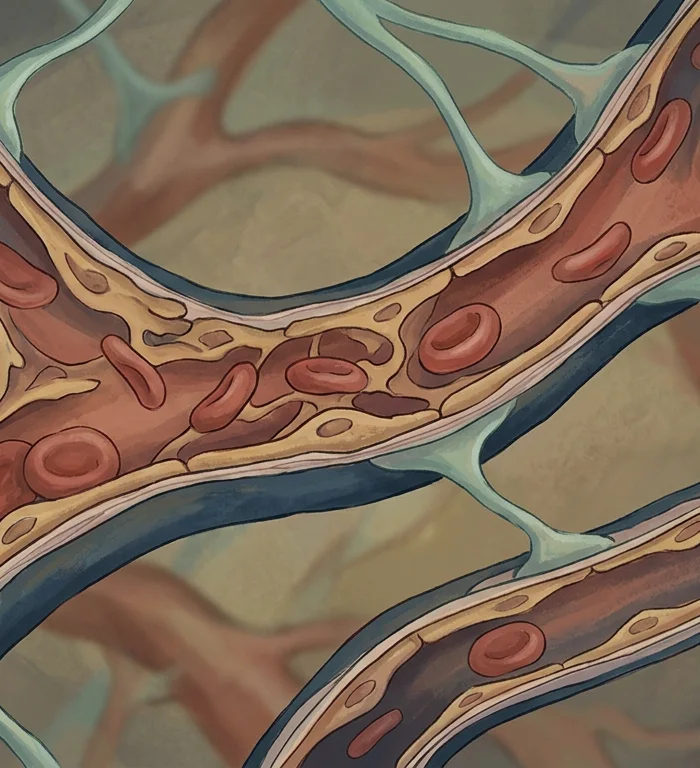
University of Pennsylvania researchers linked blood-brain-barrier-like cells from 22q11.2 deletion syndrome patients with schizophrenia to reduced oxygen consumption in a bioRxiv preprint posted Nov. 20.
The finding matters because 22q11.2 deletion syndrome is associated with heightened schizophrenia risk, while cells from 22qDS patients without schizophrenia retained control-level barrier characteristics in the preprint.
Frances M Smith, Stewart A Anderson and Jorge I Alvarez differentiated induced pluripotent stem cells from three groups into induced blood-brain-barrier-like cells: controls, 22qDS individuals without schizophrenia and 22qDS individuals with schizophrenia. Induced pluripotent stem cells are reprogrammed cells that can be used to model disease-relevant tissues in the laboratory.
The blood-brain barrier is a specialized vascular layer that helps regulate what passes from the body into the brain. The authors said cells from the 22qDS with schizophrenia group showed “considerable reductions” in oxygen-consumption rate compared with cells from the 22qDS group without schizophrenia.
Cells from 22qDS participants without schizophrenia retained barrier features comparable to controls, including resistance to ionic flux, tighter junction properties and cytoskeletal features, according to the preprint. Tight junctions are seals between cells that help maintain the barrier.
The authors also used RNA sequencing, which measures gene activity, and reported differences in metabolic, cytoskeletal and cell-cell adhesion genes between 22qDS subgroups. They interpreted the data as evidence that preserved metabolic and structural programs in blood-brain-barrier-like cells are associated with the absence of schizophrenia in 22qDS.
The study cannot establish a causal relationship between blood-brain-barrier dysfunction and schizophrenia. It used laboratory-derived cells rather than direct clinical outcomes, the article is a preprint that has not been certified by peer review, and the posted abstract did not report the number of donors or cell lines.
The work applies most directly to 22q11.2 deletion syndrome, not to schizophrenia broadly. It also addresses cell biology and potential mechanisms, rather than diagnosis, prognosis or treatment decisions for patients.
The authors declared no competing interest. Funders listed for the preprint included the NIH Common Fund, NIH grants, the Uytengsu-Hamilton 22q11 Neuropsychiatry Research Program of the Maternal and Child Health Research Institute at Stanford University, and the Penrose Family.
Source: bioRxiv academic preprint, Nov. 20, 2026.
Atlas360 reports health research and does not provide medical advice.
More stories
- Dietitians advise small swaps for plant-based eating
- TikTok dementia videos mislead in 66.4% of sample, researchers say
- Aberdeen Royal Infirmary faces police inquiry call over 19 deaths
- Bariatric surgery group loses 28.2% after GLP-1 use
- TOFA boosts mouse energy use 18% while preserving muscle
- ICO probes NHS therapy notes accessible to up to 140,000 staff
Latest news
- David Parr House to honor Victorian art-workman with blue plaque
- Iran's attacks hit 25 tankers near Strait of Hormuz
- FCC approves prison cellphone jamming despite 2.5-mile warning
- Russia strikes Ukraine as Odesa faces electricity strain
- Bahrain reports two injuries after Iranian aerial attacks
- Congress tests Black Democrats' growing policy influence
- Baltic responders fight Sparta II fire after drone strike
- Europe faces attribution gap after 16 cyber, physical incidents