

XIIlab Secures $7.2 Million in Convertible Debt for AI Infrastructure Expansion
XIIlab has approved a $7.2 million convertible bond issuance to fund AI data center construction and software-driven recurring revenue streams.
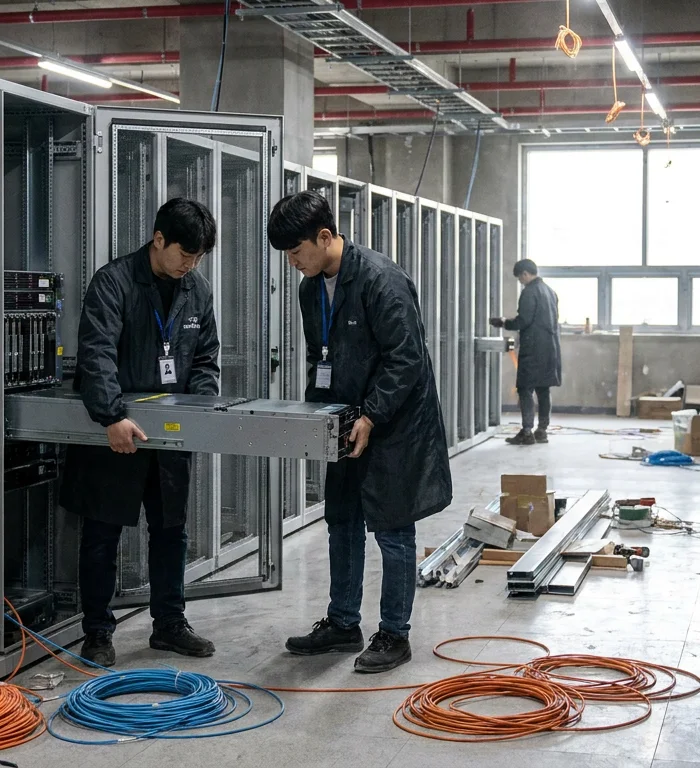
XIIlab has received board approval for a $7.2 million (KRW 10 billion) private placement of convertible bonds to finance the expansion of its AI data center operations. The capital is earmarked for working capital related to GPU-cluster construction and the scaling of its proprietary AstraGo infrastructure management software. The transaction is scheduled for completion on November 16, 2026.
The bonds are unsecured and carry a 0% coupon rate, with a maturity date of November 16, 2031. Conversion into common shares is permitted between November 2027 and October 2031 at a price of approximately $5.84 (KRW 8,106) per share. The agreement includes a call option allowing the company to repurchase up to 50% of the issuance to mitigate equity dilution, while investors retain a put option for early repayment starting in May 2029.
Growth Fund
Funding is primarily sourced from Growth Fund, a state-backed vehicle designed to support strategic sectors including artificial intelligence and semiconductors. The investment is divided among several asset management firms, with $5.8 million provided by National Growth Fund sub-funds and $1.4 million from other managed entities. The company intends to deploy the funds in two equal tranches across 2027 and 2028.
Strategically, the financing supports XIIlab’s transition toward a recurring revenue model. By integrating its AstraGo Kubernetes-based platform into its GPU-cluster construction projects, the firm aims to secure long-term operations and management contracts. As an NVIDIA Elite partner, the company is positioning its infrastructure to accommodate next-generation hardware, including the Vera Rubin architecture. The firm’s medium-term financial stability will depend on its ability to convert these construction projects into sustained subscription-based service revenue while managing the debt repayment and equity dilution risks inherent in the bond structure.
More stories
- Deal Sheet: Fortis shutdown costs over 400 jobs
- The Week in Games: GTA 6 turns attention into cash
- US data centres emit 25.7m tonnes of CO2, Harvard says
- German founders need 3,942 hours to open small business
- Leaked Deutsche Bank files test Sewing's reform narrative
- UAE employers plan 2.8% pay rises for 2027
- Singapore Airlines plans $1.57bn cabin upgrade from 2027
- DoorDash curbs Instacart LinkedIn ties during $17bn review
- Netflix usage slips as subscriber growth masks slowdown
- Mave raises $34m to expand AI cybersecurity platform
Latest news
- Trump prepares tariffs on China and other major exporters
- New-car buyers pay record average $50,087 in October
- Banks face ECB reserve debate over liquidity and profits
- Investors see Anthropic debut gains fade below $83 a share
- Iraq orders federal control over Kurdish-area oilfields
- Germans oppose Ukraine aid as poll shows support slipping
- Kim Jong-un receives 10 envoys after constitutional shift
- Ukraine claims Libya strike sinks Russian naval corvette