

West Bank olive harvest attacks reach record, UN reports
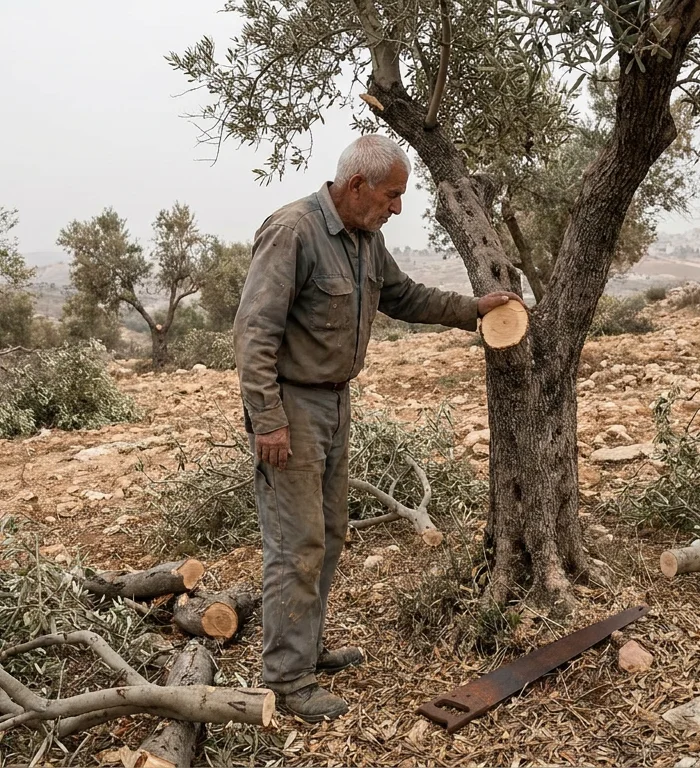
Israeli settlers carried out 377 olive harvest attacks in the West Bank since September, the highest tally since 2006, OCHA says.
The United Nations Office for the Coordination of Humanitarian Affairs (OCHA) linked the violence and Israeli limits on access to orchards to reduced harvests and pressure on Palestinian livelihoods. Its account describes overlapping obstacles: attacks affecting people and trees, alongside official restrictions preventing Palestinians from reaching their crops.
Attacks damage trees and restrict livelihoods
OCHA said a settler killed one Palestinian during the attacks, while the overall injury toll exceeded 200 Palestinians. It also reported damage or vandalism affecting more than 3,850 trees and young olive plants, extending the reported losses beyond the people directly harmed.
The agency described the attack count as the highest in its monitoring record, which began in 2006. That comparison places the current harvest season against two decades of tracking, although the statement provided no previous peak or year-earlier total against which to calculate the increase.
The damage to orchards is only one part of the disruption described by OCHA. The agency said official Israeli access controls, combined with settler violence, had diminished the quantity Palestinians were able to gather, undermining livelihoods tied to the seasonal crop across the occupied West Bank.
Harvest income supports Palestinian families
Organizations working on food security put the number of Palestinian families dependent on the yearly olive crop for income and livelihoods between 80,000 and 100,000, according to OCHA. That range describes dependence across the West Bank, rather than a count of households directly affected by the reported attacks.
The distinction matters when assessing the economic reach of the violence. OCHA's account identifies a threat to an income source supporting tens of thousands of families, but it does not establish that every household dependent on olives has suffered losses during this harvest.
If violence and access restrictions continue to limit collection, affected families could face further reductions in the crop available to support their livelihoods. Improved access would ease that particular constraint, but would not itself reverse the tree damage OCHA has already reported.
Equipment restrictions complicate Gaza aid
OCHA separately described restrictions affecting humanitarian operations in Gaza, despite an extensive relief response. Aid organizations identified difficulties bringing in lubricants for engines, replacement components, generators, large machinery and specialized equipment, according to the agency's statement.
Those organizations warned that the constraints were blocking longer-lasting shelter arrangements and exposing essential services to the risk of backup power failures. Their warning concerns the ability to maintain humanitarian operations, not only the volume of assistance reaching Gaza.
If backup generators fail while replacement equipment and parts remain restricted, critical services could stop operating, according to OCHA's account of its partners' warning. The immediate uncertainty is whether those power systems can remain functional and whether equipment access will allow more durable shelter work to proceed.
More stories
- Secret Service arrests man after White House weapons find
- China may test US resolve as Kagan flags military strains
- Newsom announces California clemency for 548 on death row
- Store closes after Fairfield shooting; six people wounded
- Store closes after Fairfield shooting; six people wounded
- Judge dismisses Trump’s $10 billion Epstein letter lawsuit
Latest news
- Poland starts 2 days of mourning over 6 Krakow deaths
- Home Office faces suit over almost 1,500 EU residency cases
- Kalshi faces state gambling laws after two appeals losses
- Uganda ties construction push to $500bn economy target
- MaxxBench exposes 23-point coding-agent gap in revised tests
- Armenia faces EU democracy test over opposition cases
- Cambodia freezes more than $300m in scam crackdown
- Adults 50 to 64 reach 7.5% heavy-drinking rate