

Antarctic Sea Ice Decline Disrupts Global Ocean Circulation Patterns
Antarctic sea ice loss is destabilizing deep-ocean circulation, threatening global climate stability and the ocean’s ability to regulate heat and carbon.
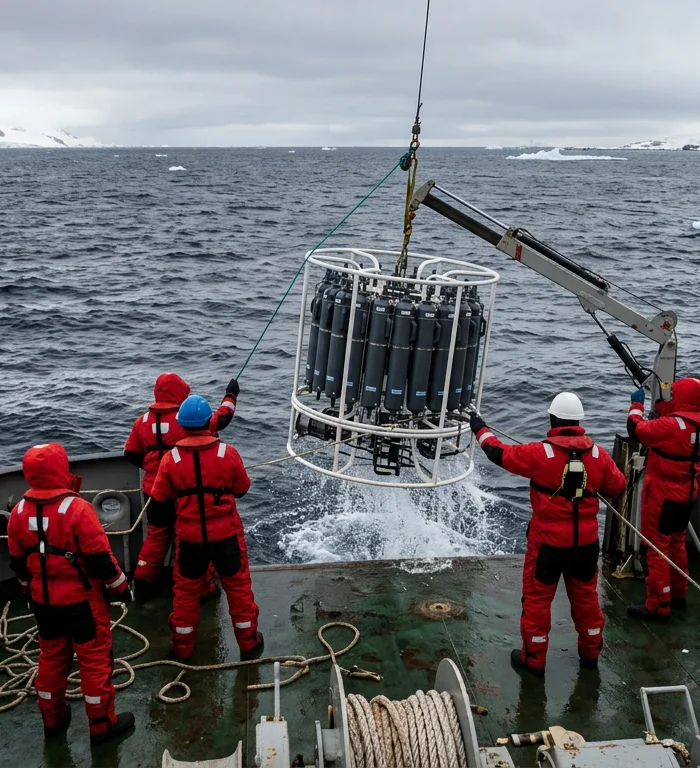
Rapid declines in Antarctic sea ice are altering the density and salinity of the Antarctic Intermediate Water (AAIW), a critical layer of the Southern Ocean. Data indicates this water mass is becoming saltier and denser, potentially destabilizing the marine conveyor belt that regulates global heat, carbon, and nutrient distribution.
This transformation, which has accelerated since 2016, threatens to disrupt the ocean's capacity to sequester carbon and redistribute atmospheric heat. The shift in deep-water dynamics mirrors historical climate transitions but is occurring at an unprecedented rate, creating a feedback loop that may further accelerate sea ice loss.
These changes pose significant risks to long-term climate stability, including potential shifts in global storm tracks, regional sea levels, and rainfall patterns. Policymakers should anticipate increased volatility in climate forecasting models as these deep-ocean transformations influence atmospheric circulation and global heat storage capacity.
More stories
- Nigeria's family-planning budget falls 97%
- Peter Attia reviews cold therapy claims on longevity
- Dietitians advise small swaps for plant-based eating
- TikTok dementia videos mislead in 66.4% of sample, researchers say
- Aberdeen Royal Infirmary faces police inquiry call over 19 deaths
- Bariatric surgery group loses 28.2% after GLP-1 use
- Brainstem nerve cells may curb blood-pressure swings
- Inulin cuts knee arthritis pain in six-week trial
Latest news
- Trump prepares tariffs on China and other major exporters
- New-car buyers pay record average $50,087 in October
- Banks face ECB reserve debate over liquidity and profits
- Investors see Anthropic debut gains fade below $83 a share
- Iraq orders federal control over Kurdish-area oilfields
- Germans oppose Ukraine aid as poll shows support slipping
- Kim Jong-un receives 10 envoys after constitutional shift
- Ukraine claims Libya strike sinks Russian naval corvette