

U.S. Officials Engage Qatar Amidst Iran Policy Uncertainty
U.S. officials met with the Qatari Prime Minister to discuss regional security and Iran, as the administration maintains a naval blockade while signaling…
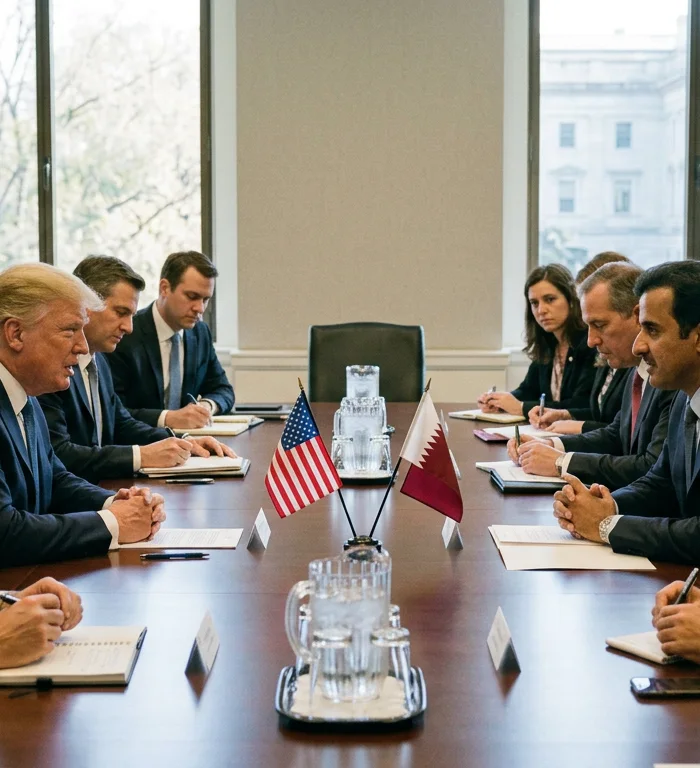
Vice President JD Vance and Secretary of State Marco Rubio held separate meetings with the Prime Minister of Qatar, Sheikh Mohammed bin Abdulrahman bin Jassim Al Thani, to discuss regional security and ongoing mediation efforts regarding the conflict with Iran. These discussions occurred during the U.S.-Qatar Strategic Dialogue, a biannual forum focused on regional stability and bilateral cooperation.
The meetings take place amid conflicting signals from the administration regarding its long-term strategy toward Tehran. While the President has publicly characterized the conflict as effectively over and expressed skepticism toward current negotiation terms, the administration continues to enforce a naval blockade in the Strait of Hormuz. This maritime restriction remains a significant factor in global energy trade volatility.
Vice President JD Vance
Internal administration dynamics appear divided on the necessity of a formal agreement. The Vice President has previously linked domestic electoral outcomes to voter dissatisfaction with the conflict, advocating for a resolution. Conversely, the President has publicly rejected current proposals as insufficient, demanding a "real deal" while simultaneously downplaying the need for resumed major military operations.
Regional allies remain concerned about the potential for Regional allies remain concerned about the potential for escalation, as sporadic military engagements persist. Qatar continues to serve as a primary intermediary, attempting to facilitate a framework that would provide limited sanctions relief to Iran in exchange for the normalization of shipping through the Strait of Hormuz and the eventual resumption of nuclear-related negotiations.
The State Department has officially reaffirmed the importance of the partnership with Doha, emphasizing the need for coordination to deter regional threats. However, no formal policy shifts were announced following the dialogue. Observers are monitoring whether these diplomatic engagements signal a move toward renewed negotiations or a continuation of the current policy of containment and economic pressure.
More stories
- Germans oppose Ukraine aid as poll shows support slipping
- Kim Jong-un receives 10 envoys after constitutional shift
- Ukraine claims Libya strike sinks Russian naval corvette
- COP31 climate talks collapse over fossil fuels and funds
- Russian military faces 1,087 recorded suicides in Ukraine war
- US faces China, Russia in Africa minerals contest
- Tax Justice Network links UK havens to 13.6% of EU tax losses
- Tundu Lissu faces Nov. 6 treason ruling in Tanzania
Latest news
- Trump prepares tariffs on China and other major exporters
- New-car buyers pay record average $50,087 in October
- Banks face ECB reserve debate over liquidity and profits
- Investors see Anthropic debut gains fade below $83 a share
- Iraq orders federal control over Kurdish-area oilfields
- Nvidia shares retreat as AI rally cools before PCE data
- Macy’s parade faces balloon limits as storm winds approach