

US Telecom Vulnerabilities Identified Two Years Prior to Salt Typhoon Espionage
A 2022 report warned of critical US telecom vulnerabilities two years before the Salt Typhoon espionage campaign, highlighting systemic risks that remained…
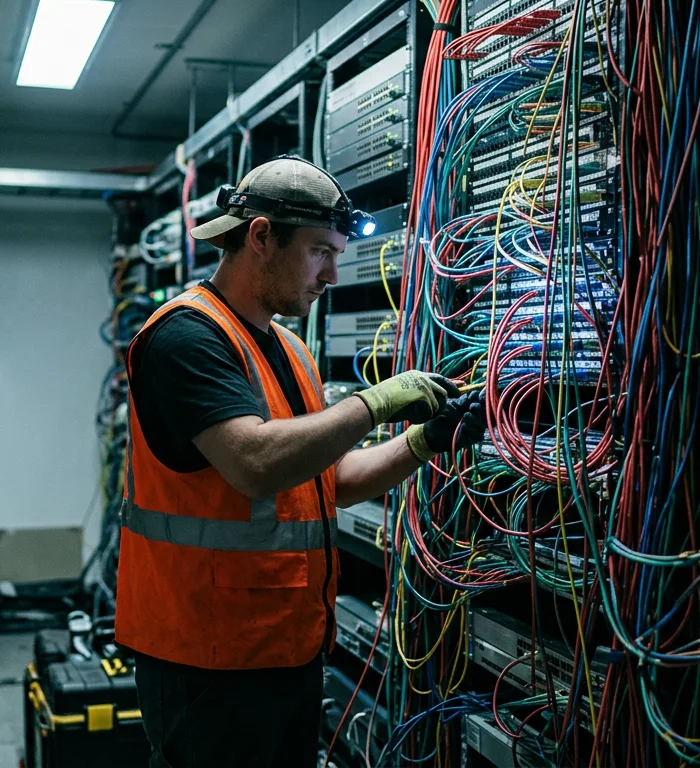
A 2022 government-commissioned report identified critical structural vulnerabilities within United States telecommunications networks, warning that the infrastructure faced a "perilous and untenable" security posture. The findings, which remained withheld from the public for four years, highlighted that international interconnects provided potential adversaries with "trusted" access to domestic systems. The report explicitly cautioned that these networks could be compromised from any global location, a risk profile that was not widely understood at the time of its completion.
These findings preceded the 2024 Salt Typhoon cyberespionage campaign, which targeted major telecommunications providers including Verizon, AT&T, T-Mobile, and Lumen. During this campaign, unauthorized actors successfully accessed telephone audio intercepts and significant volumes of call-record data. The disclosure of the 2022 report, which occurred through legal proceedings, suggests that the systemic weaknesses exploited during the 2024 incidents were documented and known to federal authorities well in advance.
Proponents of the disclosure argue that earlier transparency
Legislative oversight efforts had previously attempted to compel the release of the report to facilitate the implementation of mandatory cybersecurity standards for telecommunications carriers. Proponents of the disclosure argue that earlier transparency could have enabled Congress to mandate security upgrades, potentially mitigating the impact of the subsequent Salt Typhoon breaches. The failure to act on these findings raises questions regarding the efficacy of current regulatory frameworks and the prioritization of infrastructure hardening against state-sponsored cyber threats.
Institutional risk remains elevated as the telecommunications sector continues to serve as a primary vector for intelligence gathering by foreign actors. The reliance on legacy interconnects and the documented ease of remote exploitation indicate that structural security gaps persist. Policymakers are now faced with increased pressure to transition from voluntary guidelines to enforceable security mandates to protect critical communications infrastructure from further unauthorized access.
More stories
- Europe faces attribution gap after 16 cyber, physical incidents
- PIF backs Grand Theft Auto as Saudi players embrace game
- Signal limits screenshots to curb AI access to messages
- Cognition runs Devin Mac workspaces on EC2 in 6 AWS regions
- Salesforce engineers cut 600-failure triage to 90 minutes
- Türkiye Desk: GTA 6 puts console access and network demand in focus
- Hollow-core fiber trial sets 51.3Tb/s benchmark
- GTA 6 pre-orders trigger PS5 and Xbox supply warnings
Latest news
- Trump prepares tariffs on China and other major exporters
- New-car buyers pay record average $50,087 in October
- Banks face ECB reserve debate over liquidity and profits
- Investors see Anthropic debut gains fade below $83 a share
- Iraq orders federal control over Kurdish-area oilfields
- Germans oppose Ukraine aid as poll shows support slipping
- Kim Jong-un receives 10 envoys after constitutional shift
- Ukraine claims Libya strike sinks Russian naval corvette