US military exercises face Trump cut as Korea drills start
President Trump said the US will reduce 10-day military exercises with South Korea, citing Kim ties and Seoul's refusal to join Iran operations.
Lauren Collins ·
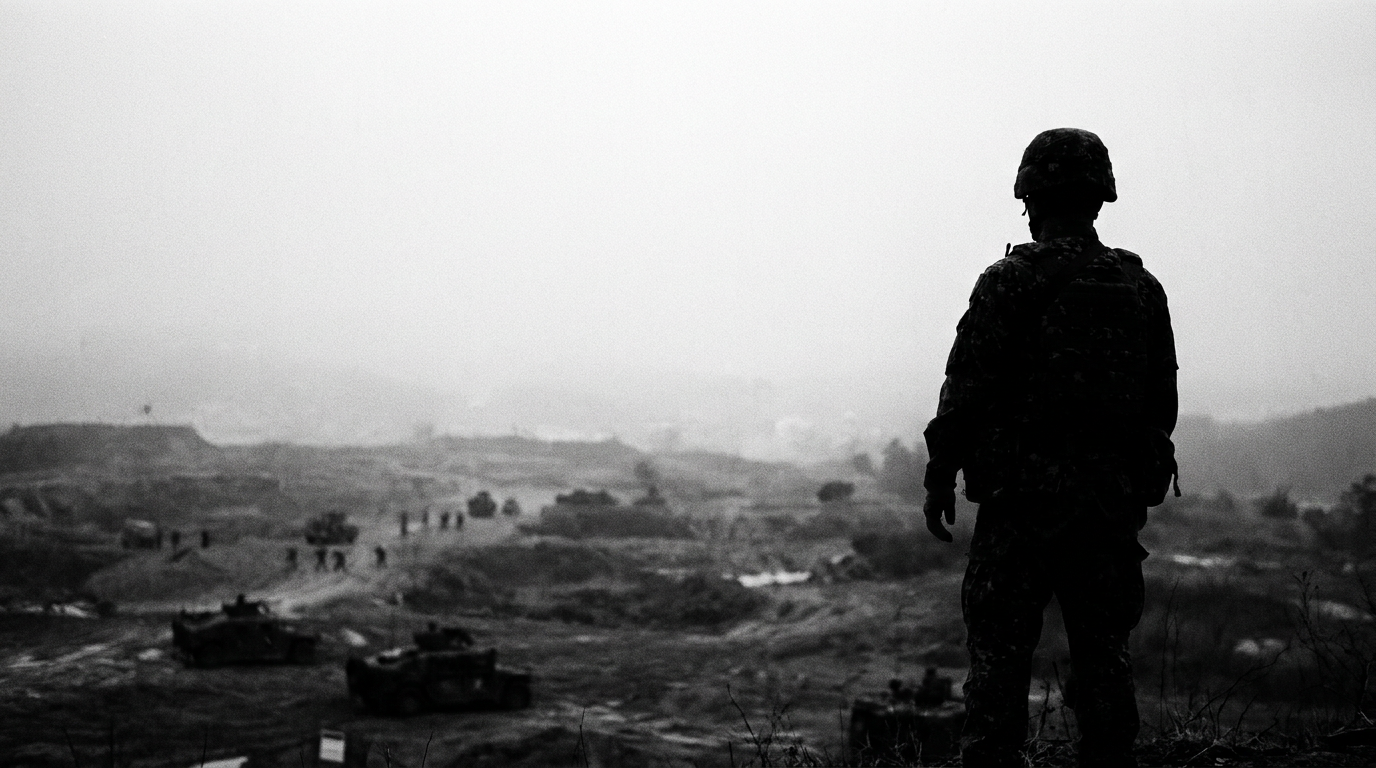
President Trump said the US will reduce 10-day US military exercises with South Korea, testing an alliance built around deterring North Korea.
A 10-day drill begins
The annual Ulchi Freedom Shield exercise was due to start Monday and run for 10 days, according to the schedule described by South Korean authorities. South Korea's Joint Chiefs of Staff said the drills began on time, leaving open whether the program had been reduced after Trump's announcement.
Trump disclosed the planned cut on Sunday, hours before the drills were to begin, in a post on Truth Social. He cited his relationship with North Korean leader Kim Jong Un, the cost to the United States and what he called an inappropriate signal toward Pyongyang.
Camp Humphreys anchors deterrence
South Korea has been a core US treaty ally for more than 70 years, with the partnership built largely around defense against North Korea. The country hosts Camp Humphreys, described by US military authorities as the largest American military installation overseas, with tens of thousands of service members, relatives and Korean nationals connected to the base.
Ulchi Freedom Shield is designed to test the allies' response to North Korea's changing capabilities, including drones, GPS disruption and cyberattacks, according to a joint description of the exercise. Local authorities said at least 18,000 South Korean troops were set to participate, alongside US forces and major equipment.
North Korea has repeatedly criticized US-South Korean drills, and its foreign ministry last week described the planned exercise as a rehearsal for aggressive war and a grave threat to its security. That criticism is long-standing, but Trump's Sunday statement put the US position closer to Pyongyang's preferred reduction in visible allied training.
Iran refusal enters the dispute
Trump also linked the decision to Seoul's refusal to join US efforts aimed at the denuclearization of Iran. In the same post, he said he had asked South Korea's president to participate and was told, in his account, “No thanks!”
The Iran reference adds a second pressure point to a security relationship usually centered on the Korean Peninsula. Trump has criticized allies that have not supported US action against Iran, while South Korea's defense planning remains tied most directly to North Korean missiles, artillery and nuclear forces.
Kim has argued that US action against Iran showed North Korea was right to retain nuclear weapons after denuclearization talks with Washington failed during Trump's first term. In a March speech published by North Korea's state institutions, Kim accused Washington of state-sponsored terrorism and aggression, without naming Iran.
First-term precedent returns
Trump's move echoes decisions from his first term, when the United States and South Korea scaled back some large exercises while Washington pursued talks with Kim. In 2018, Trump said war games on the Korean Peninsula were inappropriate during nuclear negotiations with North Korea.
After the Hanoi summit between Trump and Kim ended without an agreement in March 2019, Washington and Seoul reconfigured annual large-scale exercises into smaller drills. Trump also cited cost then, saying the United States would save hundreds of millions of dollars for which it was not reimbursed.
Three paths for Seoul
If the reduction is limited to visible field components, the global macro effect would likely be contained, while the US-South Korea alliance preserves most readiness through command-post and technical training. The wider defense sector would still face a planning signal: large multinational exercises can be narrowed quickly when diplomacy and cost politics intersect.
If the cut removes major training elements, deterrence planning becomes more difficult for Seoul and Washington, and North Korea may test whether the allies' coordination has weakened. A broader shift of that kind could affect regional risk pricing in Asia by adding uncertainty around US security commitments.
If Seoul presses for clarification or cost-sharing terms, the alliance may move into a bargaining phase rather than an operational rupture. The main open questions are the scale of the reduction, how long it lasts and whether North Korea treats the decision as an opening for talks or as a concession to bank.