Trump-Xi Archives change puts Taiwan messaging under Washington scrutiny
A last-minute change to President Trump’s National Archives visit with Xi Jinping followed Chinese objections to a Taiwan-related document planned for display.
Lauren Collins ·
Trump-Xi Archives change puts Taiwan messaging under Washington scrutiny
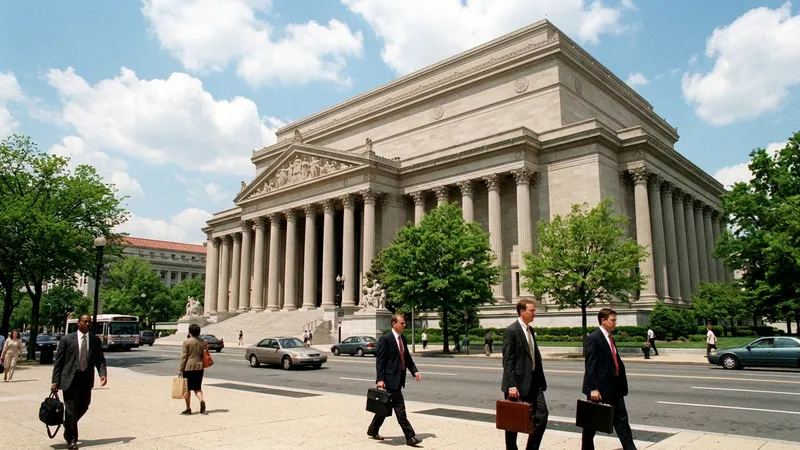
Washington altered a planned National Archives visit for President Trump and Chinese President Xi Jinping after Beijing objected to a Taiwan-related document that U.S. officials had intended to show, according to the report. The September 29 episode matters because it placed an archival display, normally a controlled diplomatic setting, inside the most sensitive dispute in U.S.-China relations.
That timing gives the White House
The change appears to have been made at the end of the planning process, not as part of an early protocol review. That timing gives the White House, the National Security Council and the National Archives a narrow but important question: whether the United States adjusted a public display to reduce diplomatic risk, or whether it gave Beijing a visible role in shaping how Washington presents its own historical record.
Taiwan sits at the center of the U.S.-China security relationship. Beijing claims the island as part of China and opposes official acts that it views as treating Taiwan as sovereign; Washington does not have formal diplomatic relations with Taipei, but it maintains deep unofficial ties and is legally committed to helping Taiwan defend itself under the Taiwan Relations Act.
That balance depends heavily on words, symbols and sequencing. U.S. officials often distinguish between policy changes and public presentation, but Beijing frequently treats ceremonies, maps, statements and historical documents as signals of intent. A document shown during a leader-level visit can therefore carry more weight than its archival status might suggest.
Xi Archives
The National Archives is not usually a front-line player in foreign policy. Its core role is to preserve and provide access to government records, including presidential materials, declassified documents and historical exhibits. But when foreign leaders visit Washington, the choice of what is displayed can become part of the diplomatic script, especially when the documents touch unresolved conflicts.
For the White House, the practical issue is control. A presidential visit is built around choreography: which rooms are used, who speaks, which images are captured and what text is visible to cameras. If a Taiwan-related document was removed, reordered or deemphasized after Chinese displeasure, the decision would show how quickly protocol planning can become a national security judgment.
The NSC’s role would be to weigh the diplomatic cost of proceeding against the political cost of changing course. Proceeding with the document could have pleased China hawks in Congress and reassured Taiwan supporters that Washington would not bend over symbolism. Altering the display could have reduced the chance that a cultural or archival stop overshadowed leader-level talks.
Congress is the domestic pressure point. Lawmakers in both parties have become more willing to challenge the executive branch on China policy, Taiwan arms deliveries, export controls and the handling of classified or declassified material. If committees see the episode as evidence that Beijing influenced a U.S. government display, oversight letters or hearing questions could follow.
The Taiwan issue also travels through allied capitals. Japan, South Korea, Australia and European partners watch how Washington handles Chinese pressure because U.S. signaling affects their own risk calculations. A small adjustment at the Archives would not change alliance policy by itself, but it could feed a broader debate over whether Washington is calibrating language carefully or avoiding friction too visibly.
There is a competing interpretation. Diplomatic visits often change at the last minute for mundane reasons, including timing, security routes, camera positions and curatorial decisions. Without a formal White House, NSC or National Archives explanation, the central claim remains tied to the account that Chinese displeasure over one document precipitated the change.
That distinction matters.
If the alteration was logistical, it belongs in the normal churn of summit planning. If it was a response to Beijing’s objection, it becomes a case study in how foreign governments can test the boundaries of U.S. public diplomacy before a leader even enters the room.
Washington’s challenge is that both choices carry costs. Showing the material risked turning an archival stop into a Taiwan confrontation. Removing it risked creating the appearance that the administration was willing to trade public clarity for smoother atmospherics with Xi.
The White House has an incentive to keep the episode procedural. A procedural explanation limits the story to planning mechanics and avoids elevating the disputed document. But Congress and outside China analysts are likely to focus less on the display itself than on the process: who objected, who approved the change and whether Taiwan policy officials were consulted.
For the National Archives, the concern is institutional. The agency’s authority rests on stewardship, not diplomacy, and its credibility depends on appearing insulated from political or foreign pressure.
If the Archives confirms any change, the wording will matter: a curatorial adjustment reads differently from a modification made after a foreign government complaint.
For Beijing, the mechanism is straightforward. Objecting early and forcefully to Taiwan-related symbolism can discourage future displays that China views as crossing its red lines. If Washington adjusts once, Chinese officials may test whether similar objections work in other public settings, from museum tours to summit backdrops.
For Taipei, the signal is more ambiguous. Taiwan’s government watches not only formal U.S. policy, but also the willingness of U.S. officials to absorb Chinese criticism. A quiet adjustment may be read as tactical risk management; repeated adjustments would be harder to separate from strategic caution.
By December 28, the test is whether the administration treats the Archives change as an isolated planning issue or as a precedent needing explanation.
If the White House or NSC publicly frames the decision as risk control, the National Archives confirms a modification or redaction, and congressional committees seek answers on declassification or display rules, the episode will support the view that Washington traded public exposure of sensitive Taiwan material for tighter messaging to Beijing. If later accounts show the change was unrelated to the document, and no official declassification or oversight trail emerges, the thesis weakens.