Trump faces housing bill deadline after bipartisan vote
A bipartisan housing bill could become law automatically as Trump declines to sign it, putting federal supply rules and investor curbs in focus.
Atlas Newsdesk ·
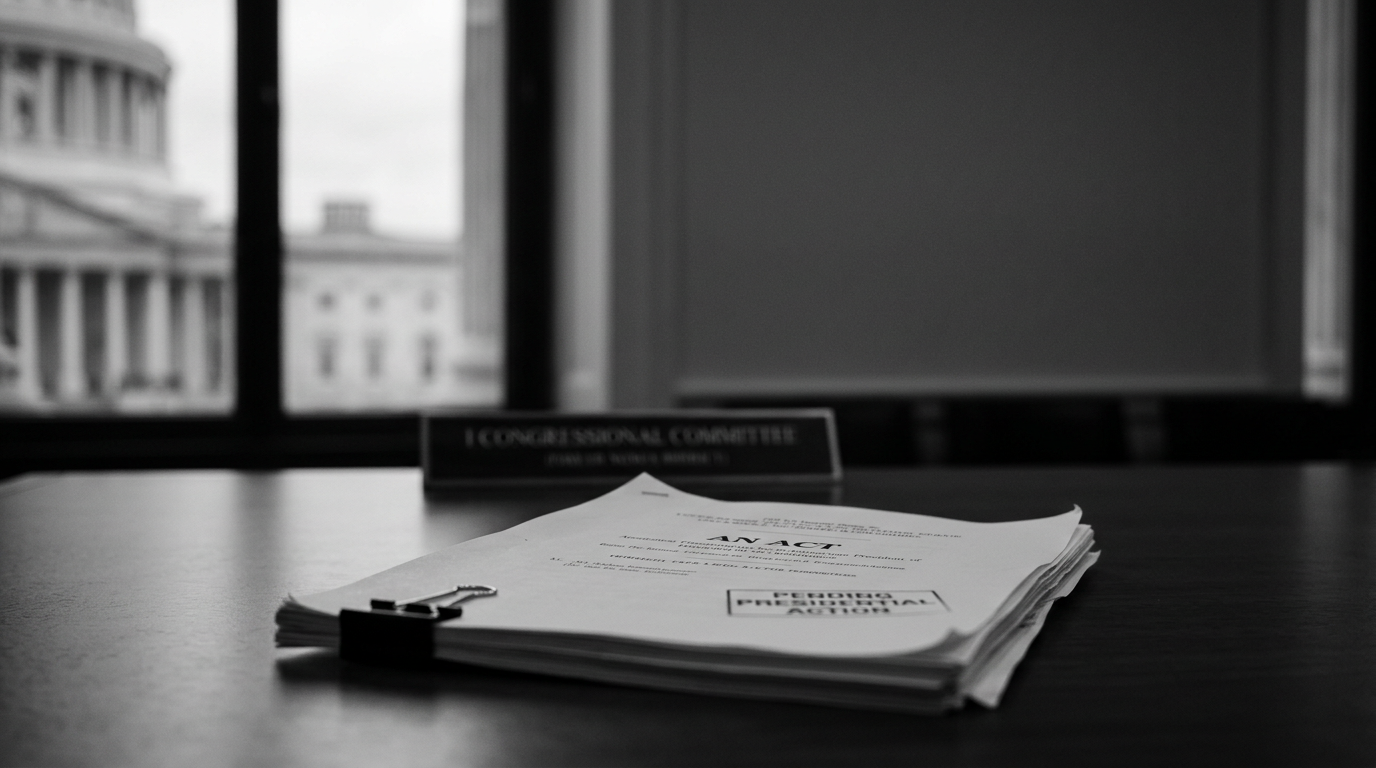
The housing bill is nearing automatic enactment as President Trump lets a 10-day signing deadline approach after Congress passed it in June.
The measure, the 21st Century ROAD to Housing Act, would become law without the president's signature if he neither signs nor vetoes it before the deadline expires. Trump has dismissed the legislation as a "yawn" and later called it "of minor importance," turning a rare bipartisan housing vote into a test of presidential inaction.
Congress approved the bill in both chambers in June, according to the account of its passage, and House Speaker Mike Johnson sent it to the White House on June 29. That step started the 10-day window for Trump to sign the bill, reject it, or allow it to take effect automatically.
Trump's midnight decision window
The deadline was expected to expire around midnight under many readings of the clock, though Trump could still choose to sign or veto before time runs out. His hesitation followed a canceled signing ceremony at the Capitol, where Republicans had expected a formal victory lap on housing policy.
Trump linked his support to a separate voting bill that would tighten identification requirements, a proposal he had promoted for months. The housing bill moved anyway because that voting measure lacked enough Senate support to clear Congress.
The episode matters because the bill reached Trump's desk through cross-party agreement in a Congress often defined by party-line votes on large legislation. Michael Gold, who covers Capitol Hill, described the process as "almost old-school congressional" and said "the final bill is huge."
Federal rules meet investor limits
The policy core is supply. The bill changes federal rules meant to make it easier and less costly for developers to finance projects, secure approvals and start construction.
It also would make it unlawful for large investors to purchase single-family homes, according to the bill description in the source material. Supporters argue that pairing construction incentives with investor restrictions could ease pressure on buyers and renters by adding homes while limiting competition from institutional capital.
Ronda Kaysen, who has tracked the measure, framed the bill as a federal signal after decades of limited national action on housing supply. "Some of the provisions cut through red tape, others make it easier to lend or borrow money," she said. "But more than anything, this bill puts a flag in the ground, telling states, cities and builders that the federal government is taking this crisis seriously."
The source material describes the legislation as the first serious federal attempt in more than 30 years to increase housing production. It does not provide official figures on housing starts, mortgage rates, rents or home prices, so the size of the shortage and the likely price effect cannot be quantified here without outside data.
Builders, renters and single-family markets
Developers would be the first group to feel the operational changes if the bill becomes law. Lower financing friction and fewer federal procedural barriers can shorten project timelines, but the actual effect depends on how agencies write rules and how state and local governments respond.
Renters and prospective buyers are the intended beneficiaries, though relief would not be immediate. New housing supply takes time to plan, finance and build, and federal changes can be slowed by zoning rules, local permitting and construction costs that sit outside Washington's direct control.
The single-family rental sector faces a different channel of pressure. If the investor limits are enforced strictly, large buyers could have less room to compete for homes, potentially shifting demand back toward owner-occupants and smaller landlords.
Three paths after midnight
If Trump allows the deadline to lapse, the bill becomes law without a presidential endorsement, giving Congress the policy win while leaving the White House politically detached from it. For the broader economy, the mechanism would be supply: any eventual increase in homebuilding could reduce shelter pressure, though the source provides no official macro data to size that effect.
If Trump signs the bill, the legal result would be similar but the political message would change. Developers and housing agencies would receive a clearer federal signal, and the industry could interpret that as support for implementation rather than passive acceptance.
If Trump vetoes the measure, the housing push returns to Congress and the bipartisan coalition faces a harder test. The immediate risk would be delay, leaving builders, renters and single-family markets with no new federal framework while lawmakers decide whether to fight for an override or restart negotiations.