

New Material Enhances Carbon Capture Efficiency in Humid Industrial Environments
A newly developed material, BVR-X, enables efficient carbon capture in humid industrial exhaust by segregating water vapor, potentially lowering the energy…
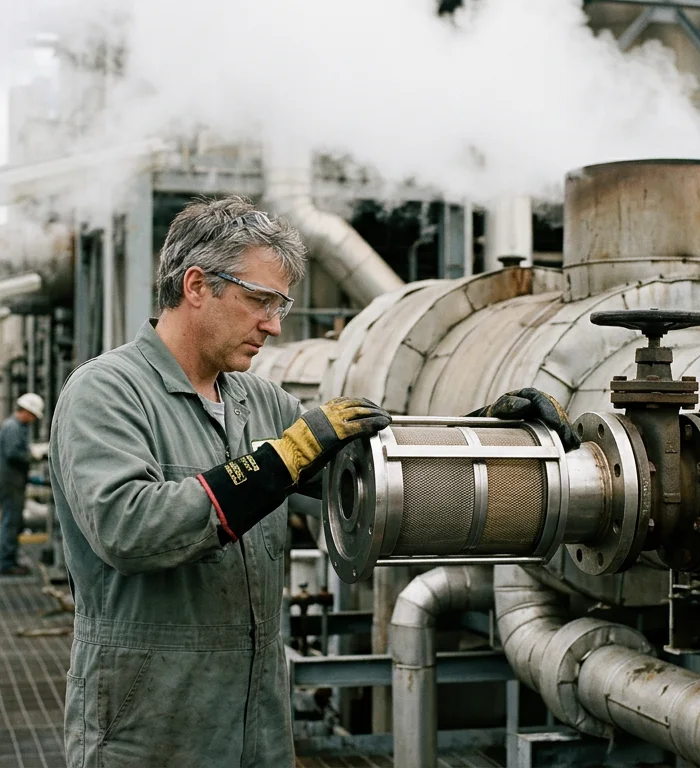
Researchers have developed a metal-organic framework (MOF) material, designated BVR-X, designed to improve the efficiency of carbon capture in industrial settings. The material addresses a primary technical barrier in current carbon capture systems: the degradation of performance caused by high levels of water vapor in industrial exhaust streams.
Existing carbon capture technologies often require energy-intensive pre-drying processes to remove moisture before carbon dioxide can be effectively adsorbed. BVR-X utilizes a specialized internal pore structure that segregates water molecules from carbon dioxide, allowing the material to maintain its capture capacity even in high-humidity environments. This structural design mitigates the competition between water and carbon dioxide for adsorption sites within the material.
Industrial facilities, which account for approximately 30% of greenhouse gas emissions in the United States, currently face significant economic hurdles in implementing carbon capture due to the operational costs associated with gas treatment. By eliminating the need for moisture removal, this material could reduce the capital and energy expenditures required for industrial-scale carbon sequestration. The research team has filed a patent application for the technology, which is intended to facilitate more practical deployment in power plants and manufacturing facilities.
While carbon capture remains a critical component of global net-zero strategies, current large-scale operations remain limited in capacity. The development of adaptable MOFs like BVR-X represents a shift toward materials engineered for the specific, variable conditions of real-world industrial emissions rather than controlled laboratory environments. Future implementation will depend on the scalability of the material's production and its long-term stability under continuous industrial use.
More stories
- Europe faces attribution gap after 16 cyber, physical incidents
- PIF backs Grand Theft Auto as Saudi players embrace game
- Signal limits screenshots to curb AI access to messages
- Cognition runs Devin Mac workspaces on EC2 in 6 AWS regions
- Salesforce engineers cut 600-failure triage to 90 minutes
- Türkiye Desk: GTA 6 puts console access and network demand in focus
- Investors fund Physical AI effort to teach robots cause-effect
- Chinese AI models match U.S. rivals in bug-finding tests
Latest news
- Trump prepares tariffs on China and other major exporters
- New-car buyers pay record average $50,087 in October
- Banks face ECB reserve debate over liquidity and profits
- Investors see Anthropic debut gains fade below $83 a share
- Iraq orders federal control over Kurdish-area oilfields
- Germans oppose Ukraine aid as poll shows support slipping
- Kim Jong-un receives 10 envoys after constitutional shift
- Ukraine claims Libya strike sinks Russian naval corvette