Investors fund Physical AI effort to teach robots cause-effect
Physical AI startup General Intuition raised $320 million on June 25 at a $2.3 billion valuation to train models using gameplay video and action logs.
Jason Kwon ·
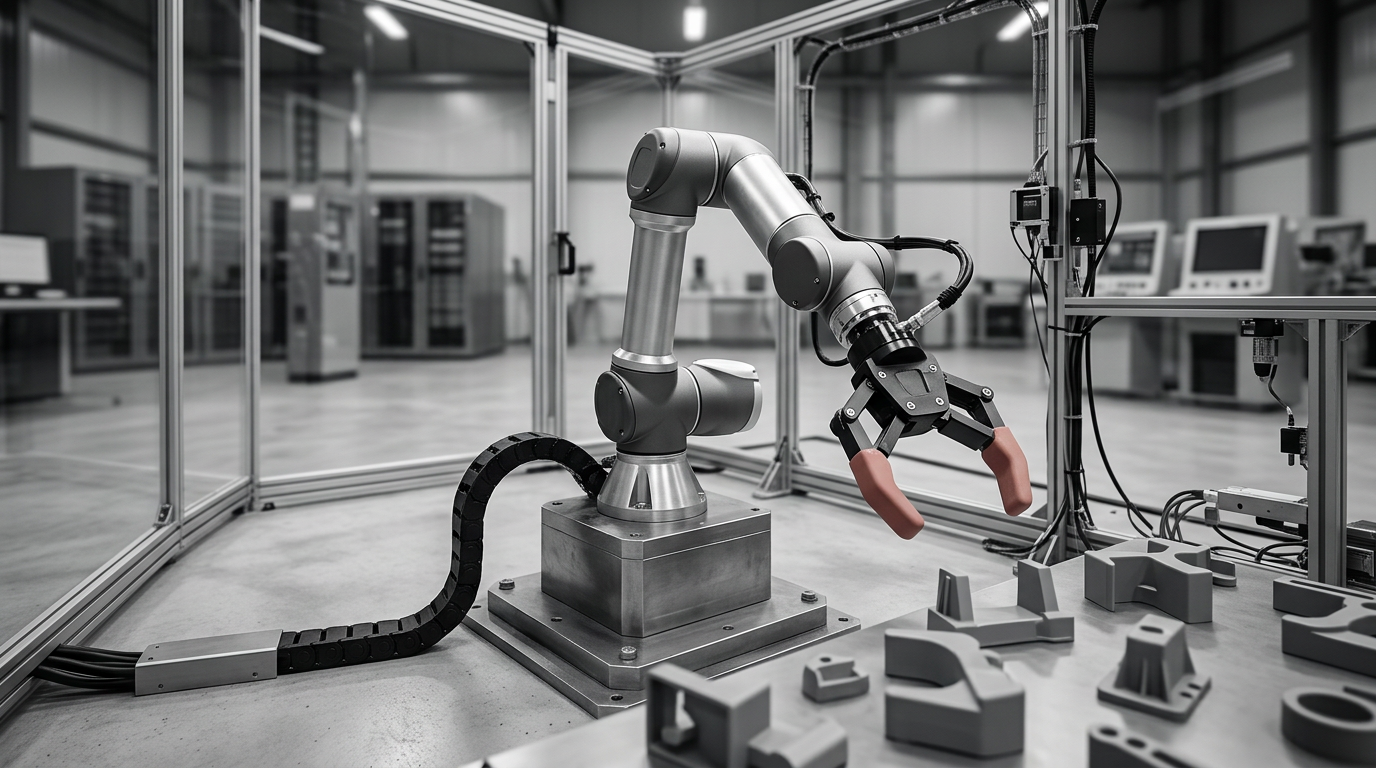
Physical AI startup General Intuition secured $320 million in fresh funding on June 25, signaling growing investor confidence in training machines to act in the real world.
The round valued the company at $2.3 billion and was led by Khosla Ventures. General Catalyst also joined, alongside individual backers Jeff Bezos and Eric Schmidt.
General Intuition’s approach centers on teaching models not only what scenes look like, but how an agent’s decisions change what happens next. The company trains on video-game recordings that include both visuals and precise inputs, such as which button was pressed and when.
Why gameplay data is useful for physical action models
Many video datasets are strong at capturing appearance—objects, layouts, motion, and lighting—but weaker at capturing intent. For systems meant to operate in the physical world, the missing piece is often a reliable mapping between an action and its consequence.
Gameplay clips can provide that linkage because the recording can pair a frame sequence with the player’s exact control signal at the moment it was issued. In practice, that creates an aligned stream of “observation” and “action,” which is a common requirement for training agents that learn cause and effect.
This type of paired data is relatively scarce outside games, where cameras typically capture the outcome but not the underlying control commands. Robots and other embodied systems need both, particularly when the goal is to plan, react, and adjust to changing environments.
Spinout roots in Medal’s massive clip library
General Intuition emerged from Medal, a clip-sharing product built around gameplay highlights. Medal has about 17 million monthly users and has accumulated hundreds of millions of hours of recorded gameplay, according to the information provided.
That archive became the company’s starting training resource, giving it an immediate pool of footage and interaction traces. For a new AI lab, access to a large, already-collected dataset can shorten early research timelines and reduce the cost of assembling data from scratch.
The company’s thesis is that game environments can serve as a scalable training ground for building generalizable action understanding. While games are simulated, they offer consistent instrumentation—every input and state change can be logged with high precision.
Investment signals rising competition in embodied AI
The $320 million raise at a multi-billion-dollar valuation highlights the race to build models that can move from passive perception to decision-making. In this market, differentiation often depends on data advantages and the ability to train systems that learn reliable action-outcome relationships.
General Intuition is positioning gameplay-derived paired data as a key edge. Because the clips capture both what was seen and what was done, they can be used to train systems to predict consequences, not just label objects.
The presence of major firms and prominent technology figures in the round underscores the belief that embodied capability will become a core pillar of next-generation AI. However, the company’s next milestones will likely depend on showing that insights learned from game interactions can translate into robust behavior beyond simulated worlds.
Next steps for the company will include expanding training, improving action models, and demonstrating performance in tasks where cause-and-effect reasoning is essential. Investors and industry watchers will be looking for evidence that game-derived learning can reliably support physical AI applications.