

Ilse Aigner Nominated as Germany’s First Female Presidential Candidate
Ilse Aigner has been nominated as Germany’s first female presidential candidate, backed by a broad coalition, with an election expected in January.
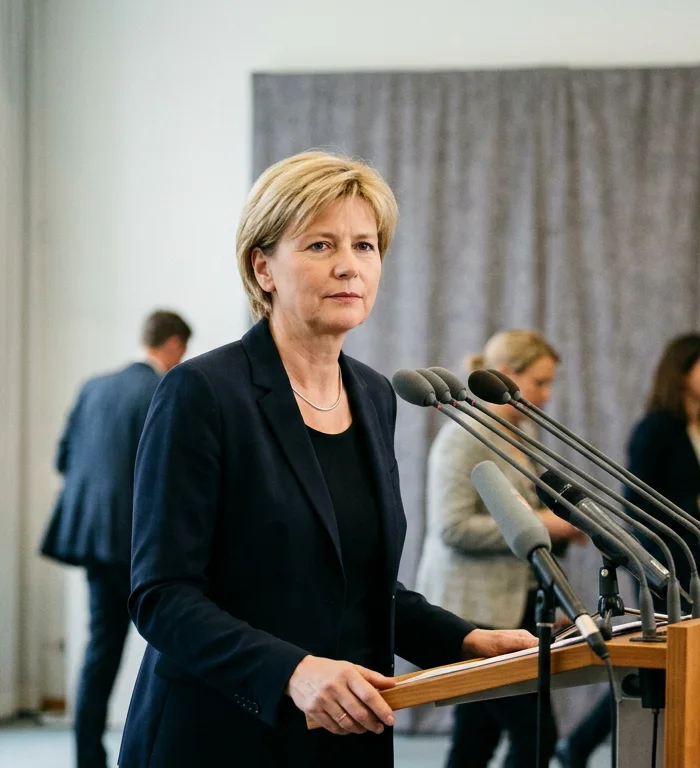
Chancellor Friedrich Merz has officially nominated Ilse Aigner as the candidate for the German presidency. If elected in January, Aigner will succeed Frank-Walter Steinmeier, marking the first time a woman has held the nation’s highest state office. The position is largely ceremonial, but the nomination represents a significant shift in German political history.
Aigner, a 61-year-old Bavarian, currently holds the support of the Christian Democratic Union (CDU), their Social Democrat coalition partners, and the opposition Greens. This broad cross-party backing suggests a high probability of success in the upcoming election. Her candidacy is viewed by political analysts as a strategic move by the Chancellor to address criticism regarding his leadership style and past perceptions of his stance on gender equality.
Her political career includes serving as agriculture minister
Unlike many of her predecessors, Aigner does not hold a law degree, having previously worked as an electrical engineer specializing in helicopter manufacturing. Her political career includes serving as agriculture minister from 2008 to 2013 under the administration of Angela Merkel. She has publicly emphasized her background as a symbol of social mobility and resilience, citing her survival of two major medical diagnoses as formative experiences.
Her nomination has encountered friction with the Alternative für Deutschland (AfD), the largest opposition force in the Bundestag. Aigner declined a request to present herself to the party, prompting accusations from AfD leadership regarding a lack of democratic decorum. Despite this, her established rapport with the political establishment and her reputation for approachability remain central to her platform.
Observers note that Aigner’s public persona is intended to provide a stabilizing, relatable counterpoint to the Chancellor’s more rigid political image. As the transition approaches, stakeholders are monitoring how her presidency might influence the tone of national discourse and the integration of diverse political factions within the federal government.
More stories
- Germans oppose Ukraine aid as poll shows support slipping
- Kim Jong-un receives 10 envoys after constitutional shift
- Ukraine claims Libya strike sinks Russian naval corvette
- COP31 climate talks collapse over fossil fuels and funds
- Russian military faces 1,087 recorded suicides in Ukraine war
- US faces China, Russia in Africa minerals contest
- Europe to join next Ukraine talks, Kushner says
- Melaka vote puts living costs before 687,697 voters
- South Africa health department faces call on boys' HPV shots after 3.6M girls vaccinated
- Singapore tribunal backs dismissal over secret workplace recording
Latest news
- Trump prepares tariffs on China and other major exporters
- New-car buyers pay record average $50,087 in October
- Banks face ECB reserve debate over liquidity and profits
- Investors see Anthropic debut gains fade below $83 a share
- Iraq orders federal control over Kurdish-area oilfields
- Nvidia shares retreat as AI rally cools before PCE data
- Macy’s parade faces balloon limits as storm winds approach