Supreme Court lets Trump mail-ballot order proceed for now
The Supreme Court paused a Boston ruling against President Trump’s mail-ballot order, leaving its legality for later fights.
Lauren Collins ·
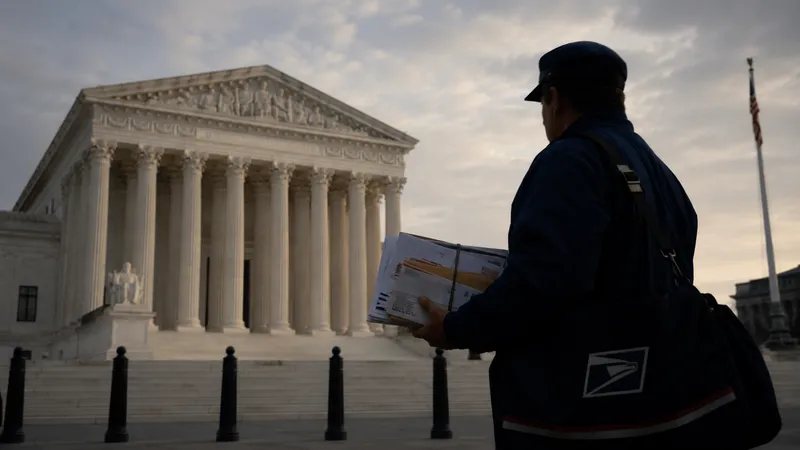
Supreme Court allowed President Trump’s mail-ballot order to move forward for now, reopening a fight over postal rules before November.
The justices on Monday paused one of two rulings by a federal court in Boston that had blocked parts of the executive order from taking full effect before the midterm elections. The order drew dissents from the court’s three liberal justices, leaving the administration with a procedural win rather than a final ruling on presidential power.
Boston case returns quickly
The emergency application asked the justices to decide whether the challenge had arrived too early, not whether President Trump may direct the Postal Service and other agencies to impose the rules. In an unsigned opinion, the court said its action “does not mean that any measure taken by the government to implement the order will necessarily be lawful,” adding, “On that score, time will tell.”
That distinction matters for the calendar. Final Postal Service regulations tied to the order are scheduled to be published Wednesday, which could send the dispute back to US District Judge Indira Talwani in Boston before election officials must make operational decisions.
Postal Service role expands
President Trump’s order directs the Department of Homeland Security to provide states with “citizenship lists,” according to the order described in the case. States would then have to submit their eligible-voter rolls to the Postal Service before mail ballots could be distributed.
The Postal Service would also require special bar-coded envelopes for states using the mail-ballot system. The administration says the structure is aimed at voter fraud, while opponents say the added steps could delay ballots and exclude lawful voters who rely on mail voting.
The ruling gives the White House leverage by allowing implementation planning to continue while the lower-court litigation proceeds. It does not remove the second Boston ruling, and it leaves open challenges once the Postal Service rules are formally issued.
November deadlines narrow choices
Election administration is a deadline business: ballots, envelopes, voter files and postal procedures have to be aligned before voters receive material. A rule published Wednesday would arrive close to the period when states are preparing for November contests, increasing the importance of any quick order from Talwani’s court.
The partisan stakes are clear, though the legal mechanism is procedural. If the order takes effect in time for November, it could help Republicans in close congressional races if mail-ballot access narrows in states or districts where Democratic voters use that method at higher rates.
Trump’s allies gain time and the ability to argue that agencies are merely preparing to administer a lawful executive directive. State officials, voting-rights groups and voters who depend on mailed ballots lose some certainty, because the Supreme Court left implementation measures subject to future review.
Three paths for ballot rules
If the Postal Service rules are published and survive immediate review in Boston, states would need to decide how quickly they can match voter rolls, use bar-coded envelopes and communicate changed requirements. The federal election system would remain formally decentralized, but the practical role of a national postal rule would expand during a compressed campaign period.
If Talwani blocks the regulations after Wednesday, the administration could ask the Supreme Court to intervene again, and states would revert to existing procedures while litigation continues. That path would reduce near-term disruption for election offices but keep the authority question alive beyond the midterms.
If the courts allow partial implementation, the effect would vary by state capacity and existing mail-ballot infrastructure. The central open questions are whether the Postal Service can operationalize the envelope requirement on the election calendar, whether DHS lists can be used without wrongful exclusions, and whether the Supreme Court will treat a later challenge as ripe for a merits ruling.