Super-puff planets surprise scientists in TOI-791 system
Super-puff planets TOI-791 b and c, 1,110 light-years away, have extremely low density, offering new clues on how planets form and evolve.
Jason Kwon ·
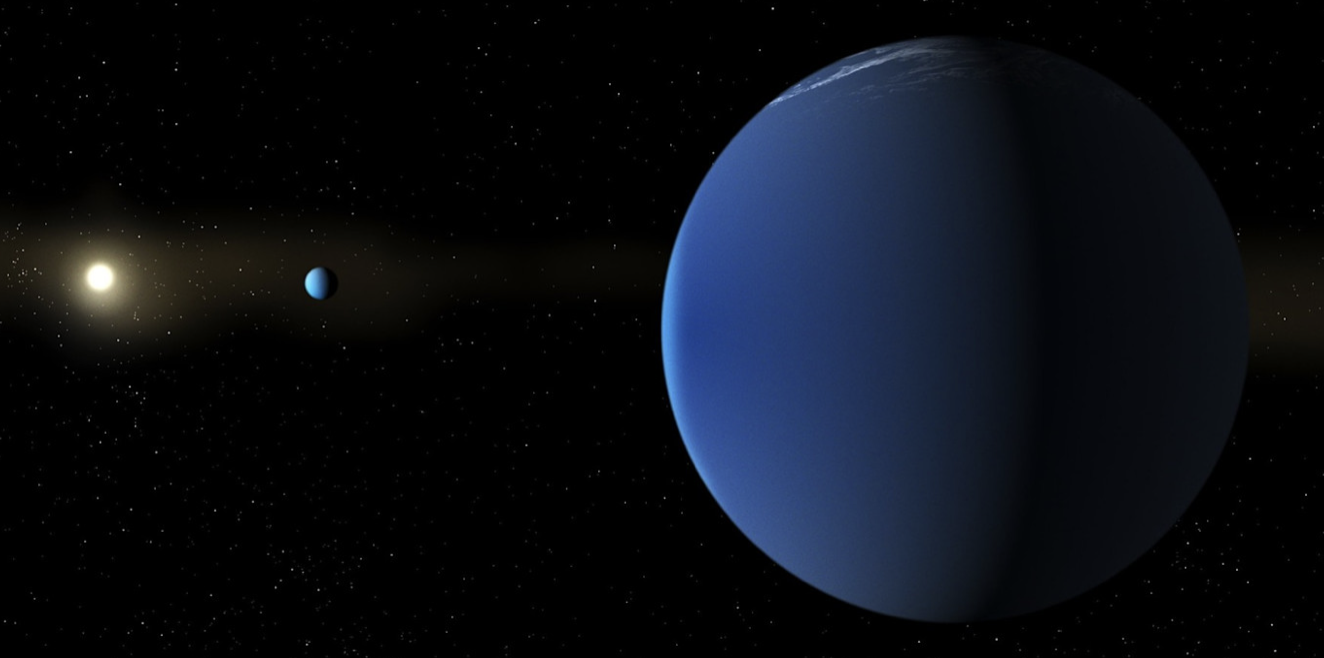
Super-puff planets identified in the TOI-791 system are expanding astronomers’ picture of how worlds can assemble and change over time.
The newly described pair, TOI-791 b and TOI-791 c, sits about 1,110 light years from Earth and is notable for densities so low they have been likened to candyfloss. Researchers say the planets’ unusually “puffy” nature may be linked to extended envelopes dominated by hydrogen and helium.
Rare twin low-density worlds found beyond the solar system
Exoplanets are planets orbiting stars other than the Sun, and they have become a key laboratory for testing theories built largely from the solar system. Within that broader catalogue, super-puff planets stand out because they combine relatively large sizes with strikingly small masses, producing extremely low average density.
Scientists involved in the work said it is uncommon to find even one such object, and rarer still to locate two within the same planetary system. George Dransfield, a University of Oxford researcher and lead author of the study, said only a limited number of super-puff planets have been confirmed so far.
The two TOI-791 planets are described as “twin” super-puffs because they share the same host star and exhibit similarly diffuse bulk properties. Their distance—about 1,110 light years—places them well outside the solar neighbourhood, but still within the reach of modern exoplanet surveys and follow-up measurements.
Why “candyfloss” density matters for planet formation models
Low-density planets force researchers to reconcile how a body can maintain a large radius without adding much mass. One explanation highlighted by the team is that TOI-791 b and c could be wrapped in vast atmospheres rich in hydrogen and helium, gases that are light but can occupy great volume.
That scenario raises questions about how such atmospheres were acquired and retained. Dransfield said these worlds present challenges for ideas about gas accretion, the process by which growing planets gather surrounding material from a protoplanetary disc.
The find also intersects with debates about migration, in which planets shift their orbital positions after forming. If TOI-791 b and c developed farther from their star and moved inward, researchers would need to explain how fragile, expanded atmospheres survived the journey and any increase in stellar radiation.
Finally, the planets invite scrutiny of long-term evolution over the lifetime of the system. Planetary atmospheres can be eroded by stellar activity, and extreme puffiness may be temporary if gases escape over time, meaning TOI-791 b and c could represent a particular phase of planetary development.
Exoplanet diversity and the search for habitable conditions
The broader significance is that discoveries like TOI-791 b and c continue to widen the known range of planetary environments. As exoplanet catalogues have grown, they have repeatedly shown that familiar solar-system categories do not capture the full variety of worlds elsewhere.
Researchers caution that super-puff planets are not straightforward analogues for Earth-like habitability, given their likely thick hydrogen-helium atmospheres. However, their existence shapes understanding of what planetary systems can produce and how common certain outcomes may be.
The next step for scientists will be additional observations to refine the planets’ measured properties and to probe their atmospheres more directly. Better constraints on mass, radius and atmospheric composition would help determine whether TOI-791 b and c are stable long-lived objects or transient, rapidly evolving worlds.