

Sudan households face 68% livelihood gap in IOM survey
Sudan’s emergency is deepening, with price hikes, water shortages, and school closures impacting displaced households and essential service access.
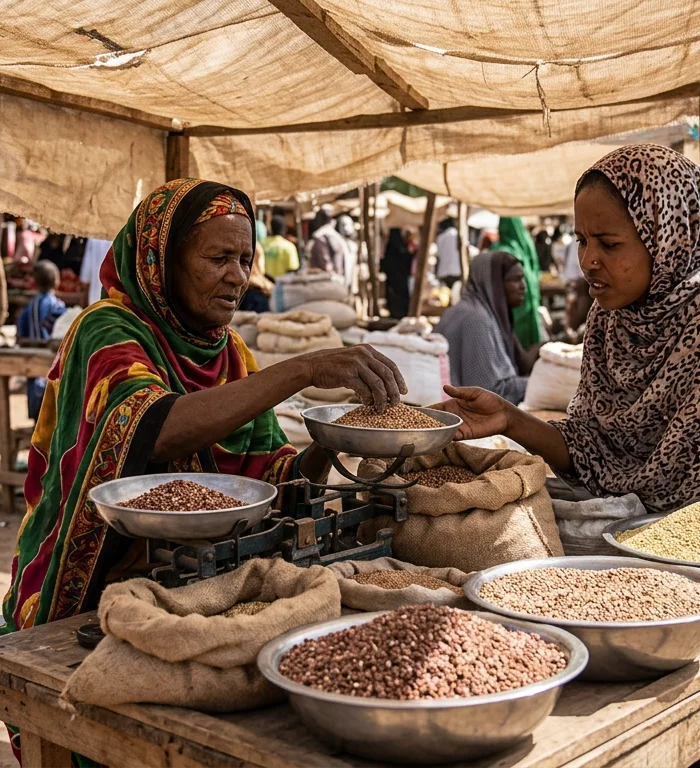
The International Organization for Migration said a Sudan assessment published Nov. 9 found 68% of households had unmet livelihood needs, the largest share across sectors in its 2026 survey.
The Multi-Sector Needs Assessment, based on 23,736 household interviews from July 23 to Aug. 17, shows economic stress reaching beyond food and displacement: 98% reported higher basic-commodity prices.
IOM's Displacement Tracking Matrix said the survey covered 185 localities in all 18 Sudanese states and included displaced, returnee and non-displaced households. The assessment was designed to compare access to essential services across population groups.
The IOM assessment said 68% of households used coping methods it classed at “crisis” level to preserve income. Those measures included spending savings, borrowing, selling productive assets, cutting essential costs or taking insecure work, leaving a gap between livelihood needs and available support.
Food indicators also weakened. The assessment found 31% of households had borderline or poor food consumption in the 2026 survey, including 23% in the borderline category and 8% in the poor category.
Water was the second-largest reported deficit after livelihoods. The IOM assessment found 59% of households had unmet water and sanitation needs, with the rate at 79% among displaced households compared with 56% among non-displaced households.
Education gaps were also widespread. The assessment said 42% of households reported unmet education needs, while 45% of households with children aged 5 to 18 said children did not attend formal education regularly during the 2025-2026 school year.
Access to medical care showed another split by displacement status. Among households that needed care in the three months before the survey, 38% could not obtain treatment; the share was 48% for displaced households, 37% for non-displaced households and 31% for returnee households.
The survey recorded unmet shelter needs for 38% of households and protection-related needs for 37%. Protection gaps reached 60% among displaced households, compared with 33% for non-displaced households.
IOM said unmet needs were consistently higher for displaced people across sectors. In livelihoods, 83% of displaced households reported unmet needs, compared with 66% of non-displaced households.
The organization said the findings were representative at locality level after geographic checks, consistency reviews and field-team verification. It cautioned that smaller-area breakdowns should be treated as indicative, and said three South Kordofan localities — El Buram, Heiban and Um Durein — were not surveyed because of security and administrative restrictions.
Source: Multi-Sector Needs Assessment, International Organization for Migration Displacement Tracking Matrix, Nov. 9, 2026; Dabanga via AllAfrica, Nov. 12, 2026.
More stories
- Monrovia mayor-designate seeks $14.5m city budget
- Iran's attacks hit 25 tankers near Strait of Hormuz
- Russia strikes Ukraine as Odesa faces electricity strain
- Bahrain reports two injuries after Iranian aerial attacks
- Baltic responders fight Sparta II fire after drone strike
- Estonia to close 5 Russia road crossings for six months
- Germany faces integration gaps with 30% migration-background share
- Vance's Iran role shifts as Trump favors blockade pressure
- Albania lawmakers clash over policing of student protests
- Policy Alert seeks Nigeria hearing over $50bn offshore plan
Latest news
- Nvidia board gets Trump input on Jensen Huang return as CEO
- Rwanda faces budget strain from 85% electricity access push
- ICE arrests at Seattle airport draw protests and scrutiny
- AI doubts leave Asian stocks facing a new investment test
- EU rejects COP31 deal as fossil fuel divisions block pact
- Deal Sheet: Fortis shutdown costs over 400 jobs
- Germany to pay about $11 a month into child pension accounts
- Laura Brand curbs prison messages after YouTube dispute