

Strength-focused exercise after 50 reframes heart plans
Dan Augustine says exercise after 50 should include strength training, with cardiovascular benefits and muscle-group focus central to his guidance.
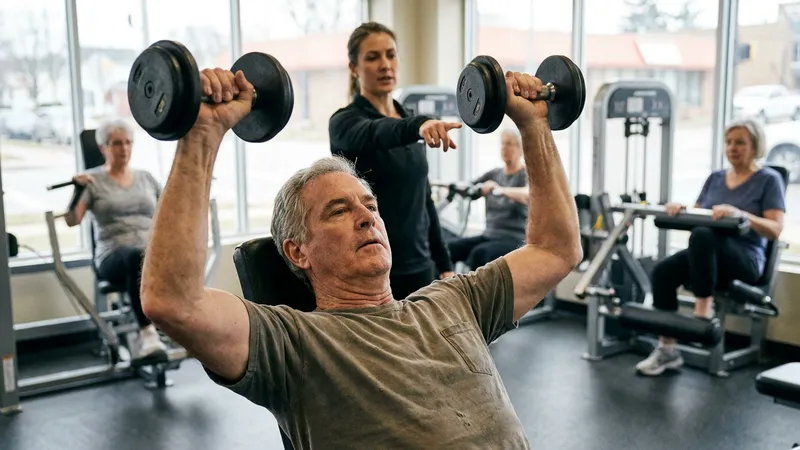
Exercise after 50 is the heart-health brief from sports cardiologist Dan Augustine. He says strength training brings overlooked cardiovascular benefits.
Augustine is identified as Prof Dan Augustine, consultant cardiologist and medical director of Sports Cardiology UK. His guidance, published on October 11, 2026 at 6:00 a.m. BST, frames muscle work as part of keeping the heart strong in later adulthood.
Augustine puts muscle first
The central point is simple: exercise advice after 50 should not be limited to endurance activity. Augustine’s previewed guidance says strength training has cardiovascular value, a claim that matters because many older adults associate heart protection mainly with walking, cycling or other aerobic routines.
The available material does not set out a full training plan, weekly schedule or medical screening process. It does say Augustine highlights three muscle groups as the focus, but those groups are not named in the supplied text.
Three groups remain unnamed
That omission changes the shape of the story. Readers are told that targeted resistance work sits at the center of the advice, but they are not given the specific muscle priorities needed to turn the guidance into a safe routine.
The distinction is important in health reporting. A cardiologist’s general endorsement of strength training is not the same as a personalized prescription for someone with chest pain, arrhythmia, high blood pressure, a recent cardiac procedure or other medical history.
The post-50 exercise gap
The article’s framing points to a familiar tension in midlife fitness: the goal is no longer only performance, weight control or appearance. After 50, exercise advice is often judged by whether it helps preserve function while reducing avoidable strain on the cardiovascular system.
Augustine’s role gives the guidance a clinical setting rather than a purely gym-based one. As a consultant cardiologist and medical director of a sports cardiology organization, he sits at the point where training habits, heart risk and exercise participation meet.
Health advice needs guardrails
The claim that strength training benefits the heart should remain attributed to Augustine unless supported by the full article or independent medical evidence. The supplied material does not include trial data, patient examples, .
It also does not say whether the guidance differs for men and women, beginners and experienced exercisers, or people taking heart medication. Those details would determine whether the advice functions as general lifestyle guidance or as a more structured clinical recommendation.
Clinics and gyms watch uptake
If Augustine’s advice is taken as a broad public-health prompt, the immediate effect would be educational rather than commercial. Older adults may be encouraged to ask whether strength work belongs in their weekly routine, while clinicians may need to explain where it fits beside other forms of exercise.
If the full guidance names specific muscle groups and gives practical boundaries, fitness professionals could translate it into programs for the over-50 market. If it remains a high-level statement, the sector impact is narrower: more attention to resistance training, but little change in practice without clearer instruction.
Next evidence decides reach
For the wider health picture, the macro effect depends on adoption, adherence and safety, none of which is measured in the supplied material. For Augustine and Sports Cardiology UK, the issue is whether a concise message about strength training can be supported by enough detail to guide non-specialists.
The next useful information is concrete: the three muscle groups, the exercises attached to them, the . Until those details are available, the result is a clear directional message, not a complete exercise plan.
More stories
- Ant genomes point to mobile DNA as size driver
- Flu visits double as early season puts vaccines in focus
- Hurricane Isaias halts Gulf output; US approves oil relief
- Unduliner reaches 0.897 accuracy in cancer-genome preprint
- Belgium and WHO Align Strategic Priorities for Global Health Cooperation
- Luxembourg Commits €47.5 Million to WHO Strategic Initiatives
- GLP-1 pills may affect brain reward circuits
- Exercise variety study links broader routines to longevity
Latest news
- Lebanon seizes 500 kg explosives tied by officials to Hezbollah
- Rwanda to Host Formula 1 Grand Prix by 2030, Bypassing South Africa
- Audi Invests in Swiss Campus for Formula 1 Team
- F1 Teams Divided Over Spending Rule Changes Amid Talent Drain Warning
- FIA Addresses F1 Power Unit Glitch After Malaysia Grand Prix
- Nintendo Life polls 673 readers on Ocarina pronunciation
- ODM power-sharing demand tests Ruto as Washington watches Kenya stability
- Turkey's science medals give Washington a new NATO tech problem