Exercise variety study links broader routines to longevity
A Harvard-led study linked exercise variety to lower premature mortality risk, adding activity mix to the debate over how movement supports longevity.
Ayla Demirhan ·
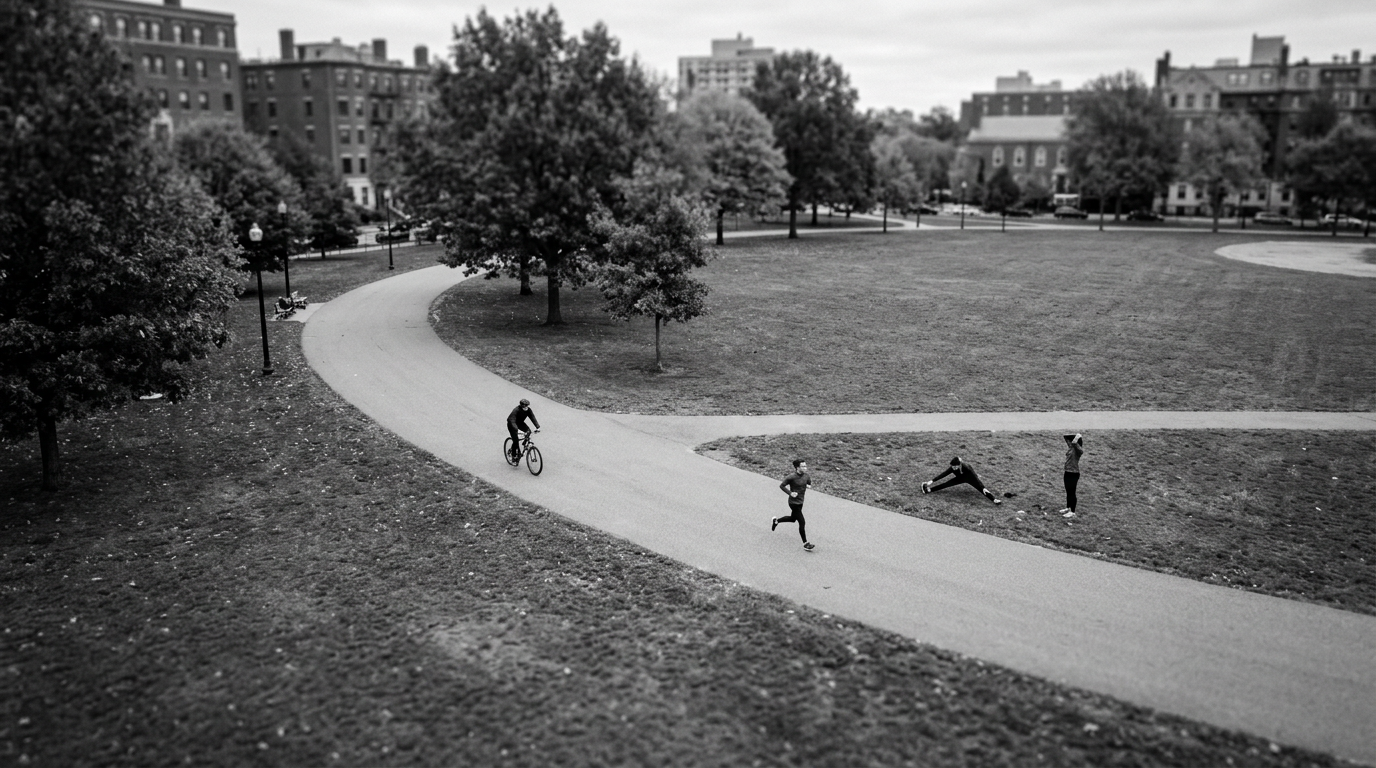
Exercise variety was associated with a 19% lower early-death risk versus low-variety routines in a Harvard-led study of more than 111,000 adults.
Variety held across activity levels
Researchers at Harvard T.H. Chan School of Public Health said the finding held even when total physical activity was kept constant. The study was published in BMJ Medicine on January 20, 2026, according to the school.
The analysis drew on adult men and women followed for more than 30 years through the Nurses’ Health Study and the Health Professionals Follow-Up Study. Participants with the widest mix of activities had a 19% lower risk of premature death compared with those reporting the narrowest mix, after adjustment for health and lifestyle factors.
The distinction is the study’s main contribution. Public-health advice often emphasizes minutes, intensity and consistency; this work adds the number of activity types as a separate measure linked to longevity.
Two cohorts, 30-year follow-up
Participants reported weekly time spent on walking, jogging, running, bicycling, lap swimming, rowing or calisthenics, racket sports, resistance training, yoga or stretching, yardwork, heavy outdoor work and stair climbing. Researchers then scored both activity variety and total activity level before comparing those measures with later mortality outcomes.
The release said few earlier studies had focused directly on whether a broader exercise menu was associated with mortality. That makes the work useful for framing a new question, though its observational design cannot prove that adding another activity type causes people to live longer.
Yang Hu, a research scientist in Harvard Chan School’s Department of Nutrition and corresponding author of the study, framed the result as practical rather than prescriptive. “When deciding how to exercise, keep in mind that there may be extra health benefits to engaging in multiple types of physical activity, rather than relying on a single type alone,” Hu said.
Mixed routines reach more bodies
For individuals, the finding supports a less rigid view of exercise planning. A week that combines walking, resistance work, stretching and gardening may deliver a broader set of physical demands than the same amount of time spent on only one activity.
For health systems, if the association is confirmed in more diverse populations, advice could shift from a narrow minutes-only message toward a broader menu of movement. The mechanism would be behavioral as much as biological: varied routines may be easier to sustain, may reduce overuse strain and may reach people who dislike gym-centered exercise.
For the fitness and wellness industry, the study points toward programs that combine cardio, strength, mobility and outdoor activity rather than selling one format as a complete answer. If the association instead reflects healthier participants being more able to choose many activities, marketing claims would need stronger evidence than this study provides.
Study limits narrow the claim
The authors noted two limits that matter for interpretation. Exercise was self-reported, which can introduce measurement errors, and the cohorts were made up primarily of white health professionals, which limits how far the results can be generalized.
The study’s first authors were Han Han and Jinbo Hu. The research was funded by National Institutes of Health grants, and Edward Giovannucci was funded as an American Cancer Society Clinical Research Professor, according to the article information.
If the finding holds across broader racial, occupational and income groups, the global public-health implication would be a cheaper messaging shift rather than a new technology: encourage more kinds of movement. For Harvard Chan School, replication would strengthen its role in preventive-care research; for the wider health and fitness sector, it would favor programs built around accessible combinations rather than single-activity intensity.
If later studies weaken the link, the established advice remains intact: regular physical activity is still central to health guidance. The open question is whether variety adds independent value beyond the amount, intensity and consistency of exercise people already report.