

Spotify requires 7-day QR check for Family and Duo users
Accounts that miss the scan are moved to the free tier and blocked from joining another shared plan for 12 months.
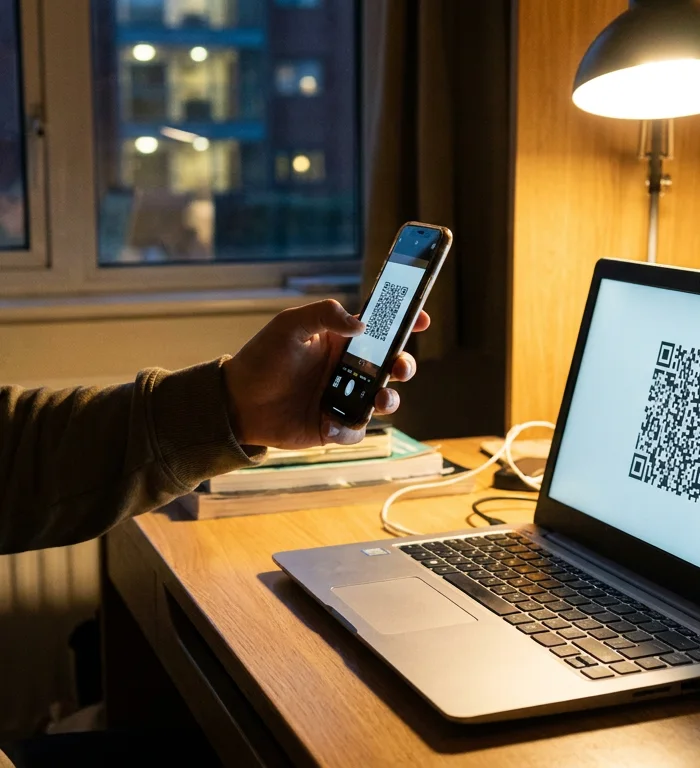
Spotify is requiring Family and Duo members to complete QR-code address verification within seven days or lose paid access, according to support documentation cited by Ars Technica on Oct. 23.
The rule could reshape shared music subscriptions because noncompliant users are moved to the free tier and barred for 12 months from joining another Family or Duo plan, Spotify’s documentation said.
The enforcement applies to Spotify’s requirement that members of multi-user plans live at the same address. Ars Technica said users on Reddit had posted reports of receiving the QR prompt before the support page confirmed the policy.
Goldman Sachs analysts, in an Oct. 15 Music in the Air: 10 Years On report made available by HITS Daily Double, said a household check could lift revenue from shared subscriptions. They estimated that “a meaningful share of family plan users are not actual household members, but rather friends sharing a plan to reduce costs.”
The Goldman report said music services have left room to earn more from multi-user packages. “Most family plans require members to reside at the same address, but enforcement has been minimal in practice,” the analysts said.
The policy places Spotify closer to a subscription playbook already used in video streaming. Netflix began enforcing account-sharing limits in May 2023, later raised prices by as much as 17% that year and, by April 2024, reported 9.3 million added subscriptions and a 54% increase in operating income, according to Ars Technica.
For Spotify, the commercial logic is that shared plans bring users onto the platform but generate less money per listener than individual accounts. Goldman Sachs said family plans’ per-user monetization materially trails individual pricing and that digital service providers may capture more value by lifting prices or tightening eligibility.
The policy also creates practical questions for paying households whose members are temporarily apart. Ars Technica cited situations such as a child away at college or a spouse traveling for work as cases that could be affected even if users believed they were using the plan properly.
More stories
- Europe faces attribution gap after 16 cyber, physical incidents
- PIF backs Grand Theft Auto as Saudi players embrace game
- Signal limits screenshots to curb AI access to messages
- Cognition runs Devin Mac workspaces on EC2 in 6 AWS regions
- Salesforce engineers cut 600-failure triage to 90 minutes
- Türkiye Desk: GTA 6 puts console access and network demand in focus
- Flow Games raises $49 million as labor and safety pressure builds
- CMAS cuts simulated agent-search regret to 0.104
- G7 draws AI companies into top-tier policy discussions
- Survey shows GenAI at 41% in US, while agentic AI lags
Latest news
- Trump prepares tariffs on China and other major exporters
- New-car buyers pay record average $50,087 in October
- Banks face ECB reserve debate over liquidity and profits
- Investors see Anthropic debut gains fade below $83 a share
- Iraq orders federal control over Kurdish-area oilfields
- Germans oppose Ukraine aid as poll shows support slipping
- Kim Jong-un receives 10 envoys after constitutional shift
- Ukraine claims Libya strike sinks Russian naval corvette