

Joint European-Japanese Spacecraft Enters Orbit Around Mercury
A $1.7 billion joint European-Japanese mission has reached Mercury to begin a three-year study of the planet’s surface, interior, and magnetic environment.
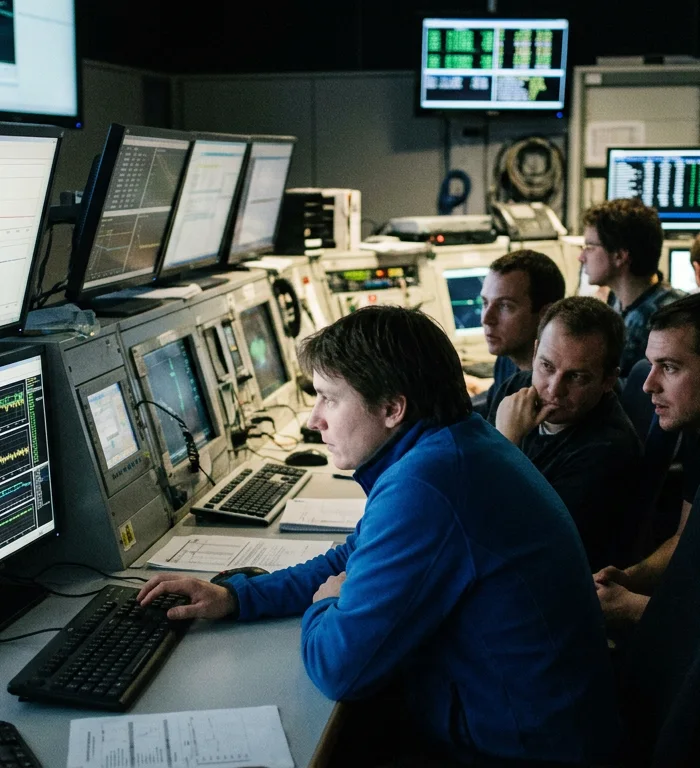
The BepiColombo spacecraft has reached Mercury, marking the second mission in history to enter orbit around the planet. The mission, a joint effort between European and Japanese space agencies, follows an eight-year transit covering approximately 6 billion miles. Flight controllers are scheduled to execute a thruster maneuver to finalize orbital insertion, concluding a complex navigational phase required to counteract the sun's gravitational pull.
The mission carries a total project cost of approximately $1.7 billion. The spacecraft is scheduled to separate into two distinct orbiters in early December, with full scientific operations expected to commence in April. The European component will focus on mapping surface composition and analyzing the planet's interior structure, specifically its unusually large core. The Japanese component will measure the planetary magnetic field and the thin sodium exosphere.
Researchers intend to utilize these instruments to address long-standing questions regarding Mercury’s formation, density, and the presence of ice within permanently shadowed craters. The mission is designed to operate for approximately three years, during which the probes will endure extreme thermal fluctuations ranging from 450°C to -180°C. Upon the depletion of fuel reserves, the orbiters will lose altitude and impact the planetary surface, concluding the mission lifecycle.
This mission represents a significant technical milestone due to the challenges of navigating the inner solar system. The data gathered is expected to provide insights into planetary evolution and the unique geological characteristics of the smallest planet in the solar system. Institutional stakeholders should monitor the transition to scientific operations in April for potential updates on planetary composition and magnetic field data.
More stories
- Europe faces attribution gap after 16 cyber, physical incidents
- PIF backs Grand Theft Auto as Saudi players embrace game
- Signal limits screenshots to curb AI access to messages
- Cognition runs Devin Mac workspaces on EC2 in 6 AWS regions
- Salesforce engineers cut 600-failure triage to 90 minutes
- Türkiye Desk: GTA 6 puts console access and network demand in focus
- SK Hynix eyes Intel Ohio plant for U.S. memory output
- Anthropic secures 2.16GW Australia AI data center lease
Latest news
- Trump prepares tariffs on China and other major exporters
- New-car buyers pay record average $50,087 in October
- Banks face ECB reserve debate over liquidity and profits
- Investors see Anthropic debut gains fade below $83 a share
- Iraq orders federal control over Kurdish-area oilfields
- Germans oppose Ukraine aid as poll shows support slipping
- Kim Jong-un receives 10 envoys after constitutional shift
- Ukraine claims Libya strike sinks Russian naval corvette