South China Sea row prompts Beijing warning for EU nations
China warned Europe over South China Sea statements, escalating a diplomatic dispute that could weigh on China-EU cooperation.
Lauren Collins ·
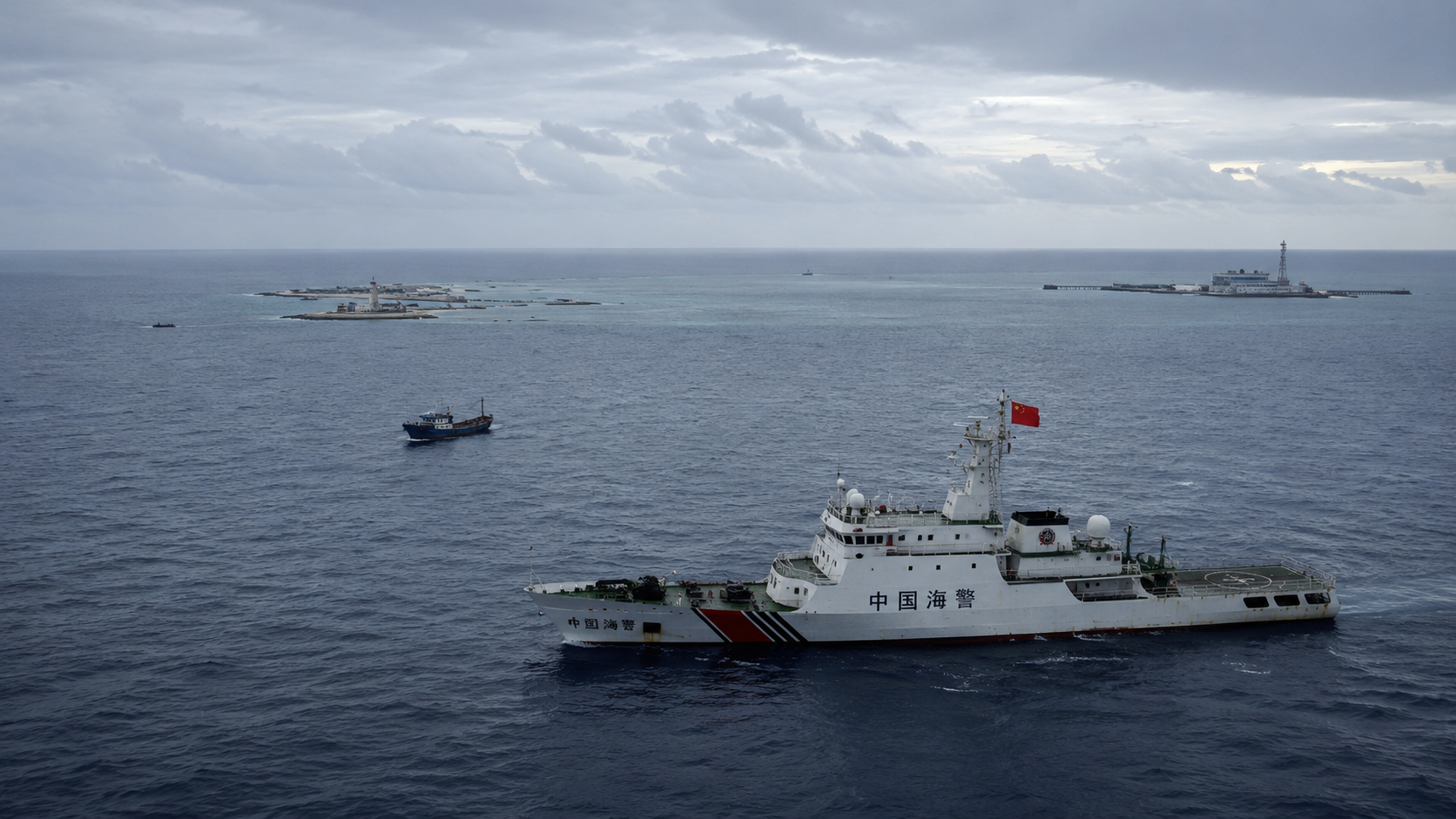
South China Sea tensions drew a warning from Beijing after European governments backed statements rejecting China's maritime claims.
China's foreign ministry said Tuesday that European governments should show caution in their language and actions on the South China Sea. The ministry also urged them to stop supporting what Beijing called an “illegal ruling,” saying continued endorsement could affect China-EU relations and cooperation.
The rebuke came from foreign ministry spokesperson Lin Jian at a daily press briefing. His remarks turned a legal and diplomatic disagreement over maritime claims into a direct test of how far Europe is willing to press Beijing on regional disputes in Asia.
Beijing turns to formal protest
The immediate trigger was a joint statement issued Sunday by several countries, including some European nations. The statement said China's broad claims in the South China Sea lacked legal grounding, and the EU later issued its own related statement.
Lin said Europe was not directly involved in the dispute and should not comment on China's claims of territorial sovereignty and maritime rights. He said China had called in officials from relevant embassies in Beijing, along with the EU delegation to China, to register formal objections.
That step matters because it moves the dispute beyond public messaging. Diplomatic summonses are used to signal that a government views another side's statement or action as serious enough to require an official protest, not just a press response.
Europe's legal message hits Beijing
The South China Sea has long been a flashpoint because Beijing frames its position around sovereignty and maritime rights, while critics focus on the legal basis for those claims. The latest European-linked statements put that legal argument back at the center of the dispute.
China's response also showed how sensitive Beijing remains to outside commentary on the issue. By saying Europe has “no right” to comment, Lin drew a line between countries directly involved in the maritime dispute and outside powers that cite international legal principles.
The source material does not name the European countries involved in the Sunday statement. It also does not identify the ruling Beijing described as illegal, which limits how far the record can be extended without outside documentation.
China-EU cooperation enters the frame
The direct target of Beijing's warning is the political channel between China and Europe. Lin linked European statements on the South China Sea to the broader health of China-EU ties, making clear that Beijing sees the issue as connected to cooperation beyond maritime policy.
No company is named in the source, and no immediate market reaction is reported. The practical exposure for business is therefore indirect: firms with China-Europe interests may watch whether diplomatic tension stays confined to statements or begins to affect policy talks.
If European governments keep endorsing legal critiques of China's maritime claims, Beijing is likely to continue using diplomatic protests as the mechanism of response. Under that path, the global macro effect would remain political rather than measurable from the available record, while China-EU channels could become more difficult and industries exposed to bilateral regulation would face a noisier policy environment.
If European language softens, the near-term pressure on China-EU cooperation could ease. That would not resolve the South China Sea dispute, but it would reduce the chance that this specific exchange spills into unrelated areas of diplomacy.
A third path is wider alignment by more governments behind the Sunday statement's legal position. If that happens, Beijing could broaden its protests to more embassies, Europe would face a sharper choice between legal messaging and relationship management, and companies would have to track whether political friction starts feeding into trade, investment or regulatory discussions.
The main open questions are which countries were summoned, whether the EU repeats its position in future statements and whether Beijing links the issue to other China-EU negotiations. Those markers will show whether this remains a contained diplomatic clash or becomes another strain in a broader relationship already carrying strategic pressure.