

South African police probe 14 election cases
Commissioner Fannie Masemola said voting has largely been peaceful, while police identified hotspots in KwaZulu-Natal and two other provinces.
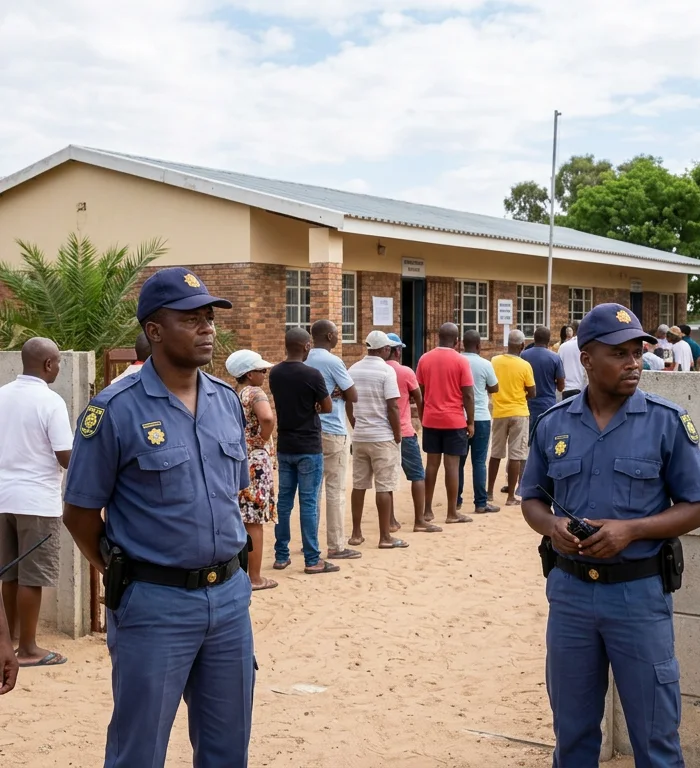
South African Police Service is investigating about 14 cases linked to the Nov. 4 local elections, Commissioner Fannie Masemola said in a government news report published Nov. 4.
The report did not provide total voting-district or expected-voter figures to benchmark the 14 cases; Masemola instead described most cases as arising since Nov. 3 and named hotspots in three provinces.
Masemola spoke at the Electoral Commission of South Africa Results Operations Centre in Midrand as police deployed for the 2026 Local Government Elections. The matters under investigation include alleged ballot-paper theft, intimidation, clashes involving party members and incidents linked to campaign posters, according to the report.
"Since yesterday, most of the cases are related to the elections -- either theft of ballot papers and intimidation, or fighting where there is intolerance among political party members," Masemola said.
Masemola said police were also handling serious offences, including murders reported in KwaZulu-Natal and the Eastern Cape. The report did not state how many murder cases were involved or whether police had linked them directly to the election.
Police identified parts of eThekwini and uMkhanyakude in KwaZulu-Natal as areas requiring attention, along with unspecified parts of the Eastern and Western Cape, Masemola said. In the Amathole District Municipality, officers dispersed a water-related protest so voting could continue, he said.
The election determines municipal councils, the level of government responsible for basic local services. Atlas360 reported on Nov. 3 that voters had to use registered stations and would receive two ballots in metros, with a third possible outside metros.
Masemola said officers must remain politically neutral while on duty. He said police may vote privately for their preferred parties but may not wear party regalia while working because that could undermine public perceptions of impartiality.
Director-General in the Presidency Phindile Baleni urged South Africans to vote, saying municipalities make decisions affecting water, electricity, roads and local economic activity. "The right to participate in democracy comes with the responsibility to vote and therefore, it is important that we vote," she said.
Source: government news report, SAnews.gov.za via AllAfrica, Nov. 4, 2026
More stories
- Monrovia mayor-designate seeks $14.5m city budget
- Iran's attacks hit 25 tankers near Strait of Hormuz
- Russia strikes Ukraine as Odesa faces electricity strain
- Bahrain reports two injuries after Iranian aerial attacks
- Baltic responders fight Sparta II fire after drone strike
- Estonia to close 5 Russia road crossings for six months
- Tinubu seeks $7.7bn external loan for Nigeria deficit
- Oil companies face EU tax calls over Iran-linked margins
- Zimbabwe defends lithium export ban set for January 2027
- Merz condemns Schroeder over Putin birthday celebration
Latest news
- Nvidia board gets Trump input on Jensen Huang return as CEO
- Rwanda faces budget strain from 85% electricity access push
- ICE arrests at Seattle airport draw protests and scrutiny
- AI doubts leave Asian stocks facing a new investment test
- EU rejects COP31 deal as fossil fuel divisions block pact
- Deal Sheet: Fortis shutdown costs over 400 jobs
- Germany to pay about $11 a month into child pension accounts
- Laura Brand curbs prison messages after YouTube dispute