

South African farm employment falls 4% in third quarter
Agbiz’s chief economist argues immigration tensions are not the main driver, pointing instead to costs, disease and drought risks.
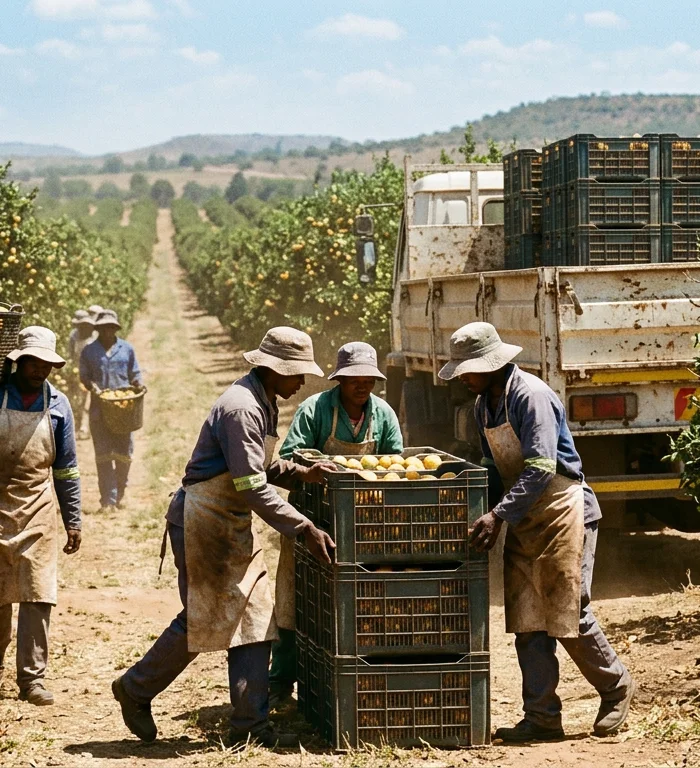
South African agricultural employment fell 4% quarter on quarter to 911,000 jobs in the third quarter of 2026, Wandile Sihlobo wrote in a Daily Maverick op-ed published Nov. 16.
Sihlobo, South Africa’s Agriculture and Land Envoy and chief economist of the Agricultural Business Chamber of South Africa, said the total remained above the sector’s long-run average of about 800,000 jobs.
The data matter because farm labour has become part of South Africa’s immigration debate. Sihlobo argued the figures do not support claims of a sector-wide labour emergency, even though individual farms experienced strain.
Citing August surveys by Agbiz and AgriSA, Sihlobo said labour disruption was limited to certain provinces and industries rather than spread across the agricultural economy. He said the sector did not suffer broad harvest disruption.
“The South African farming sector deals with perishable products; timeliness at every stage of production are key,” Sihlobo wrote. He said delayed harvesting can damage product quality, income and the durability of farming operations.
Sihlobo said primary agriculture employs nearly 1 million people, with more than 300,000 additional workers in related value chains. Foreign workers are part of that workforce, especially in border provinces and labour-intensive industries such as sugarcane and fruit, he wrote.
He also cautioned that the share of migrant workers in total farm employment is hard to measure because many are hired during peak harvest periods. A Daily Maverick graphic accompanying the op-ed, citing labour inspections and agricultural reports, said 30% of farm jobs are temporary or seasonal.
The provincial pattern was uneven. Sihlobo said annual job losses were recorded across most provinces, while the Western Cape and Limpopo gained employment because of stronger labour-intensive fruit production.
He linked weaker hiring conditions to pressure on farm profitability, including higher input costs tied to the Iran-U.S. war and broader trade friction. He also cited foot-and-mouth disease in livestock and job losses in some field crops, despite what he described as an ample harvest year.
Looking ahead, Sihlobo said the 2026-27 agricultural season will be difficult because input costs and an El Niño drought are expected to weigh on production and employment, while the weather outlook improves in later seasons.
More stories
- Rwanda faces budget strain from 85% electricity access push
- AI doubts leave Asian stocks facing a new investment test
- Singapore core inflation eases to 1.5% in October
- Greece targets 2.3% growth in 2027 budget
- US stocks face Goldman warning on further forced selling
- Bitcoin falls below $57,742 as investors seek other bets
- Fed cuts annual rate votes to six in 2028
- Asian shares slip as Nvidia earnings meet rising US yields
- Accordion adds 50 engineers in Stride AI acquisition
- Centerra targets 70% of Azimut projects with $16 million earn-in
Latest news
- ICE arrests at Seattle airport draw protests and scrutiny
- EU rejects COP31 deal as fossil fuel divisions block pact
- Deal Sheet: Fortis shutdown costs over 400 jobs
- Germany to pay about $11 a month into child pension accounts
- Monrovia mayor-designate seeks $14.5m city budget
- Laura Brand curbs prison messages after YouTube dispute
- Nigeria's family-planning budget falls 97%
- Peter Attia reviews cold therapy claims on longevity