

South Africa faces estimated 30.6m missing voters
The Op-Ed frames non-participation as a governance issue for councils formed after Nov. 8 results, not a challenge to the vote’s legality.
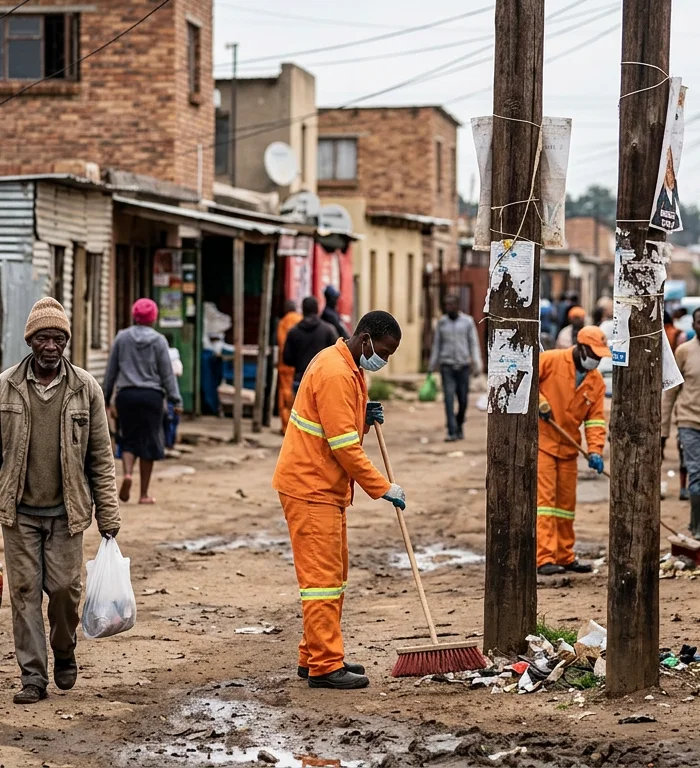
South Africa’s 2026 local elections left about 30.6 million eligible citizens outside the vote, according to an Op-Ed by Glen Mpani and Nyasha Mcbride Mpani published by Daily Maverick on Nov. 11.
The estimate matters because about 14.9 million people voted out of an estimated 45.5 million eligible citizens, while parties and coalition negotiators count seats after results were declared on Nov. 8.
The authors, using estimates from the Political Campaigns Resource Hub, said about 16.3 million eligible citizens were not on the voters’ roll and about 14.3 million registered citizens did not vote. The hub defines a “missing voter” as an eligible person who is either unregistered or registered but does not cast a ballot.
“A rising turnout percentage cannot, on its own, tell us whether the participation gap is closing,” the authors wrote. They said their figures depend on the population methodology and final participation data, but argued the scale of non-participation should be examined alongside party results.
The Op-Ed said the registered population that did not vote changed little from 2021, moving from about 14.2 million to about 14.3 million, while the estimated unregistered population increased. It also said higher participation can coexist with a large gap between eligible residents and those who take part in elections.
The authors stressed that low participation does not invalidate the vote or the authority of councils formed through electoral rules. Their argument is that municipal leaders still face a wider test of public confidence, including among residents who did not register, did not vote or did not support the winning party.
The piece also cautioned against treating non-voters as a single bloc. It said absence from the polls may reflect deliberate abstention, practical barriers, distrust of political choices or disconnection from politics, and that voting data alone cannot explain those reasons.
The local government elections were held on Nov. 4, with images in the article showing voting stations in Polokwane and Alexandra. The next test for incoming councils, according to the Op-Ed, is whether they can govern for residents whose choices were not captured in the ballot count.
More stories
- Monrovia mayor-designate seeks $14.5m city budget
- Iran's attacks hit 25 tankers near Strait of Hormuz
- Russia strikes Ukraine as Odesa faces electricity strain
- Bahrain reports two injuries after Iranian aerial attacks
- Baltic responders fight Sparta II fire after drone strike
- Estonia to close 5 Russia road crossings for six months
- Germans’ democracy satisfaction falls to one-third
- Sudan authorities leave Ahmed Haroun arrest reports unconfirmed
- South Africa records 76,922 HIV prevention jab initiations
- Three Elections Today. A Global Political Test Ahead.
Latest news
- Nvidia board gets Trump input on Jensen Huang return as CEO
- Rwanda faces budget strain from 85% electricity access push
- ICE arrests at Seattle airport draw protests and scrutiny
- AI doubts leave Asian stocks facing a new investment test
- EU rejects COP31 deal as fossil fuel divisions block pact
- Deal Sheet: Fortis shutdown costs over 400 jobs
- Germany to pay about $11 a month into child pension accounts
- Laura Brand curbs prison messages after YouTube dispute