

South Africa faces 70% coal hurdle on 2035 climate pledge
Legal scholars say the government needs binding emissions limits and worker protections to make its climate law and COP31 position credible.
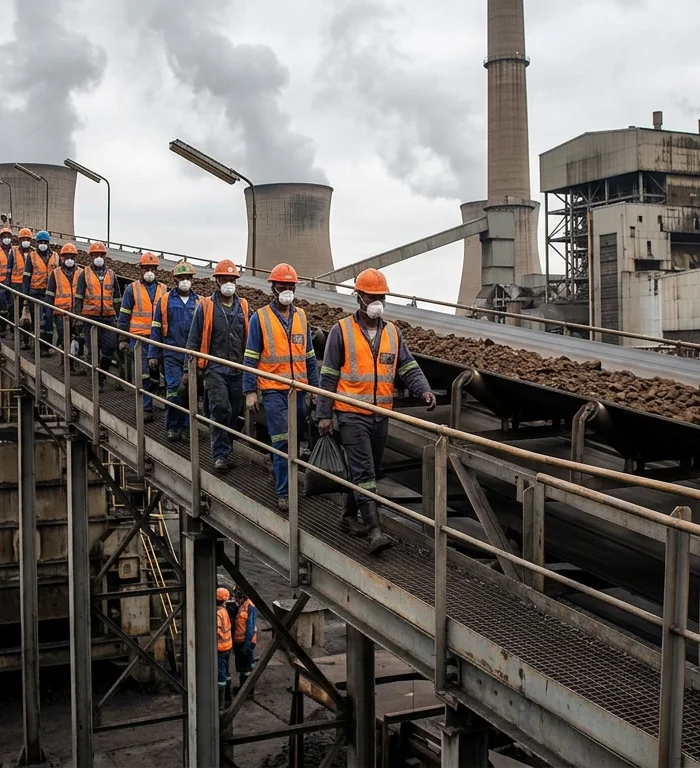
South Africa must turn its 2035 emissions pledge of 320 million to 380 million tonnes into enforceable action, legal scholars said in a The Conversation – Africa article published Nov. 11.
The 60 million-tonne gap between the targets is roughly equal to annual carbon dioxide from 13 million petrol cars, while coal still supplies over 70% of South Africa’s electricity.
The article said South Africa’s latest commitment is contained in its Second Nationally Determined Contribution, a UN climate plan setting national emissions and adaptation pledges. The country previously made its first greenhouse-gas pledge in 2016, adopted a stronger pollution target in 2021 and passed a climate law in 2024.
The authors said South Africa has moved beyond broad promises by setting targets and creating legal tools. But they said its reliance on coal raises questions about whether the government can deliver the cuts it has promised.
The 2035 range also leaves different climate outcomes. The authors cited Climate Action Tracker as saying emissions of 380 million tonnes would leave South Africa off course for the global goal of limiting warming to 1.5°C, while reaching 320 million tonnes would move it closer.
The legal context has tightened. In 2025, the International Court of Justice issued advice saying governments must do more than announce climate plans and must show steps to prevent present and future significant environmental harm. South Africa participated in those proceedings.
The domestic constraint is economic as well as legal. Coal supports electricity supply and jobs, especially in Mpumalanga, and the country depends on international climate finance through loans and grants to shift toward cleaner energy.
The article said South Africa’s constitution and climate law protect the right to a healthy environment, but the government delayed the legal start of some provisions when the Climate Change Act came into force in 2025. Those included clauses covering climate-impact preparation, funding, government responsibilities and some emissions requirements.
South African courts have already enforced environmental duties. In a case brought by Earthlife Africa, a court ruled that the government must properly consider future climate effects before approving new coal-fired power stations. In another air-pollution and health case, the High Court found that failures to address serious pollution violated constitutional environmental rights.
At COP31, the authors said South Africa should explain how it plans to meet the 2035 targets and seek support for cleaner energy, workers and coal-dependent communities. They said major polluters need clear emissions limits, sectoral deadlines and regular public reporting on progress.
Source: Article, The Conversation – Africa, Nov. 11, 2026
More stories
- Monrovia mayor-designate seeks $14.5m city budget
- Iran's attacks hit 25 tankers near Strait of Hormuz
- Russia strikes Ukraine as Odesa faces electricity strain
- Bahrain reports two injuries after Iranian aerial attacks
- Baltic responders fight Sparta II fire after drone strike
- Estonia to close 5 Russia road crossings for six months
- Spanish workers stage first general strike in 14 years
- Singapore faces 400-post Indonesia disinformation push
- South African parties split over Cape Town's 30,000-home annual gap
- Ruto seeks Russian investment in Kenya's $380m trade push
Latest news
- Nvidia board gets Trump input on Jensen Huang return as CEO
- Rwanda faces budget strain from 85% electricity access push
- ICE arrests at Seattle airport draw protests and scrutiny
- AI doubts leave Asian stocks facing a new investment test
- EU rejects COP31 deal as fossil fuel divisions block pact
- Deal Sheet: Fortis shutdown costs over 400 jobs
- Germany to pay about $11 a month into child pension accounts
- Laura Brand curbs prison messages after YouTube dispute