

South Africa arms panel faces probe call over Myanmar exports
Salc wants prosecutors to examine NCACC approvals after an ICJ ruling on Rohingya genocide sharpened scrutiny of past weapons exports.
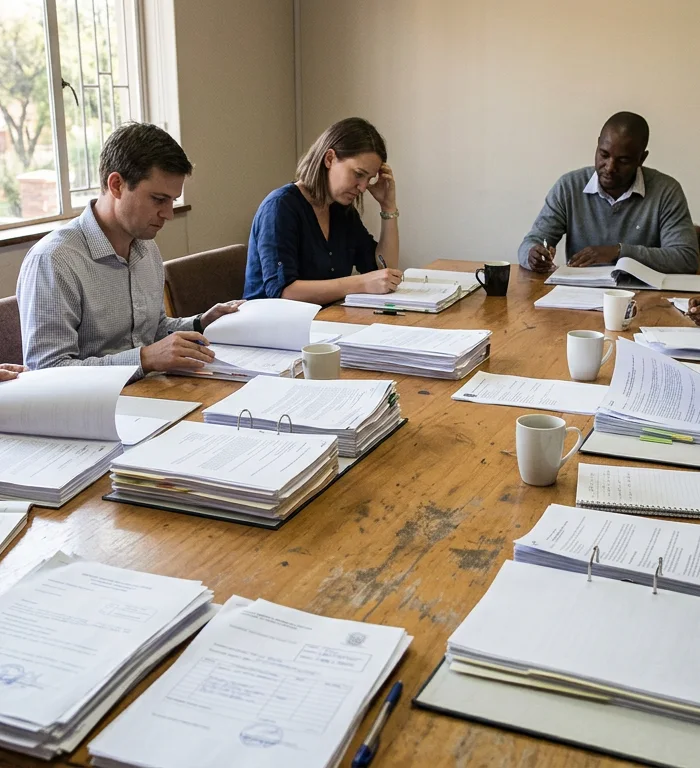
Southern Africa Litigation Centre asked South African prosecutors on Nov. 20 to examine arms approvals and exports to Myanmar from 2017 to 2021, Daily Maverick reported, citing a Salc statement.
The request matters because the International Court of Justice ruled on Nov. 19 that Myanmar’s military government committed genocide against the Rohingya; Salc said it was the court’s first genocide verdict.
Salc directed its call to the National Prosecuting Authority and the Directorate for Priority Crime Investigation. It said any inquiry should include the National Conventional Arms Control Committee, the body of Cabinet ministers and senior officials that authorised the sales.
The ICJ also found that Myanmar violated the Convention on the Prevention and Punishment of the Crime of Genocide, according to the report. The ruling gives South African prosecutors and investigators a fresh legal context for reviewing whether domestic arms-control decisions met South Africa’s obligations.
“The judgment speaks directly to questions that could be relevant for South Africa’s case,” Atilla Kisla, international justice cluster lead at Salc, told Daily Maverick, referring to South Africa’s separate genocide case against Israel at the ICJ.
Kisla said the court confirmed that genocide can occur during a military operation against an armed group. He quoted the ICJ as saying Myanmar’s assessment of the Arakan Rohingya Salvation Army as a terrorist threat “does not preclude the possibility that Myanmar acted with genocidal intent”.
The ruling may also shape legal arguments beyond Myanmar. Kisla said the ICJ found that genocidal intent can exist alongside other aims, but added that the court “was careful not to lower the bar” for proving genocide.
Nicole Fritz, executive director of the Campaign for Free Expression, said the judgment did not reduce the evidentiary threshold. “What is clear from today’s ruling is that there has been no change in the evidentiary standards required by the court to establish genocide,” she said.
Fritz cautioned that the Myanmar decision should not be treated as a preview of any Gaza ruling. She said South Africa’s case would turn on its own evidence, including whether the record can only reasonably support an additional intention to destroy a protected group.
South Africa’s government welcomed the ICJ judgment and called on Myanmar to implement it fully, including by investigating people reasonably suspected of acts barred by the Genocide Convention and, where warranted, prosecuting and punishing them.
The government also called on Myanmar to provide restitution and compensation to the Rohingya group and its members for damage not remedied by restitution, including assurances and guarantees of non-repetition.
More stories
- Monrovia mayor-designate seeks $14.5m city budget
- Iran's attacks hit 25 tankers near Strait of Hormuz
- Russia strikes Ukraine as Odesa faces electricity strain
- Bahrain reports two injuries after Iranian aerial attacks
- Baltic responders fight Sparta II fire after drone strike
- Estonia to close 5 Russia road crossings for six months
- Mashatile seeks GBVF action after 1-in-3 violence finding
- France limits protests as Paris braces for more closures
- Portugal housing shortage prompts call for more building
Latest news
- Rwanda faces budget strain from 85% electricity access push
- ICE arrests at Seattle airport draw protests and scrutiny
- AI doubts leave Asian stocks facing a new investment test
- EU rejects COP31 deal as fossil fuel divisions block pact
- Deal Sheet: Fortis shutdown costs over 400 jobs
- Germany to pay about $11 a month into child pension accounts
- Laura Brand curbs prison messages after YouTube dispute
- Nigeria's family-planning budget falls 97%