

Sharjah pivots to culture and SMEs to bypass oil market volatility
Sharjah is de-emphasizing hydrocarbon reliance by leveraging cultural and knowledge-based sectors to build a distinct competitive identity.
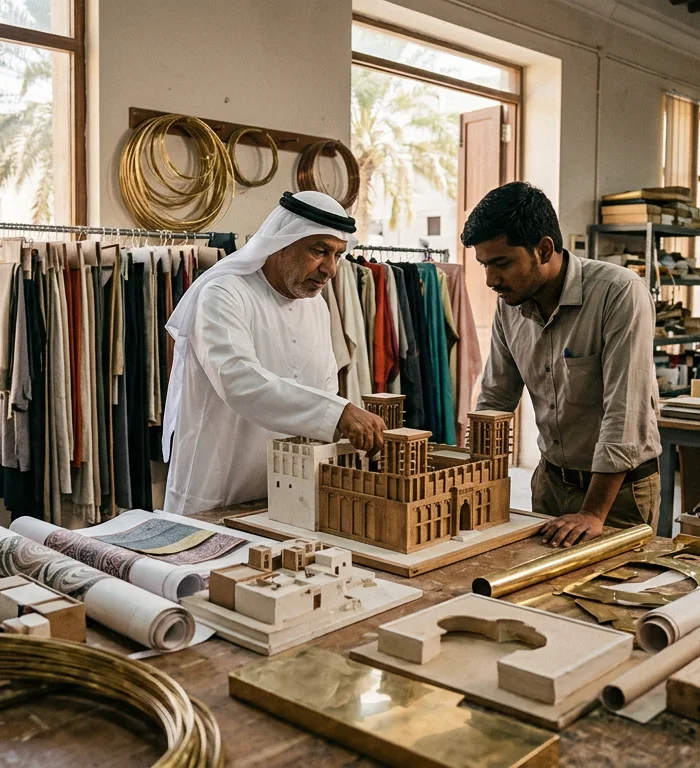
Strategic shift in economic identity
Sharjah is accelerating a pivot toward identity-based economics, positioning its cultural, environmental, and knowledge-based sectors as primary drivers for growth. This move, supported by the Sharjah Economic Development Department, signals a deliberate departure from the traditional, energy-heavy development models prevalent across the region.
Historical reliance on manufacturing
Unlike its neighbors, Sharjah has historically anchored its economy in manufacturing and a robust network of small-to-medium enterprises (SMEs). While Dubai and Abu Dhabi pursued hyper-growth through large-scale infrastructure and hydrocarbon production, Sharjah maintained a more diversified base. This structural focus provided stability but left the emirate seeking new ways to differentiate itself in an increasingly crowded market for foreign direct investment.
Alignment with federal vision
This transformation aligns with the broader "We the UAE 2031" national vision, which encourages individual emirates to identify and cultivate specialized value propositions. By branding itself around heritage and sustainable growth rather than purely extractive wealth, Sharjah aims to insulate its fiscal performance from regional oil market volatility. Regional analysts view this branding as a crucial mechanism for attracting specialized talent and capital flows that might otherwise overlook the emirate.
Competitive advantage in regional markets
The move toward a distinct economic identity serves as a hedge against the fiscal shifts occurring across the Gulf Cooperation Council (GCC). By carving out a niche in tourism and specialized education, the emirate attempts to build a self-sustaining ecosystem that functions independently of federal fiscal transfers from Abu Dhabi. This diversification is intended to foster long-term resilience against cyclical downturns in global energy prices.
Indicators of growth in 2025
The success of this strategy will likely become visible with the release of Sharjah's 2025 fiscal budget and subsequent announcements regarding new industrial or cultural zones. If these investments successfully drive an increase in foreign direct investment into non-hydrocarbon sectors, the emirate may serve as a model for niche economic development in the Northern Emirates. Conversely, a stagnation in SME growth or a return to dependency on federal support would suggest that the emirate’s pivot lacks the necessary scale to displace traditional fiscal models.
More stories
- Germans oppose Ukraine aid as poll shows support slipping
- Kim Jong-un receives 10 envoys after constitutional shift
- Ukraine claims Libya strike sinks Russian naval corvette
- COP31 climate talks collapse over fossil fuels and funds
- Russian military faces 1,087 recorded suicides in Ukraine war
- US faces China, Russia in Africa minerals contest
- Poland starts 2 days of mourning over 6 Krakow deaths
- Home Office faces suit over almost 1,500 EU residency cases
- Thai police arrest 39 in Cambodia-linked laundering probe
- Fire in Limoges leaves heritage loss and service disruption
Latest news
- Trump prepares tariffs on China and other major exporters
- New-car buyers pay record average $50,087 in October
- Banks face ECB reserve debate over liquidity and profits
- Investors see Anthropic debut gains fade below $83 a share
- Iraq orders federal control over Kurdish-area oilfields
- Nvidia shares retreat as AI rally cools before PCE data
- Macy’s parade faces balloon limits as storm winds approach