

New Membrane Technology Could Reduce Oil Refining Energy Consumption by 32%
A new membrane technology that separates crude oil at room temperature could reduce refining energy consumption by 32% and operating costs by 36%.
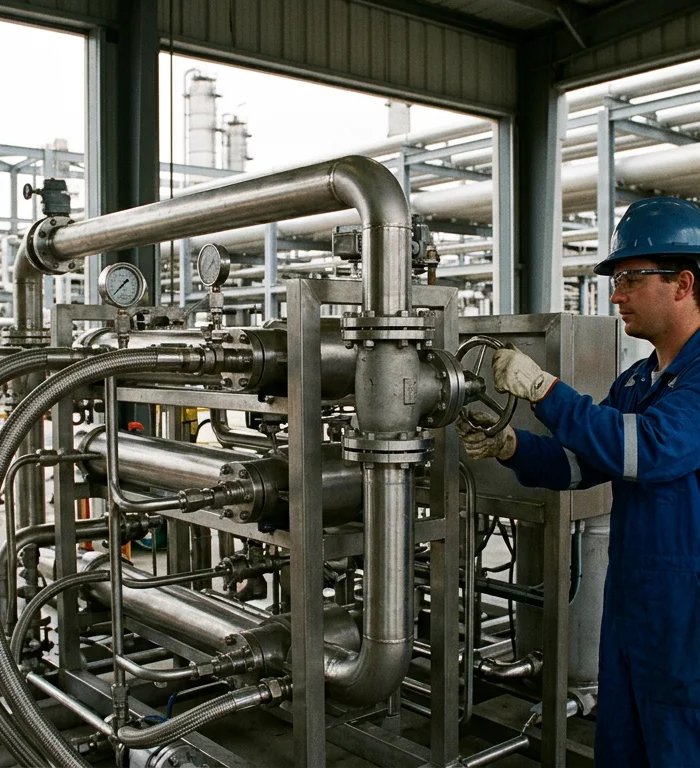
Researchers have developed a membrane-based filtration system capable of separating crude oil components at room temperature. By utilizing a porous polyacrylonitrile (PAN) polymer, the technology facilitates molecular separation without the high-temperature distillation processes currently standard in the petrochemical industry.
The mechanism relies on the accumulation of heavier hydrocarbons within the membrane pores, which creates microscopic channels that selectively filter lighter fractions such as naphtha, gasoline, and kerosene. This process effectively repurposes "fouling," a phenomenon typically viewed as a performance degradation issue, to achieve high-precision separation.
Implementation of this technology is projected to reduce energy consumption in refining by approximately 32%, carbon emissions by 38%, and total operating costs by 36%. Current global crude oil distillation consumes roughly 1,100 terawatt-hours annually, making the potential efficiency gains significant for both industrial overhead and environmental compliance mandates.
The system is designed for modular integration, allowing refineries to install the filtration units upstream of existing distillation equipment. This configuration reduces the thermal load on traditional infrastructure, potentially extending the operational lifespan of existing assets while lowering energy requirements.
Performance testing indicates that the PAN membranes achieve permeation rates 23 times higher than previous membrane designs. The system demonstrated stable performance over a 28-day continuous trial, suggesting the durability required for industrial-scale deployment.
For policymakers and financial stakeholders, this development represents a potential shift in the cost structure of the petrochemical sector. As energy-intensive industries face increasing pressure to meet decarbonization targets, the adoption of low-temperature separation technologies may become a critical factor in maintaining competitive margins and regulatory compliance. Future industrial adoption will depend on the scalability of the membrane manufacturing process and the integration of these modules into existing refinery workflows.
More stories
- Europe faces attribution gap after 16 cyber, physical incidents
- PIF backs Grand Theft Auto as Saudi players embrace game
- Signal limits screenshots to curb AI access to messages
- Cognition runs Devin Mac workspaces on EC2 in 6 AWS regions
- Salesforce engineers cut 600-failure triage to 90 minutes
- Türkiye Desk: GTA 6 puts console access and network demand in focus
- Japan & Asia: Zelda remake tops Japan boxed sales with 537,041
- Nvidia cloud access prompts Chinese overseas rental talks
- Super-puff planets surprise scientists in TOI-791 system
- NASA Swift orbit boost aims to avert reentry this year
Latest news
- Trump prepares tariffs on China and other major exporters
- New-car buyers pay record average $50,087 in October
- Banks face ECB reserve debate over liquidity and profits
- Investors see Anthropic debut gains fade below $83 a share
- Iraq orders federal control over Kurdish-area oilfields
- Germans oppose Ukraine aid as poll shows support slipping
- Kim Jong-un receives 10 envoys after constitutional shift
- Ukraine claims Libya strike sinks Russian naval corvette