

New Research Projects Arctic Winter Sea Ice Loss to Exceed Previous Estimates
New research using ancient climate data suggests Arctic winter sea ice will decline by an additional one million square kilometers, increasing risks of…
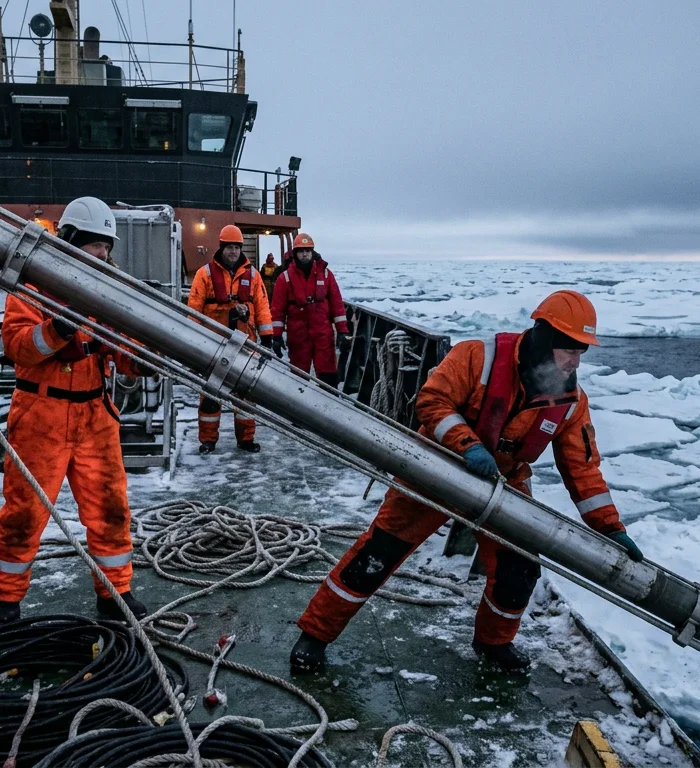
Recent climate modeling research indicates that Arctic winter sea ice coverage may decline by approximately one million square kilometers more than previously projected. This adjustment follows a comparative analysis between modern climate simulations and paleoclimate data derived from mid-Holocene ocean sediment cores.
By utilizing a biomarker known as IP25—produced by algae associated with sea ice—researchers reconstructed historical ice conditions from 6,000 years ago. Applying a Bayesian weighting method to 27 existing climate models, the study identified a systemic positive bias in current projections, which consistently overestimated future winter ice retention.
Arctic Ocean
The refined methodology has reduced uncertainty in these projections by up to 85%. While the historical warming period analyzed was driven by orbital variations rather than anthropogenic factors, the study concludes that the physical response of sea ice to temperature increases remains consistent regardless of the warming source.
Reduced ice cover alters the heat and moisture
The accelerated loss of winter sea ice carries significant implications for global weather patterns. Reduced ice cover alters the heat and moisture exchange between the Arctic Ocean and the atmosphere, a process linked to increased snowfall and colder winter conditions across Europe, the United Kingdom, and North America.
Institutional stakeholders should note that these findings suggest a higher probability of extreme weather volatility in northern latitudes. The improved predictive accuracy provides a more precise baseline for assessing long-term climate risks to infrastructure, energy demand, and regional security in the coming decades.
More stories
- Nigeria's family-planning budget falls 97%
- Peter Attia reviews cold therapy claims on longevity
- Dietitians advise small swaps for plant-based eating
- TikTok dementia videos mislead in 66.4% of sample, researchers say
- Aberdeen Royal Infirmary faces police inquiry call over 19 deaths
- Bariatric surgery group loses 28.2% after GLP-1 use
- GSK wins FDA approval for Nelkarmi after 49% response rate
- Europe faces 35,000 drug-resistance deaths a year
Latest news
- Trump prepares tariffs on China and other major exporters
- New-car buyers pay record average $50,087 in October
- Banks face ECB reserve debate over liquidity and profits
- Investors see Anthropic debut gains fade below $83 a share
- Iraq orders federal control over Kurdish-area oilfields
- Germans oppose Ukraine aid as poll shows support slipping
- Kim Jong-un receives 10 envoys after constitutional shift
- Ukraine claims Libya strike sinks Russian naval corvette