

Saudi Arabia intercepts Houthi drones as Egypt considers defense pact
Saudi forces thwarted an aerial assault near the border while Cairo weighs military cooperation to secure regional shipping lanes.
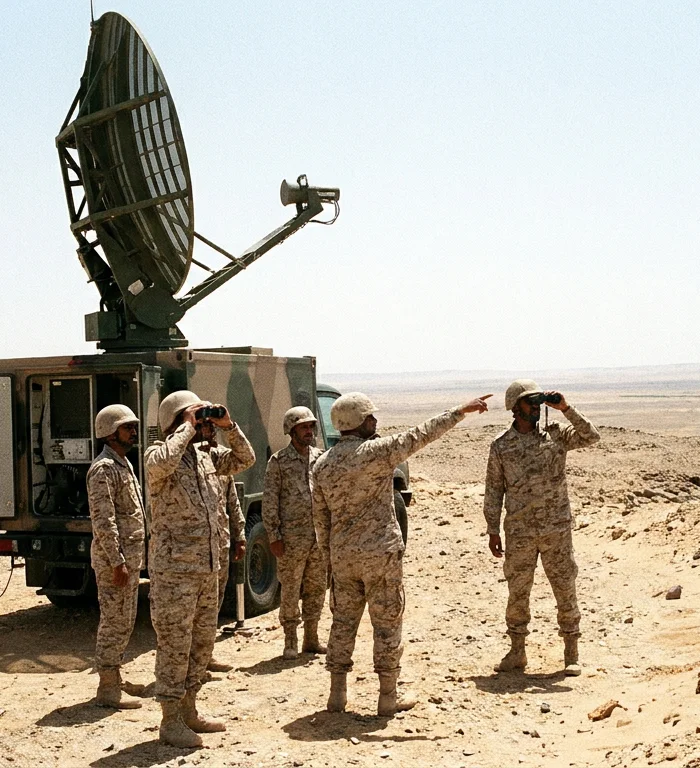
Intercepted drones highlight border instability
Saudi military forces intercepted multiple drones launched by Houthi militants toward Saudi territory, according to regional security assessments. The interception marks a test of the kingdom's air defense capabilities as attacks by the group against maritime and land targets persist throughout the Red Sea corridor.
While the Saudi military maintains active monitoring of the border, reports from Cairo indicate that the Egyptian government is evaluating new forms of defensive support. Officials in Cairo are weighing whether to provide intelligence or logistical aid to assist in neutralizing aerial threats that have disrupted regional security.
Shifting alliances in the Red Sea Security cooperation between Riyadh and Cairo has historically Security cooperation between Riyadh and Cairo has historically fluctuated according to regional geopolitical priorities, including the long-running conflict in Yemen involving the Houthi movement. The current discussions represent a recalibration of security architecture, as both nations grapple with the economic consequences of persistent maritime instability. The Houthi movement, which maintains a presence in Yemen, has transitioned from targeting vessels explicitly linked to Israel to testing the integrated air defense systems of neighboring Arab states. This tactical shift has forced a reassessment of containment strategies that previously relied on passive monitoring or isolated defensive actions. Economic stakes for Suez Canal traffic For Egypt, the primary driver for a more active defensive posture is the significant decline in revenue from the Suez Canal, a critical artery for global trade. Shipping firms have increasingly diverted traffic away from the Bab al-Mandab Strait, directly impacting the throughput of goods and the transit fees that sustain the Egyptian economy.
Cooperation with Saudi Arabia offers a mechanism to Cooperation with Saudi Arabia offers a mechanism to protect these vital corridors, though such an alliance remains sensitive given the complex diplomatic landscape of the Gulf Cooperation Council and its neighbors. Any formal military coordination between Cairo and Riyadh would signal a move toward a unified regional defense response aimed at deterring further maritime disruptions.
Regional security outlook
The effectiveness of these efforts hinges on whether Cairo and Riyadh can formalize a coherent maritime security pact. Observers are watching for the deployment of Egyptian assets or the commencement of shared intelligence operations by May 15, 2025, which would confirm a shift toward an active collaborative defense strategy against Houthi drone capabilities.
More stories
- Germans oppose Ukraine aid as poll shows support slipping
- Kim Jong-un receives 10 envoys after constitutional shift
- Ukraine claims Libya strike sinks Russian naval corvette
- COP31 climate talks collapse over fossil fuels and funds
- Russian military faces 1,087 recorded suicides in Ukraine war
- US faces China, Russia in Africa minerals contest
- Israel condemns West Bank attack on European delegation
- Egypt offers Saudi defense help, seeks parliament's role
- China sanctions two ministers over Taiwan ties
- Robert Pether returns after 5-year Iraq detention
Latest news
- Trump prepares tariffs on China and other major exporters
- New-car buyers pay record average $50,087 in October
- Banks face ECB reserve debate over liquidity and profits
- Investors see Anthropic debut gains fade below $83 a share
- Iraq orders federal control over Kurdish-area oilfields
- Nvidia shares retreat as AI rally cools before PCE data
- Macy’s parade faces balloon limits as storm winds approach