

Microsoft CEO Outlines Economic and Political Risks of Artificial General Intelligence
Microsoft leadership warns that AGI could destabilize global economies and democratic institutions if intelligence becomes overly centralized, advocating for…
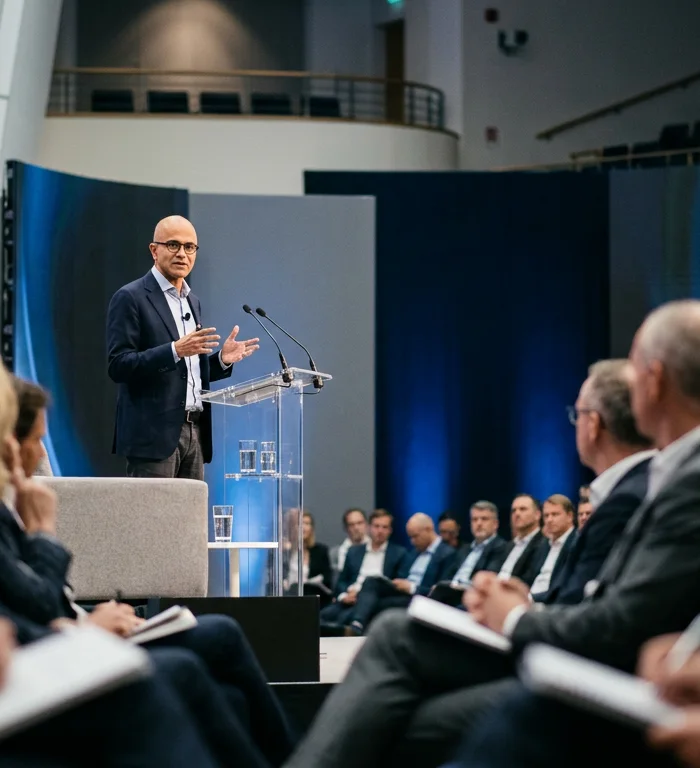
Microsoft leadership has signaled a shift in its strategic outlook regarding Artificial General Intelligence (AGI), focusing on the potential for systemic disruption to global political and economic structures. The company emphasizes that the primary risk associated with AGI is not the emergence of machine consciousness, but rather the potential for extreme market concentration. Executives argue that if intelligence gains significant network effects, the traditional model of the firm and the role of human capital may face fundamental collapse.
Concerns have been raised regarding the possibility of a single entity achieving monopoly status, which could destabilize democratic processes and labor markets. The current discourse suggests that if AI models are permitted to centralize control over economic functions—ranging from financial services to government operations—the resulting imbalance between capital and labor could render existing democratic frameworks unsustainable. This perspective frames the competition between technology firms as a broader societal challenge rather than a narrow pursuit of market capitalization.
To mitigate these risks, Microsoft is advocating for a decentralized model ecosystem. The strategy promotes enterprise-level control over data and the ability for organizations to utilize a diverse array of models rather than relying on a single, monolithic provider. By encouraging a market structure that supports multiple model providers, the company aims to prevent the centralization of intelligence that could otherwise lead to the erosion of competitive markets and institutional sovereignty.
Regarding the internal governance of AI, leadership maintains a skeptical stance on the moral status of frontier models. The company rejects the notion of granting rights to AI systems, aligning with internal policies that prioritize human-centric oversight. This approach serves as a point of differentiation from competitors who have adopted more permissive frameworks regarding the potential sentience or moral standing of their models.
More stories
- The Week in Games: GTA 6 turns attention into cash
- US data centres emit 25.7m tonnes of CO2, Harvard says
- German founders need 3,942 hours to open small business
- Leaked Deutsche Bank files test Sewing's reform narrative
- UAE employers plan 2.8% pay rises for 2027
- Bessent urges Nvidia to seek outside CEO as scrutiny grows
- Daktronics lifts acting CFO base pay to $1.2m in 8-K, adding $170k RSUs
- CapsoVision says it will raise $18m in registered direct stock sale
Latest news
- Social Security raises 2027 benefits 3.6%
- Hull City 2–0 Brighton: When Resilience Beat Reputation
- David Parr House to honor Victorian art-workman with blue plaque
- Iran's attacks hit 25 tankers near Strait of Hormuz
- FCC approves prison cellphone jamming despite 2.5-mile warning
- Russia strikes Ukraine as Odesa faces electricity strain
- Bahrain reports two injuries after Iranian aerial attacks
- Congress tests Black Democrats' growing policy influence