

Australia’s $106 Billion Energy Transition Faces Regional Governance and Social Risks
Australia’s $106 billion renewable energy transition faces significant implementation risks due to fragmented regulation, inadequate community consultation…
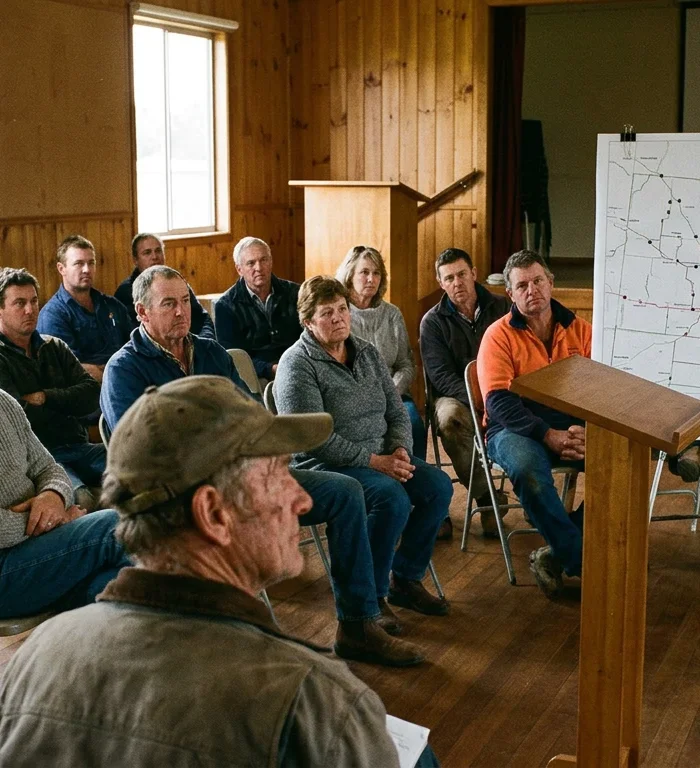
Australia’s transition to net-zero emissions requires an estimated $106 billion in infrastructure investment by 2050, including the construction of 6,000 kilometers of new transmission lines. As of the first half of this year, approximately $32.5 billion in renewable energy projects are currently financed or under construction. These developments are primarily concentrated in rural areas, creating significant pressure on local infrastructure, housing, and essential services.
Governance challenges have emerged as state governments move to fast-track projects through legislative changes, often sidelining local councils in the planning process. The regulatory landscape remains fragmented, with inconsistent community engagement guidelines across jurisdictions. In Victoria, for example, mandatory social value guidelines for renewable projects will not take effect until mid-2027, and critical mineral projects remain subject to separate, less defined legislative frameworks.
This regulatory complexity, combined with perceived inequities in benefit-sharing and compensation, has resulted in sustained community opposition. Recent instances include the abandonment of a planned renewable energy zone in northern Victoria and significant backlash against major transmission projects. Research indicates that while regional communities generally support the clean energy transition, the current lack of transparency and limited opportunities for meaningful local influence are creating project delays.
Institutional risk is compounded by a fragile level of trust between local stakeholders, industry developers, and government bodies. The lack of a unified, place-based approach to planning threatens the long-term viability of energy transition. Policymakers face the dual challenge of maintaining the pace of infrastructure deployment while addressing the socio-economic grievances of host communities to prevent further project cancellations and political volatility.
More stories
- Germans oppose Ukraine aid as poll shows support slipping
- Kim Jong-un receives 10 envoys after constitutional shift
- Ukraine claims Libya strike sinks Russian naval corvette
- COP31 climate talks collapse over fossil fuels and funds
- Russian military faces 1,087 recorded suicides in Ukraine war
- US faces China, Russia in Africa minerals contest
- Europe to join next Ukraine talks, Kushner says
- Melaka vote puts living costs before 687,697 voters
- Kenya records second Ebola death in first outbreak
- Taiz's Republican Hospital warns 270 dialysis patients face shutdown
Latest news
- Trump prepares tariffs on China and other major exporters
- New-car buyers pay record average $50,087 in October
- Banks face ECB reserve debate over liquidity and profits
- Investors see Anthropic debut gains fade below $83 a share
- Iraq orders federal control over Kurdish-area oilfields
- Nvidia shares retreat as AI rally cools before PCE data
- Macy’s parade faces balloon limits as storm winds approach