

Romania rents rise 43.5% as Croatia posts 40.1% jump
Eurostat data cited by Euronews show rental pressures far above inflation in two EU economies, while major euro-area markets recorded much smaller increases.
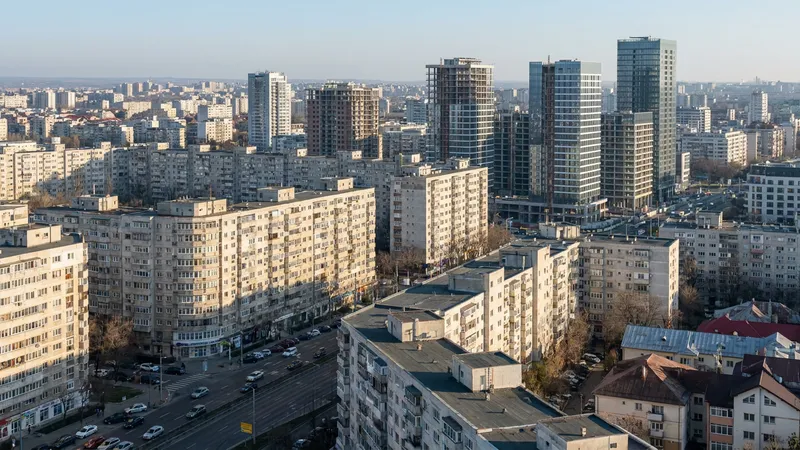
Romania’s housing rents rose 43.5% between the second quarters of 2025 and 2026, while Croatia posted a 40.1% increase, Euronews reported on Oct. 12, citing Eurostat data.
The EU average was 3% over the same period, making the Romanian and Croatian increases exceptional; consumer inflation was 9.5% in Romania and 4.8% in Croatia, leaving real rent gains above 30% in both countries.
Eurostat’s figures cover actual rental payments for housing. Across the EU, the range ran from no annual increase in Finland to the sharp increases in Romania and Croatia, with Slovenia third at 10%, or slightly above 6% after inflation.
Authorities supplying the data to Eurostat pointed to public-sector rents. Romania’s government told Euronews the main factor was “the increase of the administered rent [rent for housing belonging to the public or private domain of the state or administrative territorial units]”.
Dr Adriana M. Soaita of the University of Glasgow questioned whether that explanation can account for the Romanian surge. “Public rental housing is too insignificant as a share of the housing stock,” she told Euronews, adding that even a large rise in those cheaper rents would have limited effect on the national average.
Soaita said another explanation may lie in the composition of homes entering the measured market. “If we still notice high increases in rents after adjusting for inflation, Eurostat methodology and the informal sector, these may be driven by new builds or fully renovated properties entering the market,” she told Euronews.
Croatia’s data provider attributed the increase to a decision by Zagreb’s local authorities to raise a category of social rents. The reported August series also suggests a statistical timing effect: Croatia’s annual rent increase was 4.3% between August 2025 and August 2026, far below the second-quarter comparison, after the index rose sharply between July and August 2025.
Prof. Gojko Bezovan of the University of Zagreb told Euronews that Croatia’s housing market has been shaped by investment demand, with apartments and tourism-linked property becoming a major savings vehicle. He said many new units are not bought for owner-occupation and often sit empty.
Croatia introduced a tax on vacant apartments starting in 2025, according to the Euronews report. Bezovan said rent contracts registered with the Tax Administration increased during 2025 and 2026. “Therefore, a larger number of higher-quality housing units in major cities entered the rental market, with rental rates significantly exceeding the average,” he told Euronews.
The pattern was less severe in the EU’s largest economies. Italy recorded rent inflation of 3.5% between the second quarters of 2025 and 2026, above the EU average of 3%, while Spain rose 2.5%, Germany 2.1% and France 1.6%.
The broader European picture also included faster increases outside the EU. Turkey recorded 49.6% annual rent inflation between the second quarters of 2025 and 2026, but overall inflation above 30% meant its inflation-adjusted rent rise was lower than in Romania and Croatia, Euronews reported.
Other double-digit or near-double-digit increases included Serbia at 12.5%, Bulgaria at 9.9%, North Macedonia at 9.2% and Iceland at 8.6%. Greece rose 7.5%, Czechia 6.2%, Albania 6%, Slovakia and Lithuania 5.3% each, and Portugal 5.2%.
The data leave open how much of the Romanian and Croatian jumps reflects market pressure, policy changes, registration effects or Eurostat measurement. Euronews also cited Emma Rosser, EMEA living research director at JLL, as saying overall Eurostat rent figures do not show broad sharp increases, while growth on new lettings appears stronger.
Source: Euronews article citing Eurostat data, Oct. 12, 2026
More stories
- Chinese Securities Regulator Initiates Market Stabilization Measures
- US Grid-Scale Battery Capacity Reaches Record Highs Amid Residential Decline
- South Africa Faces Heightened Food Security Risks from El Niño Climate Patterns
- Financial Instability and Credit Reliance Among Young Adults
- New South Wales Stamp Duty Revenue Declines Amid Property Market Contraction
- China Pivots to Targeted Stimulus to Tame Mounting Local Debt Crisis
- Volkswagen Aligns With EU Strategy to Shield European Automakers
- Houthis claim four Saudi strikes, putting Aramco in focus
- Global Giants Pay Zero Tax Despite Record Australian Revenue Spikes
- Bank of England Warns Artificial Intelligence Threatens Global Financial Stability
Latest news
- ESA Astronaut Completes Record-Breaking 237-Day International Space Station Mission
- Computational Breakthrough Enables Predictive Modeling of Quantum Material Behavior
- Quantum Vacuum Engineering Increases Superconductor Critical Temperature
- ChangXin Memory Technologies Advances 4F Square DRAM Architecture
- Expansion of Enhanced Geothermal Energy Capacity and Market Scaling
- Houthi strike kills 14 at Riyadh airport
- ASOS Data Breach Highlights Vulnerabilities in Third-Party SaaS Integration
- Emerging Cybersecurity Risks from AI Agent Manipulation