

Volkswagen Aligns With EU Strategy to Shield European Automakers
Volkswagen supports the EU Industrial Accelerator Act, restricting subsidies to local production while halving its model lineup to preserve reserves.
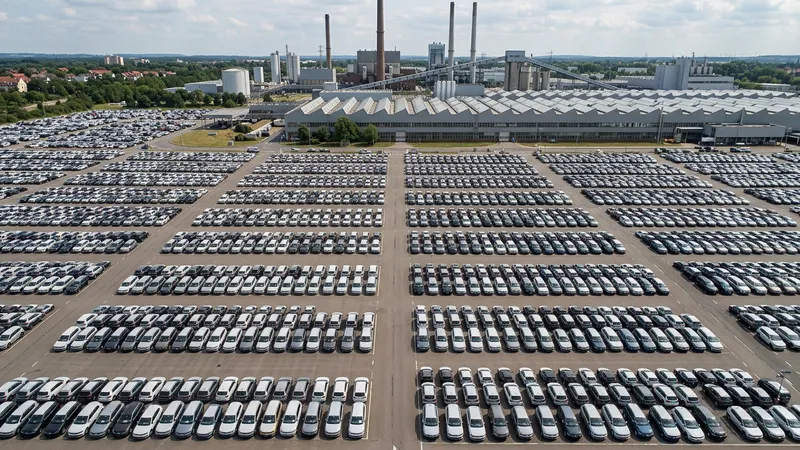
Executive leaders at Volkswagen have formally backed a legislative proposal from the European Union designed to strengthen the continent's automotive sector against mounting foreign competition. The initiative, known as the Industrial Accelerator Act, seeks to restrict public procurement contracts and state financial subsidies solely to items produced within EU member nations.
Officials intend for these strict eligibility rules to narrow the operational advantage held by Chinese car manufacturers, who currently profit from reduced assembly costs and aggressive regional expansion plans.
The legislative framework forms part of a broader regional strategy to preserve Europe's core industrial network and secure long-term technological independence. Continental automakers are currently operating under challenging macroeconomic conditions, marked by high energy expenses, sluggish consumer purchasing, and persistent inflationary forces. Industry experts note that an inability to reinforce domestic manufacturing could introduce systemic risks to the economic recovery of the Eurozone.
Real GDP Growth2.1%USA 2026 — IMF (↑ prev: 2.0%)Inflation (CPI)2.4%USA 2026 — IMF (↓ prev: 2.7%)Unemployment Rate4.1%USA 2026 — IMF (↓ prev: 4.2%)
Internal Restructuring and Product Lineup Reductions
To navigate these commercial headwinds, Volkswagen has launched a major internal restructuring program aimed at protecting corporate margins and securing liquidity. Under this efficiency strategy, the vehicle manufacturer will cut its global product offerings in half, downsizing its lineup from 150 distinct model variants to 75.
Corporate executives consider this portfolio consolidation vital for safeguarding internal cash reserves and defending domestic market share against lower-priced foreign entries.
The push for stricter regional content rules aligns with existing regulatory actions intended to protect vehicle assembly facilities across member states. Recent policy measures include a landmark regulatory agreement designed to restrict the importation of Chinese hybrid vehicles, providing commercial relief to local manufacturing operations.
The growing backing for "Made in Europe" guidelines signals an increasing shift toward trade protectionism to maintain domestic employment and regional value generation.
Global Economic Context and Macroeconomic Indicators
Corporate alignment with EU policy highlights how major industrial entities and European lawmakers are coordinating to address overseas competition alongside internal market pressures. This continental focus on industrial defense unfolds as economic projections for other major markets show shifting conditions.
According to macroeconomic benchmarks provided by the International Monetary Fund, real gross domestic product growth for the United States in 2026 has been revised upward to 2.1 percent from a previous estimate of 2.0 percent. Concurrently, United States inflation projections were reduced from 2.7 percent down to 2.4 percent, while the projected unemployment rate was adjusted downward from 4.2 percent to 4.1 percent.
More stories
- Oil slips after Trump announces energy ceasefire
- Romania rents rise 43.5% as Croatia posts 40.1% jump
- Houthis claim four Saudi strikes, putting Aramco in focus
- India condemns Hormuz ship strikes as seafarers missing
- Liquid Network Freezes L-BTC Redemptions Following Reserve Shortfall
- IEA urges diesel releases as 400 million-barrel pledge lags
- Iran foreign minister's New York stay not extended
- US Treasury Drafts Zervos to Tame Bond Selloff
Latest news
- NBA, FIBA Advance European League Plans After EuroLeague Merger Rejection
- Ericsson CTO says India’s 6G role may deepen telecom lock-in
- Turkey Cabinet agenda puts Syria, Iran and SDF policy back on Washington’s desk
- Reported Sudan Mine Strike Puts Egypt’s US Defense Ties Under Scrutiny
- Airstrike kills 72 at Sudan-Egypt border gold mine
- MTY draws Strong Buy call at 17.82% FCF yield
- AI models cite correct law up to 100%, but reliance lags
- Pope Leo XIV Faces Urgent Surgery to Remove Lung Mass