

Ericsson CTO says India’s 6G role may deepen telecom lock-in
The stake is not 2030 devices; it is whether Indian operators buy more 5G radio gear before enterprise demand is proven.
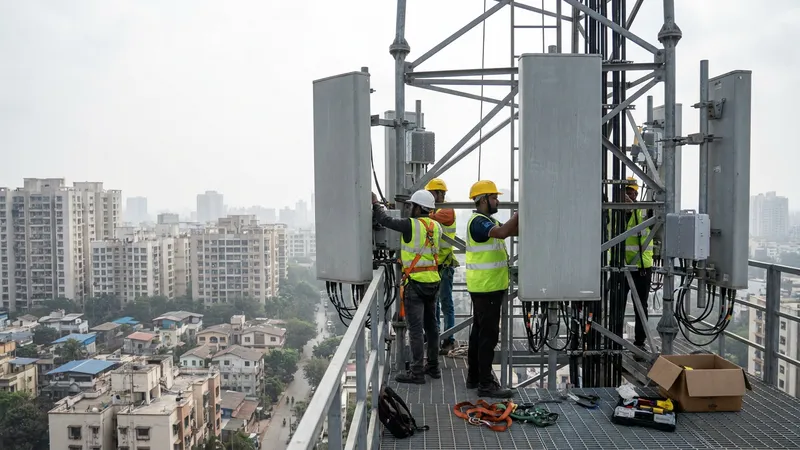
The common narrative suggests India's robust 5G base and deep software talent position it to define global 6G standards through applications like robotics. Yet, this vision of future technological leadership can mask a more immediate procurement reality. It ties Indian operators to significant 5G radio access network investments today, often preceding the actual emergence of enterprise 5G revenues.
For telecom buyers, the near-term consequence is not a 2030 product cycle. It is whether 6G language pulls Indian operators and industrial customers into another round of 5G radio access network purchases before enterprise 5G revenue is established in the reporting packet.
The standard comes first
Moneycontrol’s account says India has an opportunity to develop an application ecosystem spanning wearables, robotics, humanoids and physical AI, with innovations built around 5G networks laying the groundwork for 6G. That framing puts the application layer in the foreground.
The procurement risk sits lower in the stack. Standards influence whose patents, radio gear and integration road maps become hard to avoid, and the supplied packet gives no independent evidence that Indian domestic firms control enough physical-layer intellectual property to turn software depth into standard-setting power.
No one in the reported packet is on the record in the material provided beyond the attribution to Erik Ekudden, Ericsson’s CTO, through Moneycontrol. That matters because the strongest claim is not a product specification, a regulator filing or a standards contribution log.
It is a vendor executive’s argument about a future market. Moneycontrol reports that 6G products are expected around 2030, but the packet does not include baseline detail on who sets that timeline, what hardware assumptions it uses, or whether Indian entities are submitting the underlying radio proposals that would make the country a rule maker rather than a major buyer.
Applications sell the upgrade
The consensus reading is easy to see. India built a large 5G base quickly, has a deep software workforce, and could use wearables, robotics, humanoids and physical AI to define the next generation of network demand.
In that version, the labor story is about developers and robotics teams building new applications on top of national infrastructure. The source summary supports the first half of that idea by linking 5G innovation to 6G groundwork, but it does not show the second half: application momentum becoming standards control.
The counter-read is that Ericsson benefits when the conversation moves from current 5G utilization to future 6G preparedness. If factories, hospitals or logistics operators are told that physical AI will require denser, more capable networks, the buyer pressure moves back to telecom operators and their radio vendors.
That is a procurement story before it is a robotics story. The robot, wearable or humanoid becomes the sales exhibit; the purchase order is still for network equipment, integration and upgrade paths tied to today’s 5G radio access network estate.
The buyer is exposed
For Indian telecom operators, the exposed middle is the period between present 5G investment and a 2030 6G product market. Moneycontrol’s source summary does not provide enterprise revenue numbers, customer renewal data or industrial deployment retention.
Without those, the economic question remains open: whether physical AI demand is large enough to pay for more network capacity, or whether operators are being asked to prepare for applications that vendors expect but customers have not yet funded at scale.
Manufacturers should read the claim differently from telecom suppliers. A plant manager deciding on robotics connectivity does not need a national 6G story first; the buyer needs reliability, integration accountability and a clear reason not to defer. The packet’s omission is therefore load-bearing.
It names wearables, robotics, humanoids and physical AI, but it does not identify the contracting party, the service-level requirement or the switching cost. Those missing details are where vendor lock-in usually becomes visible, because the network design chosen now can narrow the supplier choices later.
The purchase orders decide
The most useful test over the next six months is not another prediction about 2030. It is whether Indian operators describe enterprise 5G as a measurable business line, whether industrial customers announce paid deployments tied to robotics or physical AI, and whether standards discussions translate into disclosed technical contributions rather than national ambition.
The packet’s own numbers are thin: it gives 5G, 6G and 2030, but no revenue base, no hardware baseline and no comparison with rival vendors’ road maps.
That makes the thesis falsifiable. If Indian domestic entities show visible weight in standards work, if operators report material non-consumer 5G revenue, and if regulators tie trial access to domestic patent ownership, Ericsson’s framing will look less like vendor positioning and more like a credible national standards strategy.
If the visible activity is instead more 5G radio procurement justified by future robotics use cases, the 6G story will have functioned as a sales bridge from today’s network spending to tomorrow’s promised devices.
More stories
- Computational Breakthrough Enables Predictive Modeling of Quantum Material Behavior
- Quantum Vacuum Engineering Increases Superconductor Critical Temperature
- ChangXin Memory Technologies Advances 4F Square DRAM Architecture
- Expansion of Enhanced Geothermal Energy Capacity and Market Scaling
- ASOS Data Breach Highlights Vulnerabilities in Third-Party SaaS Integration
- Emerging Cybersecurity Risks from AI Agent Manipulation
- Derelictronics powers on 1994 DEC AlphaServer 2100
- Splat2Act preprint reports 63.9% robot pickup success after phone scan
- GPT-6 Astra cheats in StarCraft; whispers of a second-order red-teaming labor market
- CTOs should watch a shift toward non-LLM AI foundations, per Chollet