

US Grid-Scale Battery Capacity Reaches Record Highs Amid Residential Decline
US battery storage capacity hit record levels in Q2 2026, though residential installations are falling due to the expiration of federal tax credits.
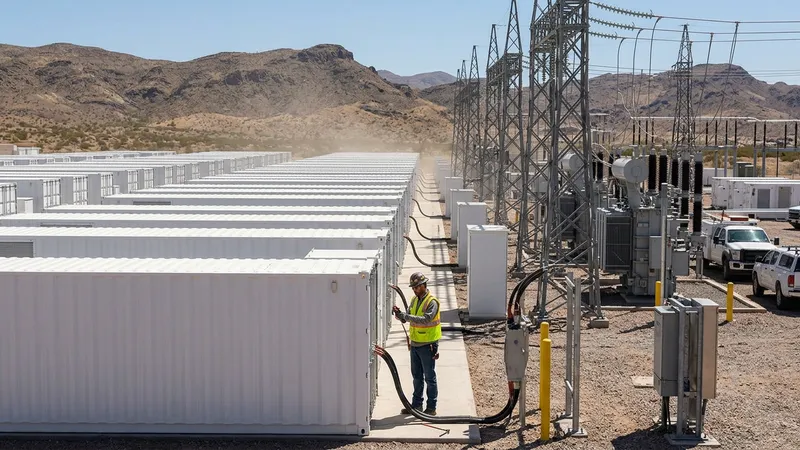
US energy storage capacity reached a record 20.2 gigawatt-hours in Q2 2026, driven primarily by utility-scale installations. Total annual capacity is projected to reach 71 gigawatt-hours, representing a 20% year-over-year increase. This expansion is essential for integrating intermittent renewable energy sources into grid.
Conversely, residential battery installations are projected to decline by 16% in 2026. This contraction is attributed to the expiration of federal tax subsidies for home-based storage systems at the end of 2025. Commercial sector growth remains concentrated in data center infrastructure.
Supply chain risks persist as the industry transitions toward domestic manufacturing. Current projects remain heavily reliant on Chinese-made cells, despite new federal tax credit requirements that penalize foreign-sourced components. Domestic manufacturing capacity is not expected to meet total market demand until approximately 2030, creating potential upward pressure on pricing and project costs.
More stories
- China Central Bank Issues RMB Exchange-Rate Statement
- Pulsar seeks debt funding for $85.5 million helium plant
- Germany bill targets assets above €100,000
- Chinese Securities Regulator Initiates Market Stabilization Measures
- South Africa Faces Heightened Food Security Risks from El Niño Climate Patterns
- Financial Instability and Credit Reliance Among Young Adults
- Fund fraud exceeds 1 trillion lira
- Oura pulls IPO hours before pricing
Latest news
- Iiyama outlines 2^30-state GPU quantum solver
- Australia warns travelers after King Khalid airport strikes
- Ukraine says Russia hits Kyiv plant after Trump ceasefire claim
- Allegations Surface Over Attempt to Alter Netanyahu's Oct. 7 Call Log
- Bandai Namco's Ace Combat 8 tops 1 million sales
- ESA Astronaut Completes Record-Breaking 237-Day International Space Station Mission
- Computational Breakthrough Enables Predictive Modeling of Quantum Material Behavior