

Palestinian delegation seeks UN resolutions challenging Israel’s legal status
The Palestinian Authority is pushing for new resolutions at the UN General Assembly to isolate Israel internationally amid ongoing conflict negotiations.
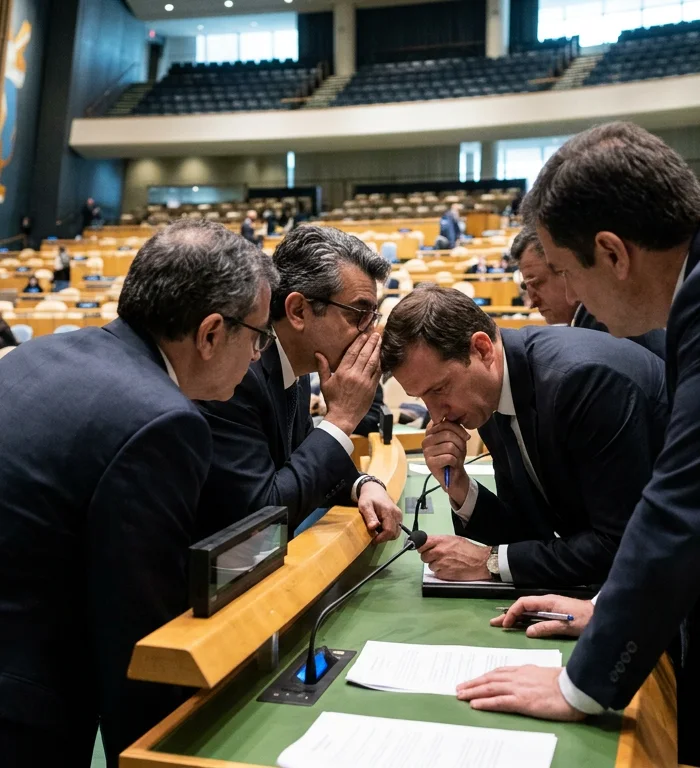
Diplomatic strategy shift
The Palestinian delegation to the United Nations has launched a new push for resolutions aimed at challenging Israel’s legal status within the international body. This move, reported in recent days, marks a tactical pivot toward utilizing multilateral forums to apply diplomatic pressure during the current regional instability.
Danny Danon, Israel’s Ambassador to the United Nations, stated that the delegation is attempting to leverage the ongoing political environment to alter the standing of the Israeli state at the UN. The initiative seeks to transition from rhetorical opposition to formal resolutions that could establish new international legal benchmarks.
Context of the mandate
This effort coincides with an ongoing advisory opinion process at the International Court of Justice concerning the legal consequences of the occupation. The Palestinian Authority is attempting to consolidate its position as the primary representative of Palestinian interests, a role that has faced increasing scrutiny regarding its internal legitimacy and administrative capacity.
Regional dynamics are further complicated by the positions of Gulf Cooperation Council member states, which have maintained diverse strategies following the 2020 Abraham Accords. While these nations face significant domestic pressure to adopt more aggressive diplomatic stances against Israel, their governments continue to balance these public demands against long-term security and economic integration goals.
Global stability risks
Increased international isolation of Israel through UN resolutions could complicate the framework for post-conflict governance in Gaza. For regional powers, the situation risks forcing a choice between maintaining strategic Western alignments and responding to domestic calls for a unified Arab front against Israeli policy.
Should these resolutions gain traction, the shift could disrupt trade and diplomatic normalization pipelines that have defined the Middle East’s economic trajectory over the past four years. The potential for a cooling in normalization momentum depends on the degree of cohesion among regional players in multilateral voting blocks.
Voting bloc indicators
A clear indicator of the geopolitical impact will be the voting patterns of GCC member states on these resolutions by December 31, 2024. If these nations move to support the measures in unison, it would suggest a temporary pivot away from existing normalization frameworks toward a more confrontational stance. Conversely, if key states choose to abstain or provide only muted support, it would indicate that economic and security interests remain the primary drivers of Gulf foreign policy despite the pressure of regional conflict.
More stories
- Germans oppose Ukraine aid as poll shows support slipping
- Kim Jong-un receives 10 envoys after constitutional shift
- Ukraine claims Libya strike sinks Russian naval corvette
- COP31 climate talks collapse over fossil fuels and funds
- Russian military faces 1,087 recorded suicides in Ukraine war
- US faces China, Russia in Africa minerals contest
- Poland starts 2 days of mourning over 6 Krakow deaths
- Home Office faces suit over almost 1,500 EU residency cases
- Biya faces Cameroon succession pressure after 74-day absence
- AfD leak details 420,000 emails on Trump outreach
Latest news
- Trump prepares tariffs on China and other major exporters
- New-car buyers pay record average $50,087 in October
- Banks face ECB reserve debate over liquidity and profits
- Investors see Anthropic debut gains fade below $83 a share
- Iraq orders federal control over Kurdish-area oilfields
- Nvidia shares retreat as AI rally cools before PCE data
- Macy’s parade faces balloon limits as storm winds approach