

Pakistan rebuke adds pressure on US Lebanon diplomacy
Zardari backed Lebanon’s territorial integrity as Beirut marked 83 years of independence and demanded Israel withdraw from Lebanese territory.
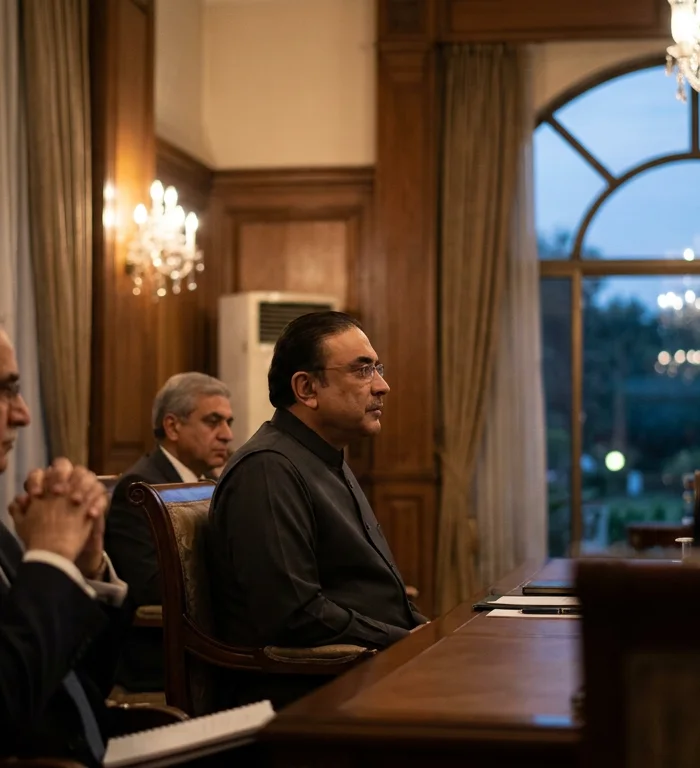
Pakistan President Asif Ali Zardari condemned Israeli actions in Lebanon on Sunday, as Lebanon marked its 83rd independence anniversary on Nov. 22, according to a news report.
The statement matters in Washington because Pakistan is a nuclear-armed, Sunni-majority partner whose public positions can complicate U.S. efforts to sustain wider diplomatic backing for Lebanon border enforcement.
Zardari condemned what he described as Israel’s continued incursions and violations of Lebanese sovereignty, and reaffirmed Islamabad’s support for Lebanon’s territorial integrity. The report did not include an Israeli response.
Lebanese President Joseph Aoun used the anniversary to demand that Israel stop attacks and withdraw forces from "every inch of Lebanese territory." That phrasing puts Beirut’s sovereignty claim at the center of the dispute and gives Pakistan’s statement a direct alignment with Lebanon’s position.
For the White House and State Department, the diplomatic problem is less Pakistan’s military weight in the Levant than the political signal from a major Organization of Islamic Cooperation state. U.S.-led de-escalation efforts often depend on keeping partners publicly tethered to ceasefire and enforcement frameworks rather than broader anti-Israel alignment.
Islamabad also has its own constraints. Pakistan’s government faces a durable domestic consensus against normalizing ties with Israel, while it also seeks workable relations with Washington and Gulf monarchies whose security ties influence Pakistan’s diplomatic room.
The immediate test is whether Washington treats Zardari’s statement as rhetoric for a domestic and Muslim-world audience or as part of a wider drift among partners away from U.S.-backed sequencing on Lebanon.
If the State Department publicly cautions against rhetorical escalation before Feb. 15, 2025, it would suggest U.S. officials see the Pakistan line as diplomatically material; if there is no response, Washington is treating it as peripheral.
More stories
- Germans oppose Ukraine aid as poll shows support slipping
- Kim Jong-un receives 10 envoys after constitutional shift
- Ukraine claims Libya strike sinks Russian naval corvette
- COP31 climate talks collapse over fossil fuels and funds
- Russian military faces 1,087 recorded suicides in Ukraine war
- US faces China, Russia in Africa minerals contest
- Estonia to close 5 Russia road crossings for six months
- Mashatile seeks GBVF action after 1-in-3 violence finding
- Turkey's OIC trade reaches $108bn in first nine months
- Mojtaba Khamenei warns US, Israel after meeting 3 commanders
Latest news
- Trump prepares tariffs on China and other major exporters
- New-car buyers pay record average $50,087 in October
- Banks face ECB reserve debate over liquidity and profits
- Investors see Anthropic debut gains fade below $83 a share
- Iraq orders federal control over Kurdish-area oilfields
- Nvidia shares retreat as AI rally cools before PCE data
- Macy’s parade faces balloon limits as storm winds approach