OpenAI Enters Robotics Manufacturing with New Division
OpenAI has launched a new internal robotics division focused on both AI and hardware, signaling a significant shift in its strategic direction.
Jason Kwon ·
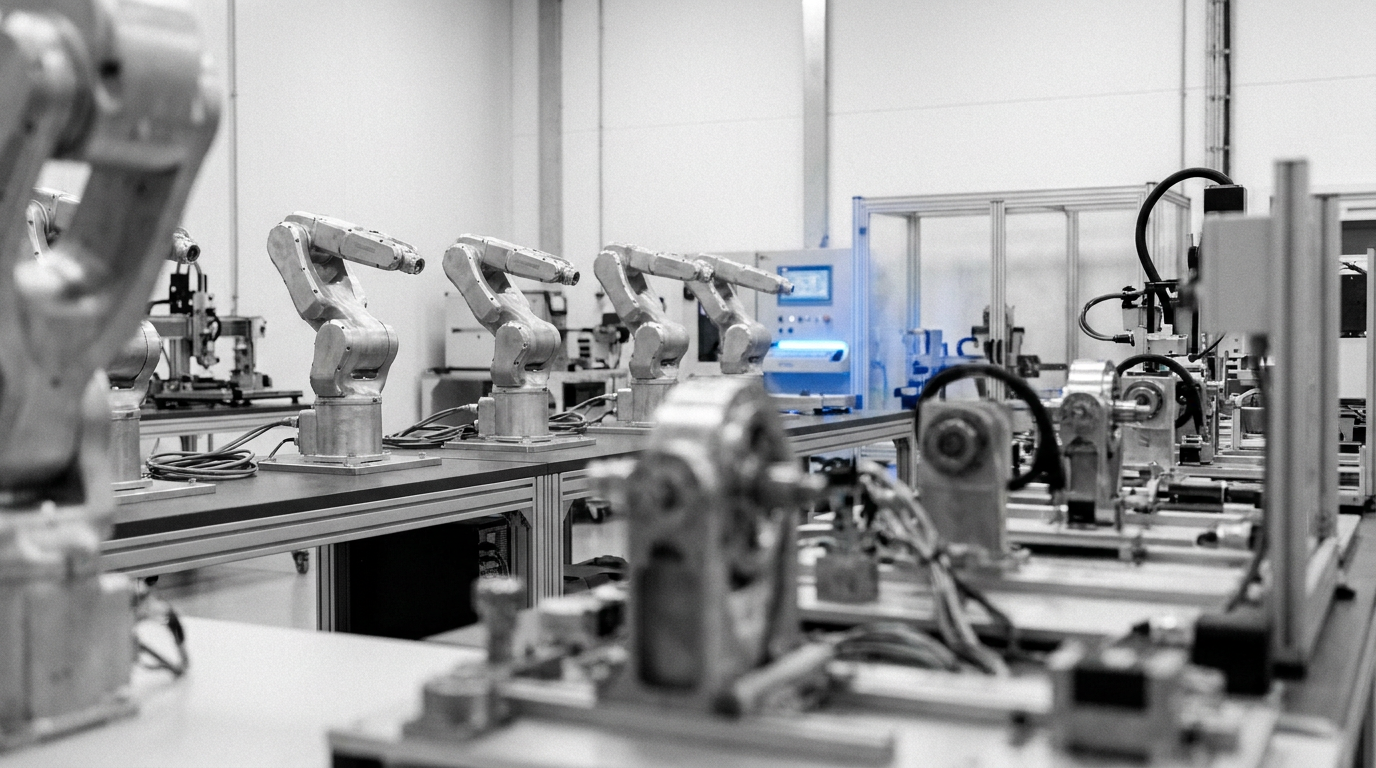
OpenAI, a prominent artificial intelligence research laboratory, has confirmed a major strategic shift, establishing its own internal robotics division. The company will now focus on developing and manufacturing physical machines, moving beyond its previous model of collaborating with external hardware partners. This internal expansion positions OpenAI to compete directly within the burgeoning robotics sector.
CEO Sam Altman announced on May 31, 2026, that the new initiative evolved from the company's world simulation research program, previously led by Aditya Ramesh. The division, now called OpenAI Robotics, emphasizes co-design between hardware and machine learning research, indicating a vertically integrated approach to robotics development.
Strategic Shift Towards Physical Embodiment
The core objective behind OpenAI's new endeavor is to achieve Artificial General Intelligence (AGI) through physical embodiment. Short-term goals involve creating robots that can assist skilled workers in infrastructure construction. The long-term vision aims for widespread personal robots capable of performing general-purpose tasks for everyone.
This aggressive move into hardware development follows previous challenges and a high-profile separation from humanoid robotics startup Figure earlier this year. Figure's CEO, Brett Adcock, had cited OpenAI's lack of focus on physical hardware as a primary reason for the partnership's dissolution, highlighting a pivotal moment that likely influenced OpenAI's current strategy.
New Roles Signal Deep Hardware Commitment
OpenAI's hiring initiatives reveal a detailed blueprint for its robotics hardware ambitions, with 11 specialized roles currently open in San Francisco. These positions reflect a deep commitment to custom engineering, advanced simulation, and large-scale data acquisition, indicating the company's intent to build components from the ground up rather than relying on off-the-shelf solutions.
Key roles include Actuator Design Engineers, tasked with developing custom electromechanical actuators critical for agile robot movement. Simulation Realism Engineers will focus on bridging the 'sim-to-real' gap, ensuring smooth transitions from virtual training environments to physical hardware.
Additionally, an Operations Manager for Data Acquisition is sought to oversee a large workforce dedicated to collecting real-world physical interaction data, underscoring the data-intensive nature of this venture.
Implications and Future Outlook
OpenAI's foray into physical hardware manufacturing represents a significant departure from its historical focus on AI software development. While the company has demonstrated prowess in AI models, scaling hardware production is notoriously capital-intensive and presents complex supply chain challenges that differ vastly from managing data centers.
The specific form factors of the robots OpenAI intends to develop remain undefined, with job descriptions mentioning a 'broad range of robotic form factors.' However, the intent to own the entire physical stack, from custom components to advanced simulation and data collection, is clear. This integrated approach, dubbed 'co-design,' aims to tightly weave hardware and AI development, potentially setting a new standard for future robotics advancements.