Artemis II: Ten-Day Lunar Test Mission Blasts Off
Artemis II launched Wednesday from Kennedy Space Center on a 10-day crewed Moon flyby to test Orion systems ahead of later lunar missions.
Jason Kwon ·
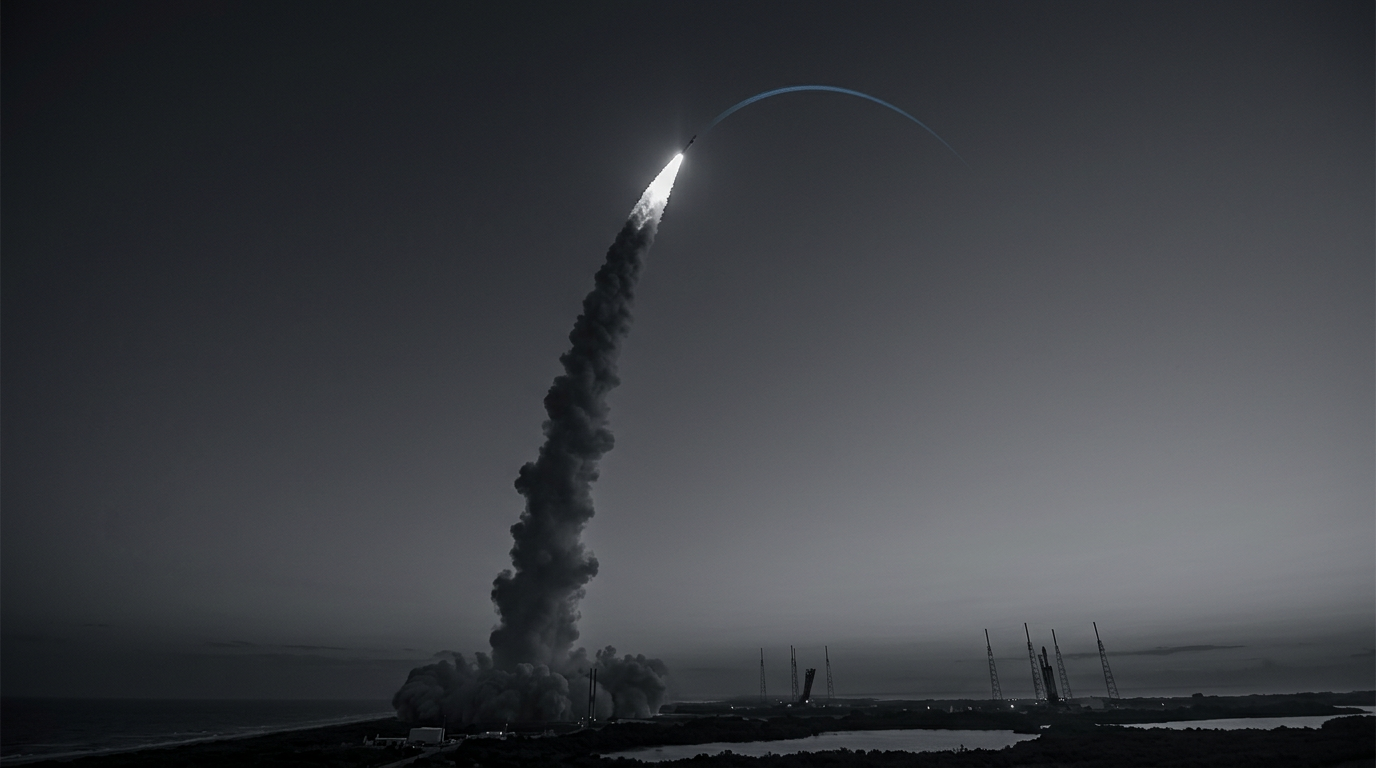
NASA’s Artemis II mission lifted off on Wednesday evening from the Kennedy Space Center in Cape Canaveral, Florida, beginning a 10-day crewed test flight that will take astronauts around the Moon. Officials said the flight is designed to validate key spacecraft hardware and life-support performance needed for later lunar missions.
The launch marks the first time people have traveled beyond low Earth orbit since Apollo 17 in December 1972. NASA said the mission is a major milestone for its Artemis program, which is intended to build toward sustained human activity around and on the Moon.
The crew of four is flying aboard the Orion space capsule. NASA said the spacecraft will not attempt a lunar landing on this mission, but will instead conduct a flyby that reaches about 253,000 miles from Earth, exceeding the distance record set by Apollo 13 .
NASA identified the astronauts as Christina Koch , Victor Glover , and Jeremy Hansen , alongside a fourth crewmember, for a total of three Americans and one Canadian. NASA said Koch will become the first woman to fly into cislunar space, while Glover will be the first person of color to do so. NASA said Hansen will be the first non-American to reach cislunar space.
During the flight, NASA said the mission will collect imagery of areas near the Moon’s south pole. The agency has designated the region for future human landings and as a focus area tied to longer-term plans for a lunar base.
NASA described Artemis II as a foundational step within a broader program that includes plans for a $20 billion Moon base by the end of the decade. The agency said the mission’s systems checks are intended to reduce risk for later flights that would involve more complex operations closer to the lunar surface.
Looking ahead, NASA said the next crewed mission referenced in its current schedule is Artemis IV , planned for 2028 , with the goal of returning humans to the lunar surface. Officials did not describe additional mission changes in the announcement, and the outcome of Artemis II’s test objectives will be a key unknown until post-flight assessments are completed.