NASA Artemis II flight begins historic 250,000-mile journey
Artemis II launches, marking humanity's return to deep space & a step towards Mars. Explore the Moon with NASA's historic crewed mission.
Jason Kwon ·
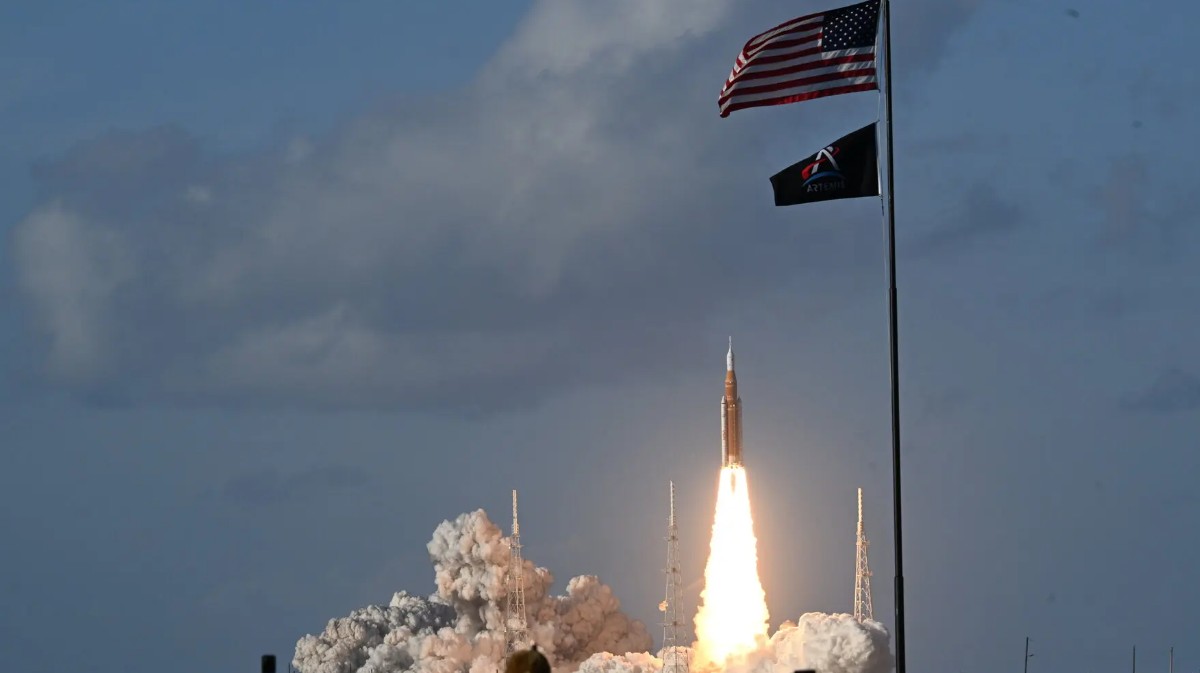
NASA’s Artemis II mission lifted off at 6:35 p.m. EDT (2224 GMT) today from the Kennedy Space Center, marking a historic return of humans to deep space and a strategic pivot toward the Moon as the centerpiece of U.S. exploration ambitions.
The Space Launch System (SLS) rocket ignited precisely on schedule from Launch Complex 39B, after a tense final countdown that included minor technical concerns earlier in the day. NASA officials had been monitoring issues related to prior helium flow irregularities and legacy hardware concerns from earlier missions, but ultimately determined that all systems were within acceptable limits for flight.
https://x.com/NASA/status/2039473910987534599
“After a thorough review, we are go for launch,” launch director Charlie Blackwell-Thompson said ahead of liftoff, giving final clearance for the mission.
Blackwell-Thompson, one of NASA’s most experienced ground operations leaders, has become a central figure in the Artemis era, overseeing the complex countdown and final decision-making process. Her role underscores the evolving leadership profile of NASA, as Artemis pushes not only technological but cultural boundaries in space exploration.
The rocket rose cleanly into clear Florida skies, with early telemetry confirming nominal ascent, booster separation, and trajectory alignment. The launch window extended for two hours, but NASA opted to proceed at the opening minute, signaling confidence after days of system checks and weather monitoring.
Today’s launch represents more than a technical success—it reflects a strategic recalibration. After years of prioritizing Mars as the next destination for human exploration, NASA and U.S. policymakers have shifted focus back to the Moon as a more immediate and achievable objective.
Artemis is now positioned as the foundation of a “Moon-to-Mars” architecture, where lunar missions serve as testing grounds for the technologies and operational models required for eventual journeys to the Red Planet.
“The Moon is no longer a detour,” one senior official said. “It’s the proving ground for everything that comes next.”
The mission is the first crewed flight beyond low Earth orbit in more than 50 years and is designed as a critical systems test rather than a landing. Over the next 10 days, the crew will travel more than 250,000 miles, looping around the far side of the Moon before returning to Earth.
Beyond its technical goals, Artemis carries significant geopolitical and economic weight. The program is central to U.S. efforts to maintain leadership in space amid growing competition from China, while also anchoring a new commercial ecosystem around lunar infrastructure and deep-space logistics.
The mission is also notable for its crew composition, which includes the first woman and the first person of color to travel to lunar distance—milestones NASA has emphasized as part of a broader effort to redefine the narrative of space exploration.
Despite earlier concerns and the inherent risks of deep space travel, NASA’s decision to proceed with today’s launch reflects a calculated confidence built on years of testing and iteration.
For now, the successful liftoff marks a turning point: not just a return to the Moon, but the beginning of a sustained effort to build a permanent human presence beyond Earth—one step closer to Mars, but firmly grounded in lunar strategy.