Nagatitan: Giant sauropod unearthed in Chaiyaphum province
Nagatitan is a newly identified giant sauropod from Thailand, about 88.5 feet long and weighing roughly 27 tons, based on fossils found in Chaiyaphum in 2016.
Jason Kwon ·
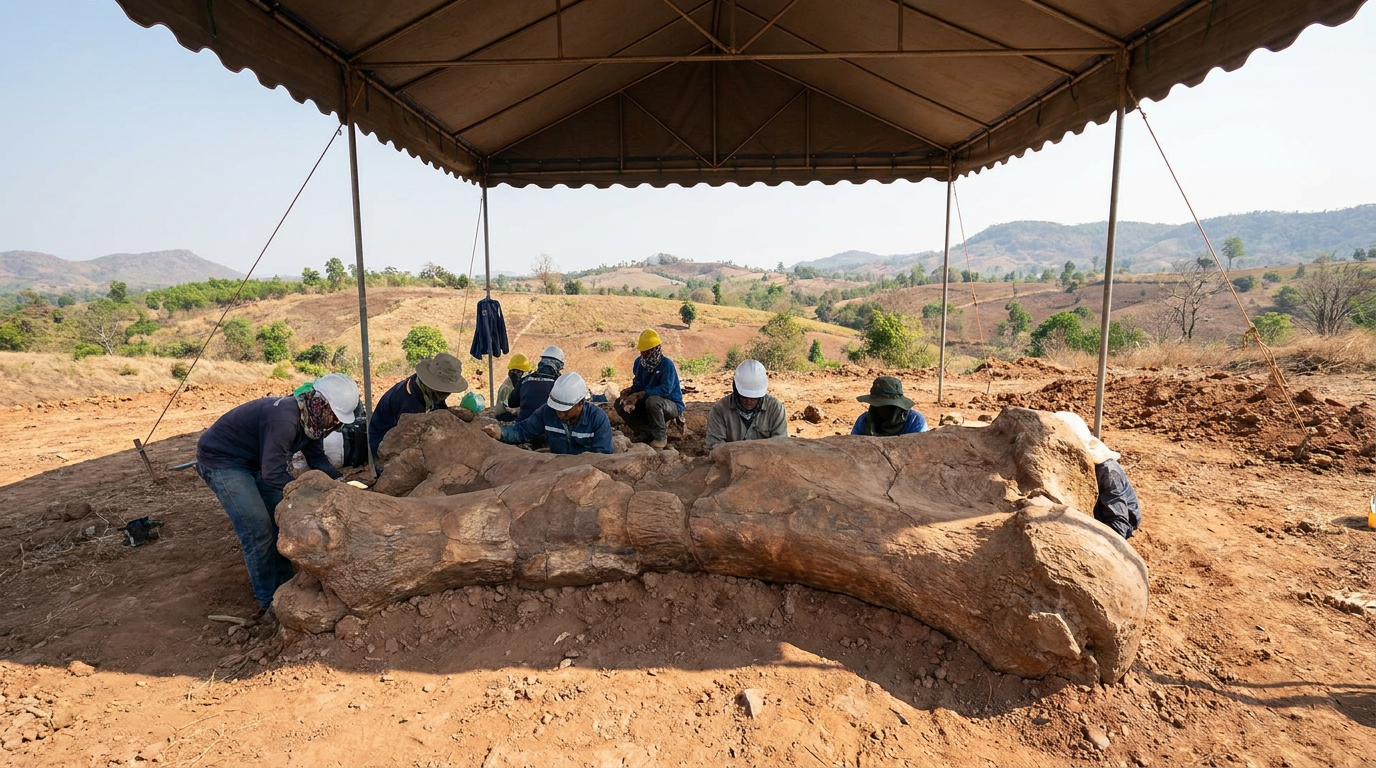
Nagatitan, a newly identified giant sauropod from Thailand, measured about 88.5 feet and weighed roughly 27 tons; fossils were recovered in Chaiyaphum in 2016.
Discovery and physical profile
Researchers recovered bones including vertebrae, limb fragments and a front leg bone nearly six feet long from deposits in Chaiyaphum province in 2016. The animal is estimated at roughly 88.5 feet (27 meters) in length and an estimated mass near 27 metric tons, comparable to about four African elephants.
Scientists date the specimen to the early Cretaceous, approximately 100–120 million years ago. The remains come from what researchers describe as one of Thailand’s youngest dinosaur-bearing rock units.
Taxonomy, naming and significance
The species was given the name Nagatitan chaiyaphumensis; the genus references mythic water serpents and titans, while the species epithet records the find location. Colloquially it has been called the “last titan” in reference to its occurrence in a younger local formation than many regional finds.
Comparative study of skeletal details — including specific vertebral and limb characteristics — led authors to recognize it as distinct from other known sauropods. Sauropods are a broad clade of long-necked herbivores that includes familiar taxa such as Brontosaurus and Diplodocus.
Context and implications
This discovery ranks among the largest dinosaur species identified to date in Southeast Asia and expands knowledge of the region’s Cretaceous megafauna. It indicates that substantial sauropods persisted in this area later in the Mesozoic than previously documented by local finds.
The find underscores the paleontological value of northeastern Thailand and suggests additional large-bodied dinosaurs may remain undiscovered in similar rock units. More complete material and further preparation could refine size and mass estimates and clarify the species’ relationships within titanosaurs.
Future steps include targeted excavation at the Chaiyaphum site, detailed description and publication of the full skeletal anatomy, and broader comparisons with Cretaceous sauropods from Southeast Asia and beyond. Ongoing fieldwork and new imaging techniques may alter understanding of the specimen’s anatomy and ecology as researchers gather more data.