MSC Opens Saudi Bypass for Gulf Cargo
MSC launches Europe-to-Gulf service May 10, routing via Saudi Arabia. A workaround for shippers amid Hormuz trade disruptions.
Atlas Newsdesk ·
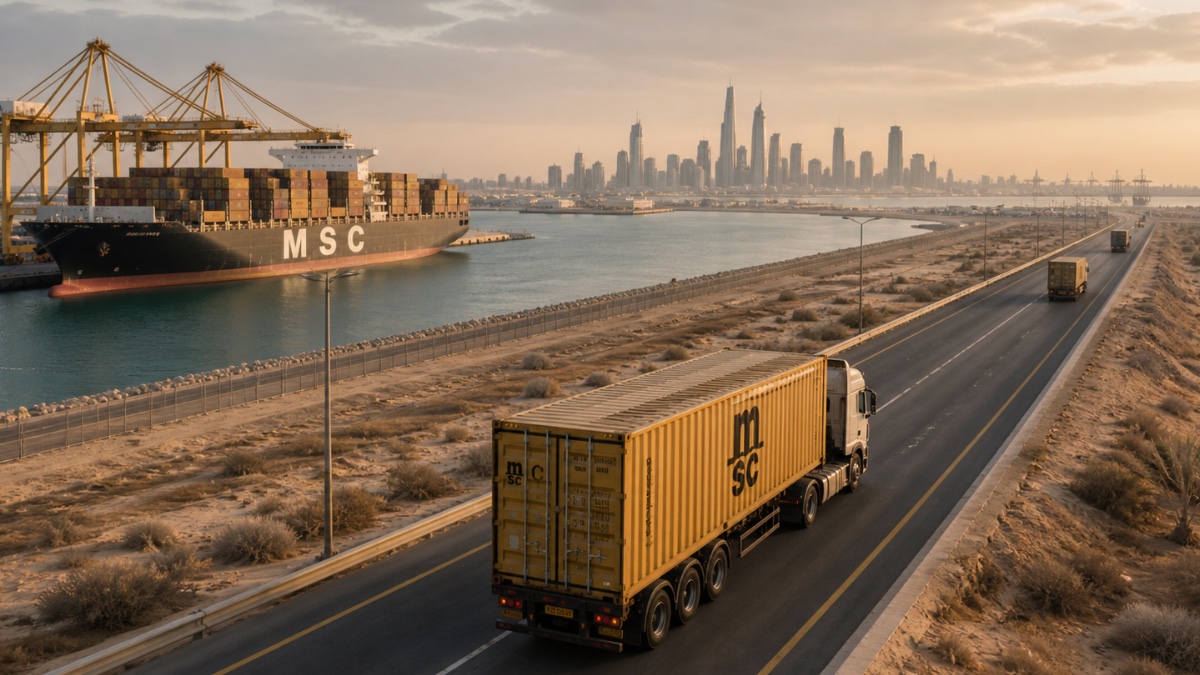
The service sends larger container ships to Jeddah and King Abdullah Port on Saudi Arabia’s Red Sea coast, rather than pushing them through Hormuz into the Gulf. Cargo will then move by truck across Saudi Arabia to Dammam, the kingdom’s main eastern gateway. From there, feeder ships will carry boxes to destinations including Jebel Ali, Abu Dhabi, Bahrain, Iraq and Kuwait. The Jeddah-to-Dammam haul runs about 1,300 kilometers and passes through the Riyadh corridor.
A Choke Point Closes
The route is a commercial response to one of the world’s most important maritime bottlenecks becoming unreliable. The Strait of Hormuz has faced severe disruption since the outbreak of the Iran conflict on February 28, with the Dallas Fed describing the closure as a geopolitically driven oil-supply shock. The passage is better known for energy flows, but it is also critical for containerized trade serving industrial zones, consumer markets and transshipment hubs across the Gulf.
UAE Hubs Feel the Strain
The immediate beneficiaries are cargo owners tied to Gulf ports that rely on predictable container flows. Jebel Ali and Abu Dhabi serve manufacturing, retail, construction and logistics companies across the United Arab Emirates, including multinational tenants in large free zones. A landbridge gives those shippers another option when direct sea access through Hormuz is delayed, restricted or commercially unattractive. It does not remove the disruption; it shifts the problem from maritime risk to coordination across ports, roads and feeder schedules.
Rivals Add Landbridges
MSC is not alone in turning to multimodal routes. Hapag-Lloyd said in March that it had opened ground-transport options across Saudi Arabia and Oman, while Maersk has also promoted landbridge services for regional cargo. Saudi ports authority Mawani said in March that new services involving carriers including MSC, CMA CGM, Maersk and Hapag-Lloyd were intended to strengthen logistics resilience during Hormuz tensions.
Saudi Roads Gain Leverage
The shift gives Saudi Arabia a larger role in Gulf supply chains at a moment when shipping networks are being forced to prioritize redundancy over speed. Using trucks across the peninsula is likely to add cost, planning complexity and emissions compared with a direct ocean move, but it also offers carriers a way to keep serving Gulf customers without sending mainline vessels into a constrained corridor. That makes Saudi port and road capacity more strategically important for trade between Europe, the Red Sea and the Gulf.
Capacity is the Test
The risk is that land routes become crowded as more cargo is diverted. Ports in Oman and the eastern UAE are already receiving additional containers that need trucking, while feeder capacity from Dammam must match demand from multiple Gulf destinations. The next test is whether MSC can provide reliable transit times once the service begins, and whether Hormuz reopens enough to make the landbridge a backup rather than a longer-term feature of Gulf logistics.