Europe’s Central Banks Split on Next Move as War Drives Inflation Risk
The ECB and Bank of England held interest rates steady but signaled diverging outlooks, with the ECB leaning toward a June hike while the BOE remains cautious.
Atlas Newsdesk ·
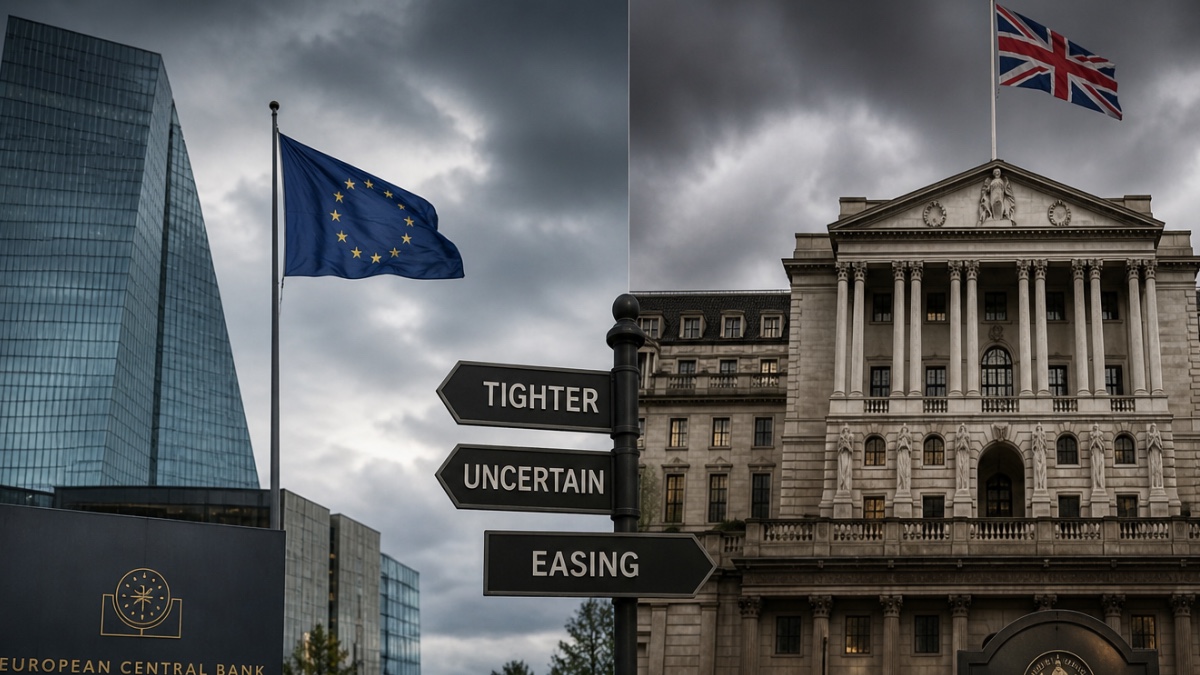
Europe’s two leading central banks kept borrowing costs unchanged but sent increasingly different signals about what comes next. The European Central Bank and the Bank of England both warned that inflation risks tied to the Middle East conflict could require tighter policy. Yet their guidance suggests the eurozone is closer to raising rates than the U.K.
Lagarde Hints At June Move
ECB President Christine Lagarde said policymakers had actively discussed a potential rate increase, indicating preparation for a possible move at the next meeting. While the decision to hold was unanimous, the internal debate marks a shift toward tightening. Economists say the tone puts a June increase firmly on the table if inflation pressures persist.
Bailey Pushes Back On Hikes
Bank of England Governor Andrew Bailey took a more restrained stance, rejecting the idea that a rate increase is imminent. He told reporters there was no hidden signal pointing to higher borrowing costs, despite market expectations for multiple hikes this year. The message suggests policymakers are not yet convinced further tightening is necessary.
Different Starting Points Matter
The divergence reflects where each economy stood before the conflict-driven inflation shock. The ECB had already brought rates to a level considered neutral, neither boosting nor restraining growth. In contrast, the BOE’s rate remains restrictive, meaning holding steady continues to weigh on economic activity in the U.K.
Labor conditions are also shaping policy decisions. The ECB sees low unemployment as a sign of resilience that could sustain demand and inflation. The BOE, facing a loosening labor market and rising joblessness, expects weaker wage growth and reduced domestic price pressure.
Energy Prices Drive The Outlook
Both central banks are highly sensitive to energy costs, which surged after the conflict disrupted supply expectations. A sustained increase would likely push the ECB toward a rate hike and could eventually force the BOE to follow. Conversely, a resolution that reopens key shipping routes could quickly ease inflation concerns.
Future decisions depend heavily on how the geopolitical situation evolves. A prolonged disruption in energy markets would strengthen the case for tighter policy across Europe. But if tensions ease, the BOE may resume plans to cut rates while the ECB could delay tightening, leaving the current divergence unresolved.