Microsoft adds Minecraft's first new dimension in 14 years to market a spin-off game
Microsoft is bringing a brand-new dimension called The Sift to the base versions of Minecraft across both Java and Bedrock.
Jason Kwon ·
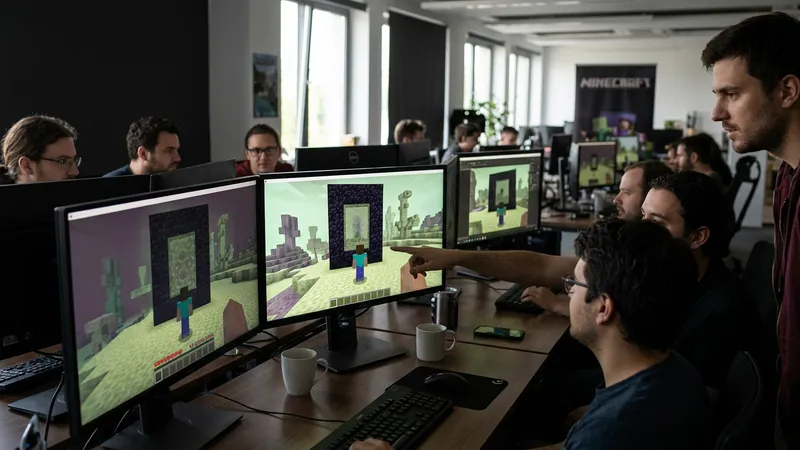
In an Xbox Wire post coinciding with the Minecraft LIVE event, Microsoft confirmed it is fundamentally expanding the geography of the world's best-selling game. For the first time in over 14 years, Minecraft is getting a new official dimension. It is called The Sift, and the publisher announced it is coming to both the Java and Bedrock editions of the core game.
But the origin of this new zone is what makes the update a distinct signal for the business of Xbox. The Sift was not originally pitched as an organic base-game expansion. As the company noted, the dimension was first announced at Gamescom as a key feature for the upcoming spin-off, Minecraft Dungeons II . "We’ve visited the Overworld, the Nether, and the End. Now, prepare yourself for a journey to the Sift," the publisher wrote, positioning the crossover as a unified event rather than two isolated product beats.
The mothership serves as an inescapable marketing engine
To understand why this matters, you have to look at how franchise spin-offs traditionally operate, and how Microsoft is currently managing its biggest intellectual properties. Usually, a publisher spinning off a mega-hit wants to keep the new game's most compelling features exclusive to that new box. If you want the new mechanics, the new story, or the fresh map, you have to pay the premium entry fee for the standalone title.
By taking the defining hook of Minecraft Dungeons II and effectively giving it away inside the legacy game, Microsoft is acknowledging a harsh reality of the modern live-service era: it is infinitely harder to convince a player to boot up a new application than it is to reach them where they already are. User acquisition is the most expensive hurdle in gaming right now. If you want to sell your existing players on an upcoming sequel, you do not rely solely on YouTube trailers and digital storefront banners. You put a playable advertisement directly into the survival loops they are already logging into every day, turning the base game into a structural funnel for the new release.
Breaking a 14-year geographical freeze requires a structural shift
The restraint Microsoft and developer Mojang have shown with the core geography of Minecraft is historically unusual for a live-service juggernaut. For over a decade, the game has relied on a holy trinity of zones: the Overworld where players start, the hostile Nether, and the stark, boss-focused End. While the developer has added countless biomes, blocks, and creatures to those existing spaces over the years, introducing an entirely new dimension requires overhauling core progression loops and material economies.
Breaking that 14-year freeze just to cross-promote a secondary title shows how much pressure is on the wider Minecraft ecosystem to generate ongoing cultural momentum. Microsoft Gaming is now a massive, multi-platform operation, but Minecraft remains its foundational trojan horse across consoles, PCs, and mobile devices. Keeping those engagement numbers high requires bigger operational bets than simply tweaking mob spawn rates or adding a new type of wood. Tying a massive base-game update to a new spin-off achieves both player retention and product marketing simultaneously.
The dual-engine technical tax remains unpaid
The announcement specifically notes that The Sift will arrive on both the Java and Bedrock editions of the game. That detail is a quiet reminder of the technical tax Mojang continues to pay to maintain its sprawling player base. The Bedrock edition, built on C++, is the cross-platform monetization engine that runs on consoles, mobile devices, and modern PCs, complete with the highly lucrative Minecraft Marketplace.
The Java edition is the legacy PC version. It does not interface with the modern microtransaction storefront, but it remains the cultural heartbeat of the community, largely because it supports complex, community-built mods. Delivering a massive engine update like a brand-new dimension to two completely distinct codebases simultaneously is a heavy development lift. Still, skipping Java would risk alienating the hardcore creators and modders who keep the game perpetually relevant on streaming platforms—a risk Microsoft is clearly unwilling to take, even for a corporate cross-promotional event.
The obvious risk of giving away the main hook
The skeptic's read on this strategy is the immediate threat of product cannibalization. If the primary marketing beat for Minecraft Dungeons II is the exploration of The Sift, letting players run through that exact same aesthetic and lore in the base game could blunt the need to buy the sequel at all. Critics of this kind of aggressive cross-pollination will argue that while the genres are different—one is an action-RPG, the other a sandbox survival game—the novelty of the new environment is a finite resource. If millions of active users have already strip-mined The Sift in vanilla Minecraft , they may be far less inclined to pay a premium to fight through it in a rigid, story-driven format.
Over the next six months, the core metric to watch will not just be how many players log in to see The Sift in the base game, but whether Microsoft ties the two distinct experiences together with concrete, cross-game incentives. Watch to see if playing The Sift in the Bedrock edition unlocks exclusive cosmetic items in Dungeons II , or if Game Pass subscribers get a bridged progression system between the two clients. Furthermore, pay attention to the Minecraft Marketplace surrounding the update. If third-party creators are given early access to build premium maps inside The Sift, it will signal that Microsoft views the new dimension less as a one-off marketing stunt and more as a permanent, monetizable platform expansion.