

Nvidia board weighs Huang ouster after spy inquiry claims
Nvidia’s board is weighing Jensen Huang’s future after alleged affairs and China-linked intelligence concerns, leaving succession questions at the AI…
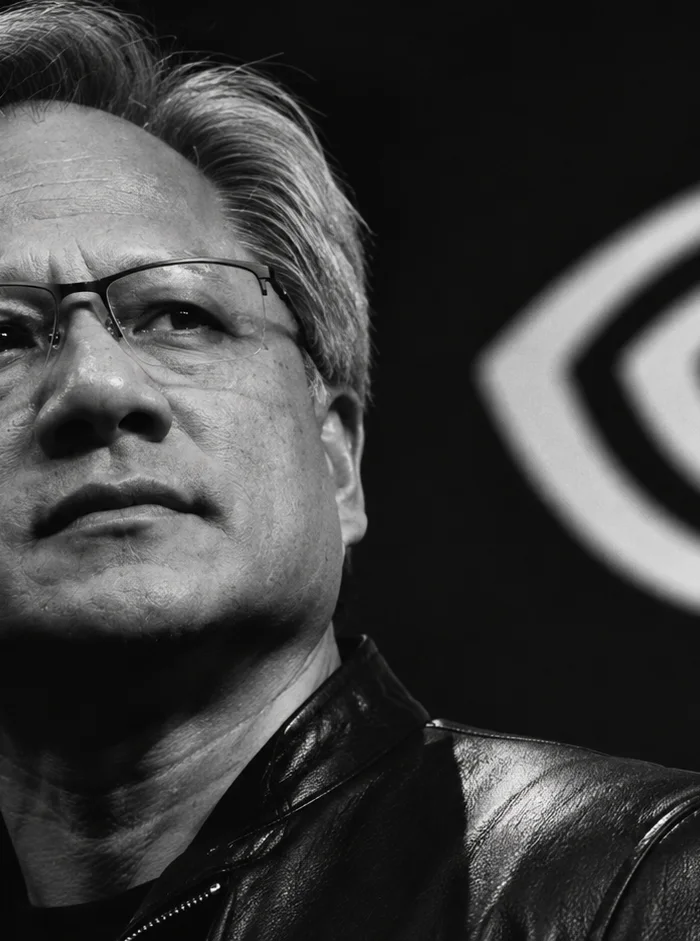
Nvidia’s board is weighing whether to remove CEO Jensen Huang after two alleged affairs, people familiar said, leaving no clear successor.
The board is expected to meet as soon as Wednesday to decide Huang’s future, according to people familiar with the matter. A departure would put one of the world’s most valuable companies into an abrupt leadership transition at a time when its chips sit at the center of the artificial-intelligence buildout.
Board meeting tests succession
Huang, 63, co-founded Nvidia and has become the public face of the company’s graphics processing units, which are used to train and run advanced AI systems. The supplied account said he has roughly 60 direct reports and has argued against formal succession planning, preferring leaders to share knowledge continuously.
Nvidia’s latest proxy statement, cited in the account, warned that the company is “highly dependent on the services of our longstanding executive team.” It also said a failure to ensure effective succession planning could “hinder our strategic planning, execution, and long-term success.”
The succession issue matters more at Nvidia than at many large technology groups because Huang is not only chief executive but also its largest shareholder. The account said he owns about 3.6% of the company, giving the board’s decision implications for governance, investor confidence and control of the AI supplier most closely associated with the current boom.
Megaspeed link draws scrutiny
Huang told staff on Sunday that he had been unfaithful to his wife and apologized for violating the trust of his family and employees, according to the supplied material. One relationship involved Alice Huang, an executive at Singapore-based data company Megaspeed, a major Nvidia customer.
U.S. intelligence officials believe Alice Huang is working for China’s intelligence services, according to the account. Nvidia had previously said through a spokesman that there was nothing “unusual or unexpected” about Jensen Huang’s relationship with her.
Megaspeed was described as one of several companies using Nvidia chips to build AI data centers in Southeast Asia. The account said the Commerce Department had been investigating the company since late 2024 over suspicions that some Nvidia products were being diverted to China.
The Justice Department is now leading multiple investigations involving Alice Huang, people familiar with the matter said. The supplied material did not say whether Jensen Huang is a target of those inquiries, and the allegation that Alice Huang is tied to Chinese intelligence remains attributed to U.S. officials.
Powell allegation adds workplace risk
The account also said Huang had an affair with Kimberly Powell, a senior Nvidia executive who runs the company’s healthcare business, according to a person familiar with the matter. Powell did not respond to requests for comment, the supplied material said.
For Nvidia, the second alleged relationship would widen the issue from geopolitical exposure to internal governance. A board weighing the future of a founder-CEO would have to assess not only personal conduct but also the company’s standards for executives, reporting lines and employee confidence.
Nvidia shares were down about 8% in after-hours trading after the latest developments, extending a recent slide following disclosure that the board was investigating Huang’s relationship with Alice Huang. The move was reported after the account’s publication and should be read as a market reaction in sequence, not proof of investor motive.
Trump alliance adds policy risk
President Trump stood by Huang earlier this week, saying Huang told him he did not know Alice Huang was a suspected spy. Trump described the Nvidia CEO as an “amazing guy” and an “honorable man,” according to the supplied material.
The political stakes are tied to chip-export policy. Trump approved shipments of Nvidia chips to China despite security concerns and adopted several policy positions associated with Huang, the account said, moves now under scrutiny from lawmakers and officials.
If the board removes Huang, Nvidia would face the company-level task of reassuring customers, employees and regulators while naming an interim or permanent successor. For the wider chip sector, the mechanism would be uncertainty around AI supply negotiations, export approvals and the role of founder-led lobbying in Washington.
If Huang remains, the immediate company risk would shift to whether the board can show that its review was credible and that internal controls are adequate. At the macro level, continuity could steady the AI investment cycle, but unresolved legal or intelligence questions could keep pressure on chip policy and on companies routing advanced processors through Southeast Asia.
The main open questions are whether the board reaches a decision this week, whether federal inquiries produce further allegations, and who inside Nvidia could command investor and customer confidence. Until those points are settled, the company’s leadership risk and the sector’s China-exposure risk are likely to remain linked.
More stories
- Japan & Asia: Zelda remake tops Japan boxed sales with 537,041
- Nvidia cloud access prompts Chinese overseas rental talks
- Pomerado targets browser agents with $0.03 task claim
- How Turkey's esports ecosystem works
- Xbox Game Pass guide: Ultimate costs 799 TL in Turkey
- On Switch 2's eShop, account type matters as much as price
- KOSPI circuit breakers hit Samsung, SK Hynix leverage
- EU AI Act model rules hand Brussels new powers from today
Latest news
- Cameroon faces succession test after Biya's 10-week absence
- Germany faces integration gaps with 30% migration-background share
- Vance's Iran role shifts as Trump favors blockade pressure
- Sudan gold revenue reaches $3.5bn without price relief
- ADNOC L&S lifts 2026 profit outlook to $4bn
- EU defence start-ups face two funding gaps, MEPs warn
- EU receives 12.89 million tonnes of Russian Arctic LNG before ban
- How did a $4 trillion company miss it?