KOSPI circuit breakers hit Samsung, SK Hynix leverage
KOSPI circuit breakers followed sharp Samsung and SK Hynix losses, exposing leverage risks in South Korea’s chip-heavy equity market.
Jason Kwon ·
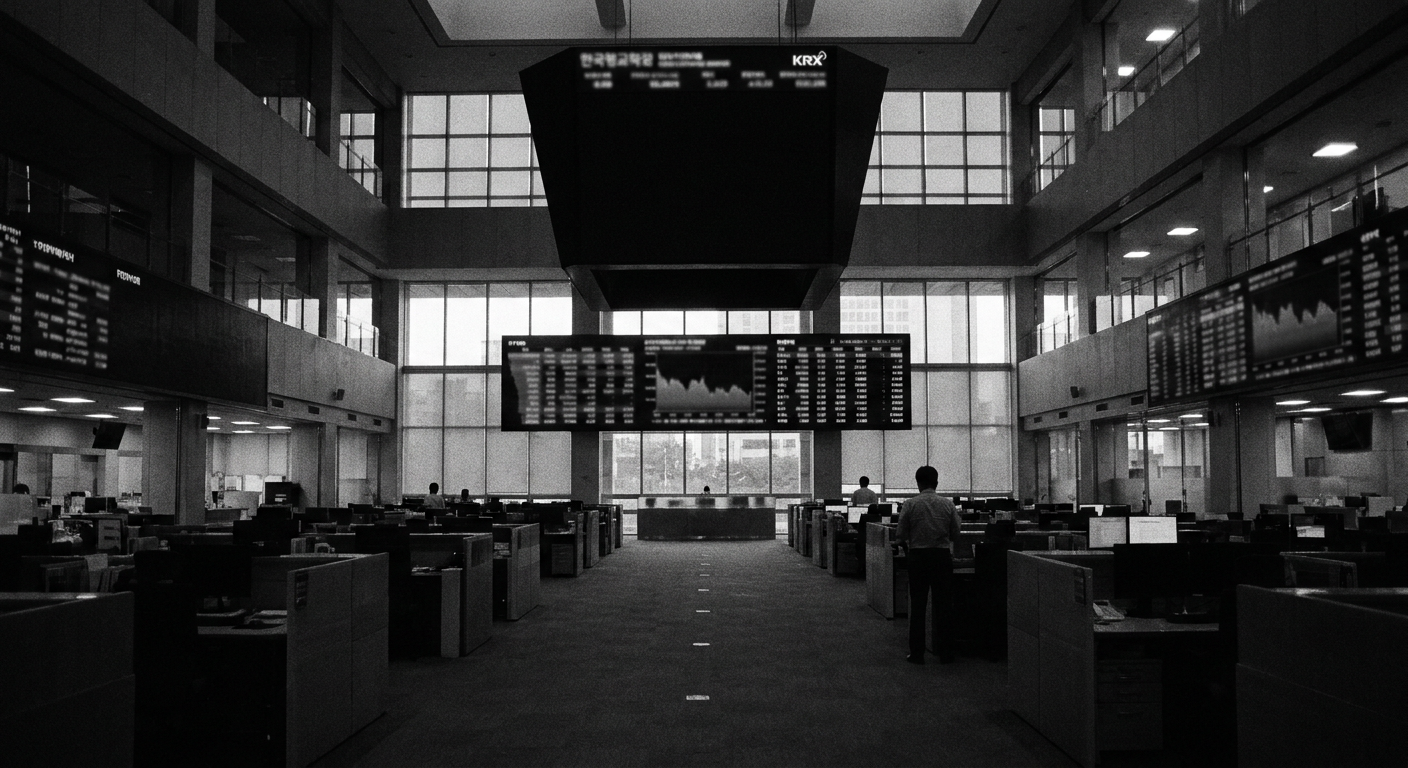
KOSPI circuit breakers put Seoul's chip-heavy market under pressure after Samsung and SK Hynix losses deepened a rapid selloff.
The benchmark index triggered consecutive trading halts this week, according to the supplied market account, after a reversal that at one point wiped out almost 40% of its value from a record above 9,380 set little more than a month earlier. The same account said as much as $2.18 trillion in Seoul market value had disappeared at the low.
The scale of the fall matters because the KOSPI had still been one of the strongest major equity markets this year. Even after the drawdown, the index remained more than 50% higher for the year to date, leaving investors to separate a violent positioning shock from a broader collapse in the South Korean equity story.
Samsung and SK Hynix drove it
The pressure centered on the two chipmakers that dominate the index. On July 29, SK Hynix fell nearly 20% intraday before finishing 9.6% lower, while Samsung dropped as much as 14% before closing down 5.2%, according to the supplied figures.
Those moves carried extra force because Samsung and SK Hynix account for more than half of the KOSPI. A selloff in both names can therefore move the whole benchmark, not merely the semiconductor sleeve of the market.
A new leverage channel made the decline harder to contain. South Korea listed single-stock leveraged ETFs on May 27, nine weeks before the latest break in prices, and retail money crowded into funds tied to Samsung and SK Hynix.
These products seek to deliver twice the daily move of an individual stock. To keep that exposure, they typically increase exposure after gains and reduce it after losses, a structure that can add buying pressure in rallies and selling pressure during declines.
CXMT debut sharpened memory fears
The domestic ETF mechanics met a second pressure point: a reassessment of the artificial intelligence trade and the memory cycle. The supplied account said CXMT, China’s largest DRAM producer, rose 466% in its July 27 Shanghai debut and became the mainland’s most valuable listed company.
CXMT still trails South Korean producers in scale and advanced memory technology, according to the account. Even so, its listing raised concern that new Chinese capacity could weigh on conventional memory prices, a risk that lands directly on the revenue expectations embedded in Samsung and SK Hynix valuations.
The immediate impact falls first on retail investors holding leveraged products, then on ETF issuers managing daily rebalancing, and finally on the exchange infrastructure tasked with slowing disorderly trading. For the wider chip sector, the episode showed how AI-linked enthusiasm can become fragile when concentrated ownership meets forced exposure cuts.
Seoul fund targets strategic industries
Policy entered the market conversation on July 31, when Minister of Finance and Economy Koo Yun-Cheol announced plans to launch a new sovereign wealth fund next year. The fund is intended for long-term investment in strategic domestic industries including AI, chips, robotics, defense and biotechnology.
Seoul plans to put 20 trillion won, or about $14 billion, into the vehicle, according to the announcement described in the supplied text. The funding mix would include 16 trillion won in capital from government-held shares in state-run financial institutions and 4 trillion won from inheritance and gift taxes.
If volatility settles and chip earnings expectations hold, the KOSPI could keep much of its year-to-date advance while Samsung and SK Hynix regain access to a deeper domestic capital base. Under that path, the planned sovereign fund would reinforce South Korea’s strategic-industry policy and the global macro effect would be limited to a repricing of semiconductor leadership rather than a wider risk-off shock.
If leveraged ETF selling continues to feed on losses, the mechanism works in the opposite direction: falling share prices force exposure cuts, which can trigger more selling. That would tighten financial conditions for the two chipmakers, pressure other AI-linked suppliers and send a broader warning to global markets about single-stock leverage inside benchmark-heavy sectors.
A third path depends on memory pricing. If CXMT’s rise signals faster Chinese capacity growth in conventional DRAM, Samsung and SK Hynix would face margin pressure, South Korea’s chip supply chain would absorb a tougher price cycle, and global inflation effects could be mixed as cheaper memory lowers input costs for device makers.
The open questions are specific: whether regulators alter rules for leveraged single-stock ETFs, whether retail flows stabilize, whether CXMT’s capacity growth changes DRAM pricing, and how quickly Seoul can deploy the new fund. Those answers will determine whether this week becomes a contained market break or a warning about leverage inside the AI equity trade.