New Defense Framework Links Turkey, Pakistan, and Saudi Arabia
A trilateral defense agreement between Ankara, Islamabad, and Riyadh introduces a collective security framework focused on military cooperation and deterrence.
Cuneyd Erdogan ·
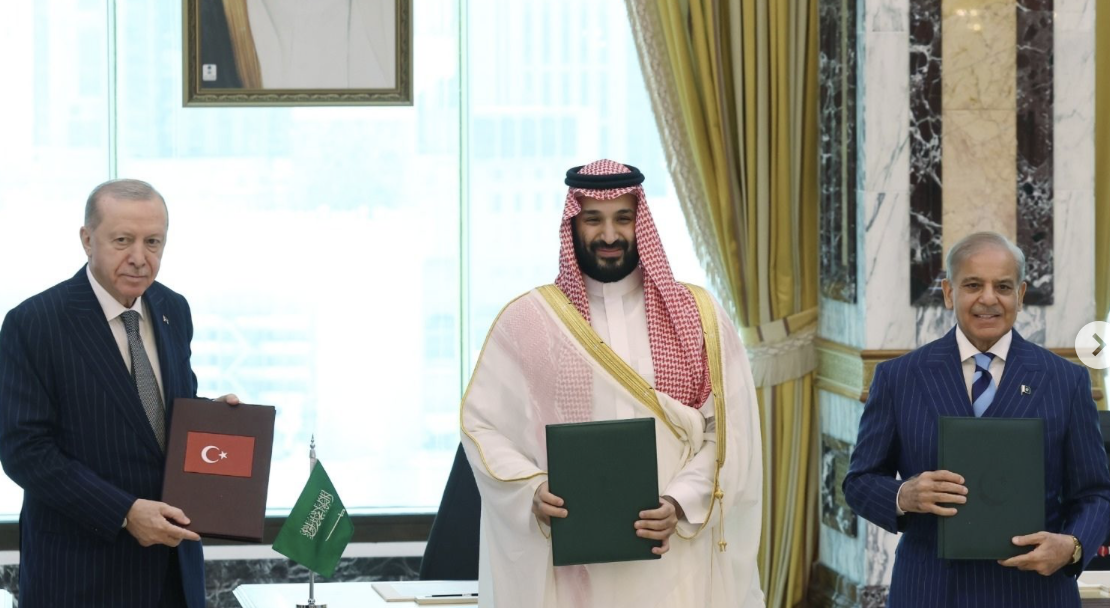
A New Trilateral Security Arrangement
Recent reports indicate that Turkey, Pakistan, and Saudi Arabia have entered into a defense pact known as the Mecca Agreement. While the official document remains unpublished, preliminary statements from Islamabad and Riyadh suggest the inclusion of a mutual defense clause, where an armed strike against one participant is viewed as an act of aggression against all three.
Officials in these nations describe the primary objective as strengthening joint deterrence capabilities. This framework is intended to bolster regional stability by aligning the security interests of the three participating states.
Differing Diplomatic Perspectives
Ankara has adopted a more measured tone regarding the agreement. Representatives from the Turkish government emphasized that the pact is not directed at any specific nation, highlighting instead its focus on military interoperability, defense industry collaboration, and collective security measures.
This discrepancy in messaging underscores the current ambiguity surrounding the agreement's practical application. Without access to the full text, critical details—such as decision-making protocols, the specific definition of an attack, and the nature of military support—remain unknown.
Operational and Technical Challenges
The effectiveness of this alliance faces significant hurdles due to the varying military capacities and threat perceptions of the three countries. A primary technical requirement for such a pact is interoperability, which necessitates standardized intelligence sharing, command-and-control systems, and joint training exercises.
For Turkey, the agreement offers a strategic opportunity to formalize defense industry ties, including technology transfers and joint production. However, the inclusion of Pakistan—a nuclear-armed state—adds a layer of complexity to the regional perception of this deterrence model.
Regional and Global Implications
The long-term impact of the agreement will largely depend on how it is perceived by neighboring powers and global actors. Observers are closely monitoring reactions from capitals such as Tehran, Tel Aviv, Washington, and Brussels to determine if this is viewed as a functional defense partnership or a broader geopolitical bloc.
If the agreement leads to increased military coordination across the Red Sea and South Asia, it could influence regional risk assessments and energy transport security. Conversely, if the pact remains limited to training and industrial cooperation, its global influence may be minimal.
Ultimately, the risk for the participating nations involves the potential for increased diplomatic costs and exposure to international scrutiny. The true test of the Mecca Agreement will be whether the signatories can clarify their operational procedures and demonstrate how they intend to manage collective security in the face of future regional crises.