MediaTek AI chip targets premium phones with TSMC tech edge
MediaTek unveiled an AI chip built on TSMC's 2-nanometer process, pressing its bid for premium smartphones as it cites component cost pressure.
Lauren Collins ·
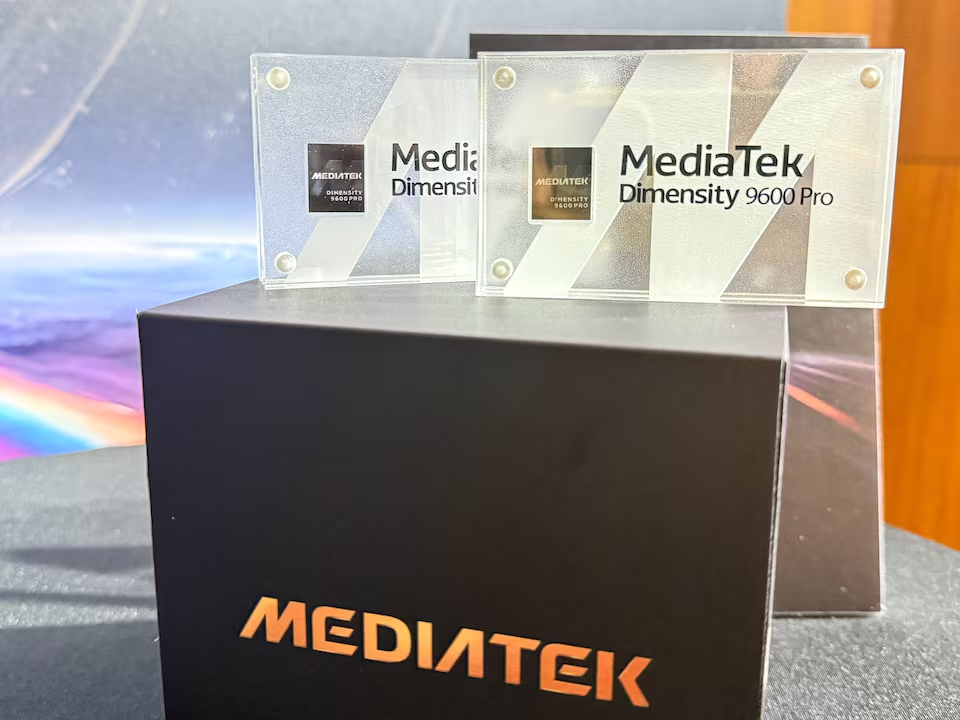
MediaTek unveiled an AI chip built on TSMC's 2-nanometer process, targeting premium smartphones with more on-device generative AI.
Dimensity 9600 Pro arrives
The Taiwanese chip designer said Tuesday that the Dimensity 9600 Pro is its first mobile processor made with Taiwan Semiconductor Manufacturing Co's most advanced manufacturing technology. The launch puts MediaTek deeper into the premium handset segment, where higher-priced phones give chip suppliers more scope to sell advanced components.
MediaTek also introduced the Dimensity 9600M, a second new processor made on TSMC's 3-nanometer process, compared with the 2-nanometer technology used for the Pro model. The company said the first smartphones using the two chips will be released soon, without naming launch dates or handset brands.
The company has previously supplied chips to Chinese smartphone makers including Xiaomi, Oppo and Vivo. Its latest products place more emphasis on running artificial intelligence features directly on the device, rather than sending every task to remote data centers.
On-device AI sets the pitch
The Dimensity 9600 Pro includes a neural processing unit, a dedicated AI processor used to handle machine-learning tasks on the phone. MediaTek said the unit delivered a 51% improvement over the previous generation in processing a user's prompt before an AI model begins generating a response, though it did not provide further technical detail.
That claim goes to the center of the premium-phone contest with Qualcomm, the US rival that has long held a strong position in high-end Android devices. MediaTek's market value surpassed Qualcomm's earlier this year, according to the company information in the source material, giving the Taiwanese group a larger investor platform for its push upmarket.
JC Hsu, corporate senior vice president at MediaTek, said the company is working with handset makers to reduce the effect of higher component costs on consumers. "As the overall market moves to higher prices, I believe there is still room for us to increase our share of the flagship segment," Hsu said.
Apple's new foldable iPhone, announced last week, will retail for as much as $3,199 in the United States for the highest-storage model. That price point gives a current marker for the upper end of the smartphone market, where advanced chips, displays and AI features are pushing device makers to defend larger bills of materials.
AI capital reaches MediaTek
MediaTek is also widening its AI business beyond smartphones into data-center and custom-chip products. The company said its first AI accelerator for a major US cloud service provider is expected to enter mass production in the fourth quarter of this year, compared with the current smartphone chip launch cycle.
The expansion has drawn large strategic funding. MediaTek raised $3.9 billion last month through a convertible bond sale, and Nvidia invested $3.5 billion in that offering; Alphabet, described as a long-term MediaTek partner in AI infrastructure, also participated.
The main uncertainty is whether consumers accept higher flagship-phone prices as handset makers add more AI hardware. If premium demand holds, MediaTek has a clearer route to higher-value smartphone sockets, while TSMC's advanced nodes and rival mobile-chip suppliers face stronger demand for leading-edge capacity.
If buyers resist those prices, adoption may concentrate in the most expensive models, limiting MediaTek's near-term share gains in broader flagship phones. At the global level, the effect would run through electronics supply chains, component pricing and AI-related capital spending rather than a single macro data point.