Kenya GDP Growth Slows to 4.6% as Drought Hits Farming
Kenya's GDP growth slowed to a five-year low of 4.6% in 2025, as a severe drought significantly hampered the nation’s vital agricultural sector.
Atlas Newsdesk ·
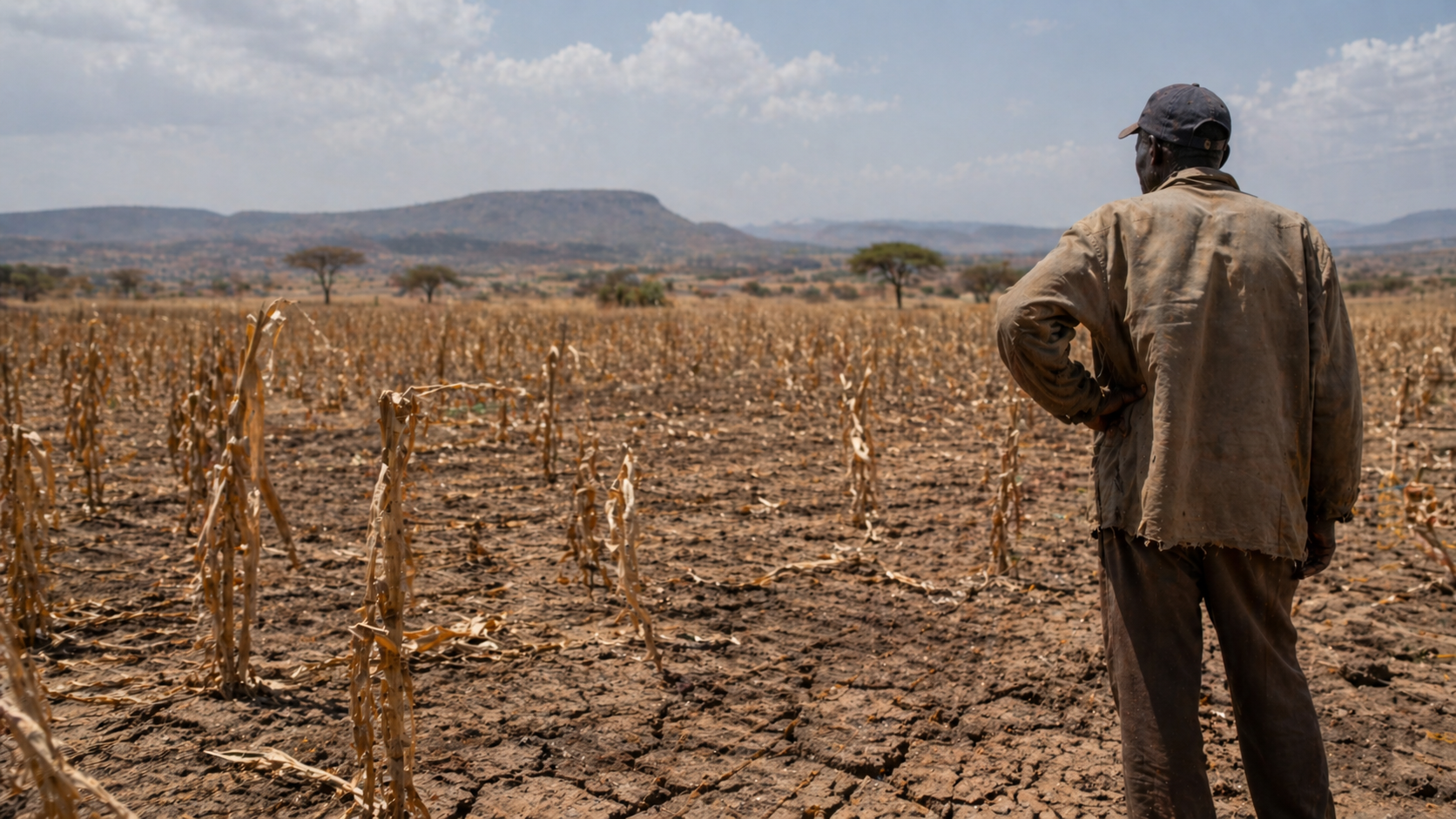
Drought Dampens Economic Momentum
Kenya's GDP growth decelerated to 4.6% in 2025, marking its most sluggish expansion in five years as a prolonged drought crippled the nation's critical agricultural sector. The new figures, released by the Kenya National Bureau of Statistics (KNBS) on Wednesday, underscore the economy's vulnerability to climatic shocks.
The 2025 growth rate represents a marginal decline from the 4.7% recorded in 2024. More significantly, it is the slowest pace of economic expansion since the downturn experienced in 2020 during the height of the COVID-19 pandemic.
Agricultural Sector Under Pressure
The primary driver of the slowdown was the severe underperformance of agriculture. This sector, which includes farming, fishing, and forestry, accounts for nearly a quarter of Kenya's total economic output. Its growth fell sharply to 3.1% in 2025, a significant drop from the 4.4% expansion seen in the previous year.
MacDonald Obudho, the Director-General of the statistics agency, highlighted the core challenge during a briefing in Nairobi. He noted that the country's agricultural output is predominantly reliant on precipitation. "Agriculture is largely rain-fed and so that’s something that we are not able to control," Obudho stated, explaining the direct impact of the drought on national economic performance.
Mixed Performance Across Industries
The economic deceleration was not confined to farming. Several other key industries experienced a slowdown, including manufacturing, transportation, and information and communication technology (ICT). The tourism sector, a major source of foreign exchange, also saw its growth rate taper off compared to the prior year.
However, the construction sector provided a notable bright spot amid the broader slowdown. Reversing a contraction from the previous year, construction activity rebounded strongly, posting a robust growth rate of 6.8%. This resurgence suggests that targeted investments and infrastructure projects may be creating momentum independent of climate-related challenges.